May 2008
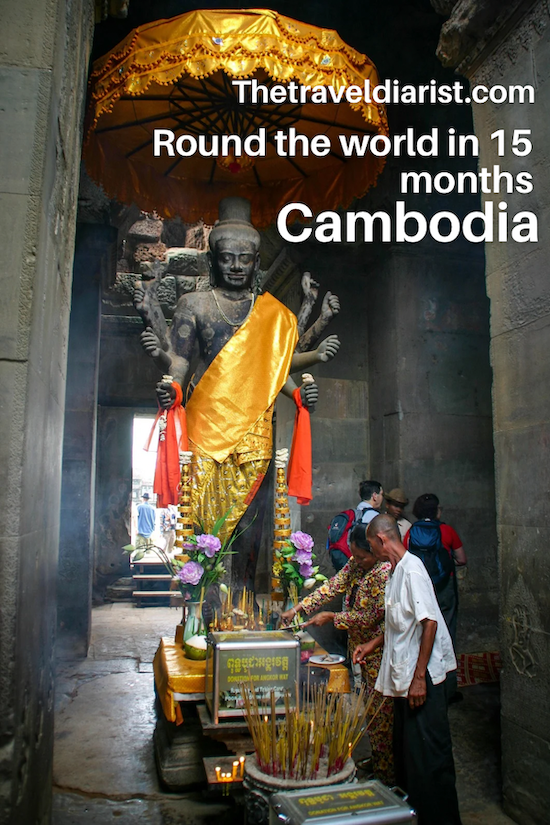
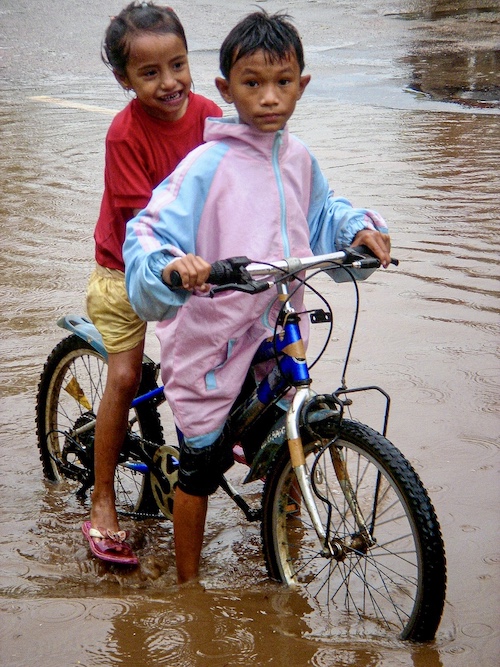
A short flight from Laos and we’re in Cambodia. We arrived on a 60 seat prop-plane from Luang Prabang landing in Siem Reap mid afternoon in torrential rain. A tuk-tuk picked us up at the airport and drove us to the hotel. After checking in we went for a wander. The roads were flooded ankle deep…but life carried on.
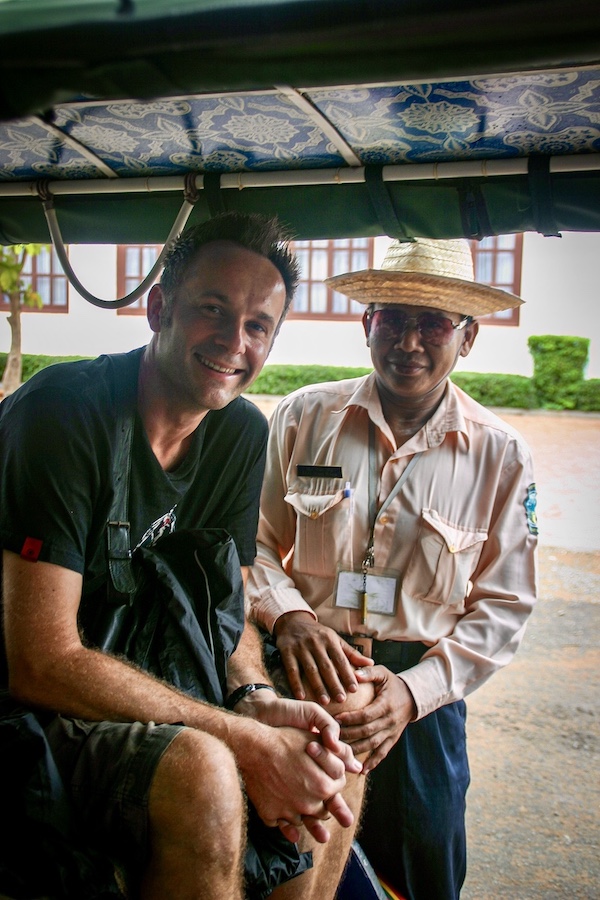
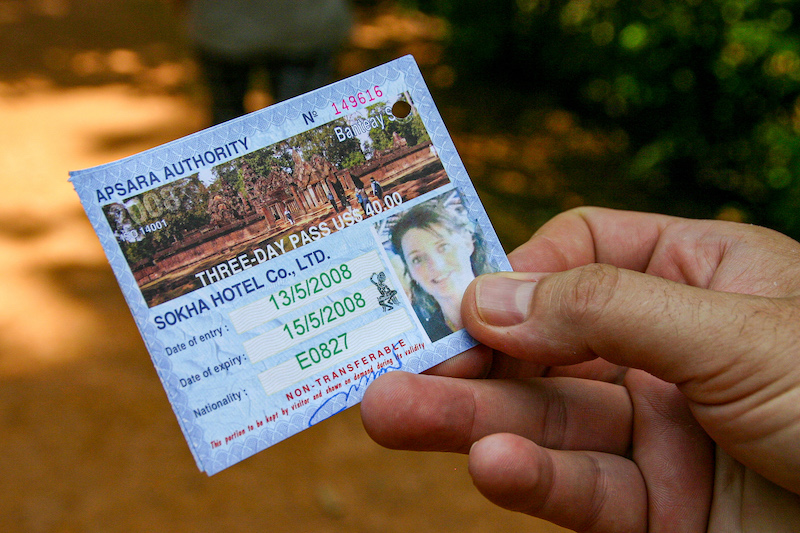
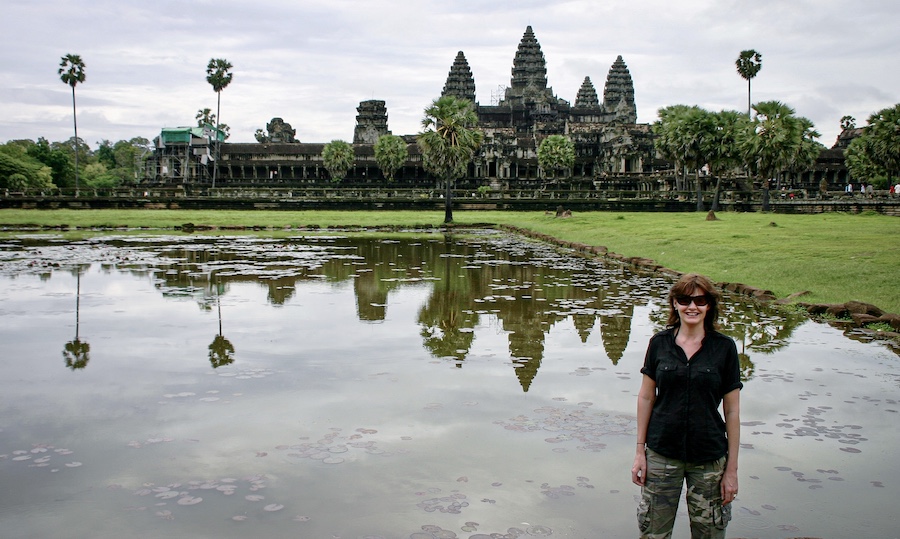
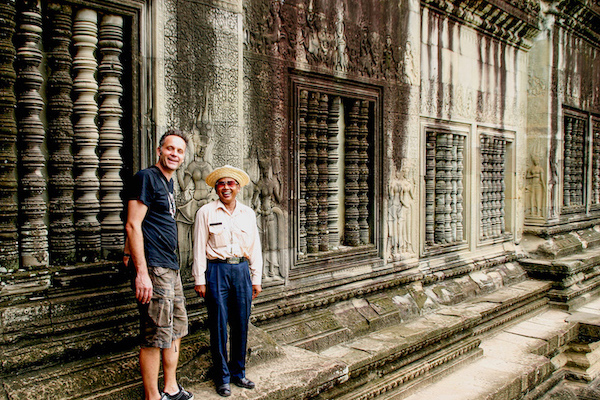
Siem Reap is home to a dizzying number of temples the most well known being Angkor Wat situated in the vast Angkor Archaeological Park…the City of Temples. We bought a $40 three day pass to explore the different sites and hired a tuk-tuk driver for $14 to take us around. Mr Von Ny at an additional $25 for the day was our excellent guide. Everything in Siem Reap is priced in US dollars though the local currency is the Riel.
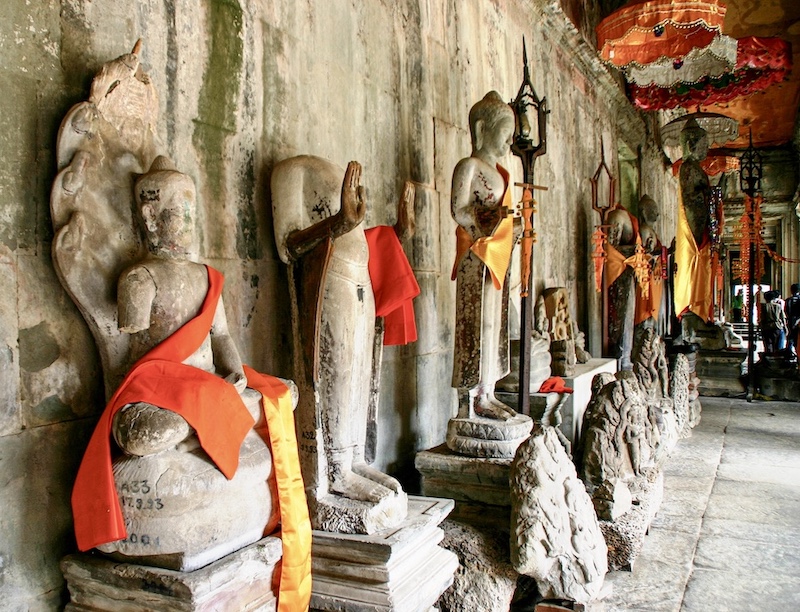
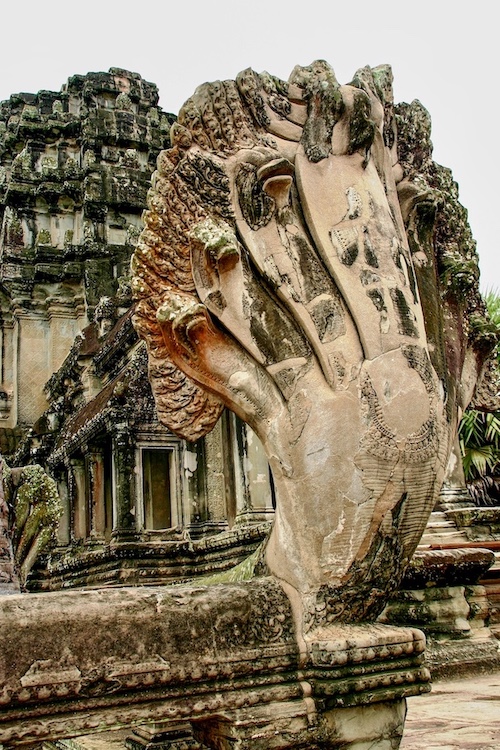
Angkor Wat was built for King Suryavarman II in the early 12th century to serve as his State temple and capital city. Angkor means Capital or Holy city, Wat is the Khmer word for temple. It was first constructed as a Hindu temple dedicated to Vishnu but by the end of the century it was transformed into a Buddhist temple. A seven headed serpent-like Naga statue worn by years of weather, represents a guardian protector and bridge between heaven and Earth. Designated as an UNESCO World Heritage site in 1992 many experts believe it to be the largest religious structure in the world. Restoration work was disrupted by the Cambodian Civil War in the 1970s and 80s and more damage was caused by art thieves in the two decades which followed with intricately carved bas reliefs and sculptures being torn from the buildings. The site is an example of Khmer architecture and has become a symbol of Cambodia appearing on its national flag.
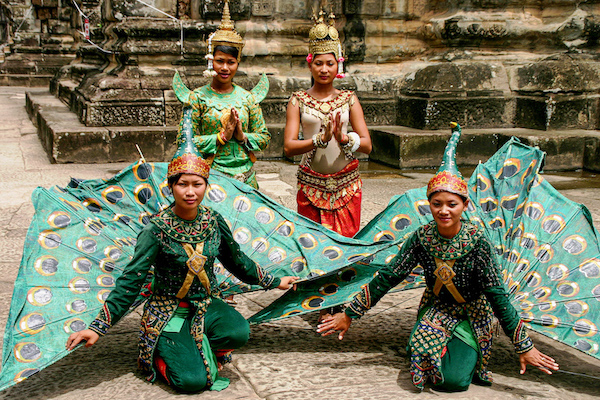
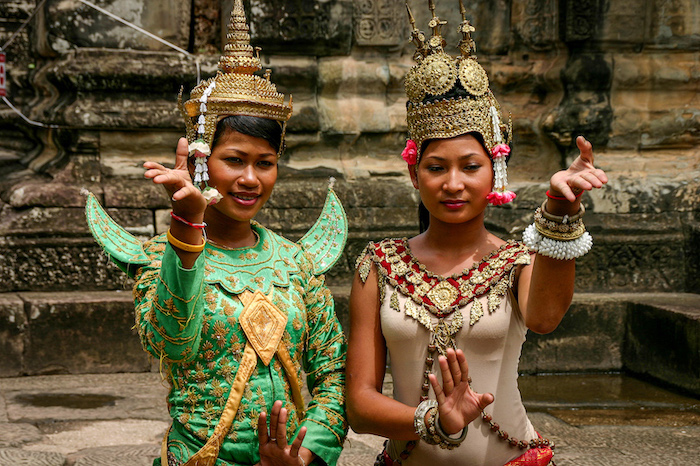
Hired by the tourist board at Angkor Wat, dancers and women in elaborate colourful costumes pose for tourists.
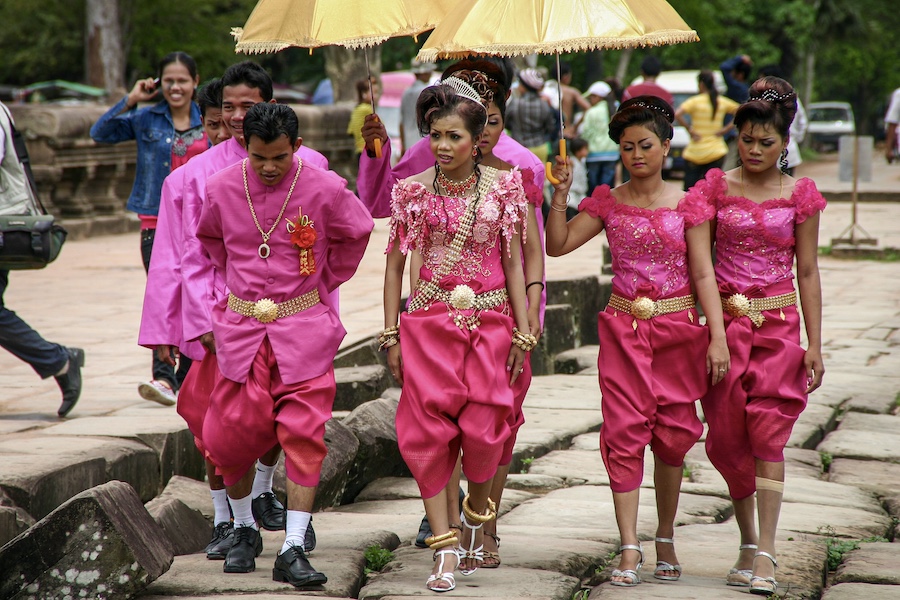
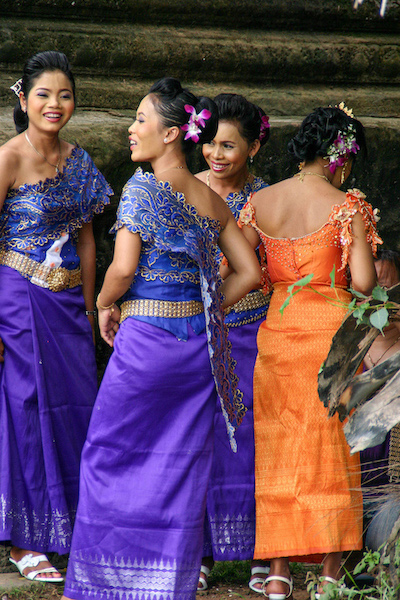
Being a national symbol of Cambodia, it’s also a popular place to have your wedding photographs taken. We saw so many wedding parties getting ready in the Angkor grounds…a small handful dressed in traditional Western white but the majority wore gorgeous jewel bright colours in heavily brocaded silks with gold accessories.
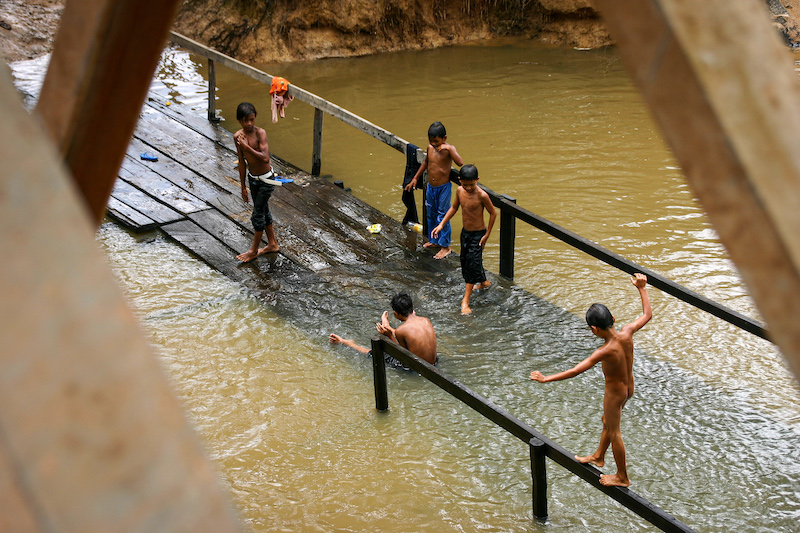
Local kids diving in to the moat surrounding Angkor Wat and from the bridge in to the river. It’s a huge area covering over 400 acres, we explored for over 2 hours before moving on in the tuk-tuk to visit other temples.

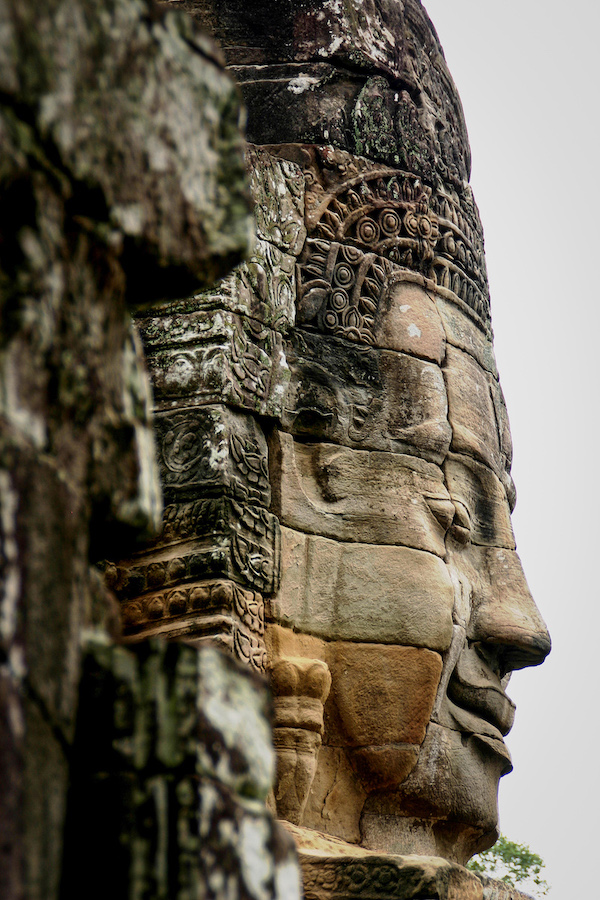
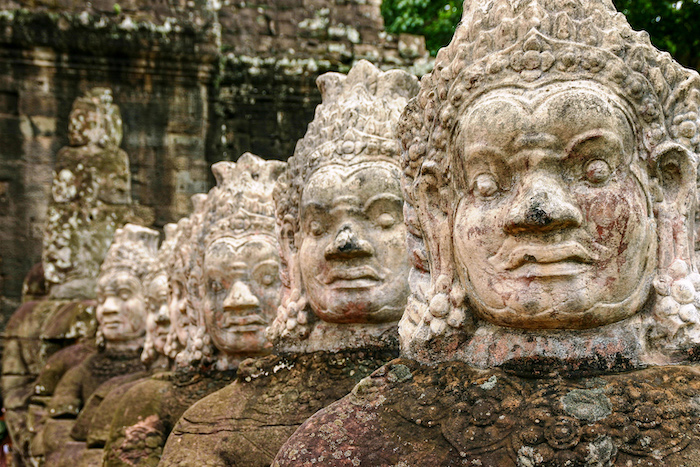
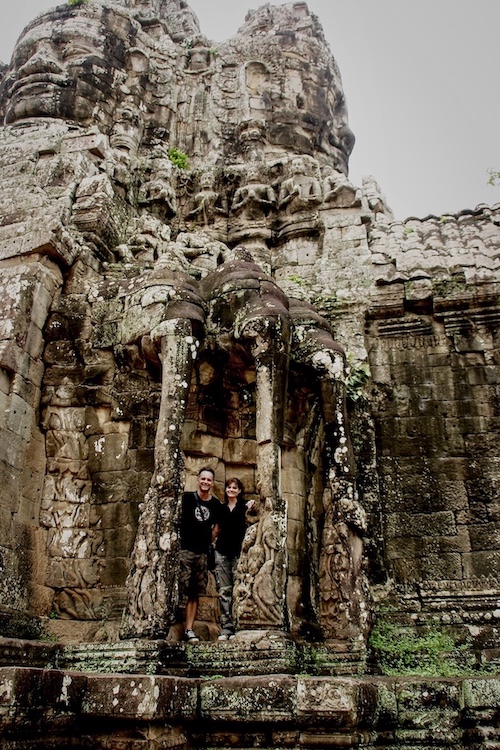
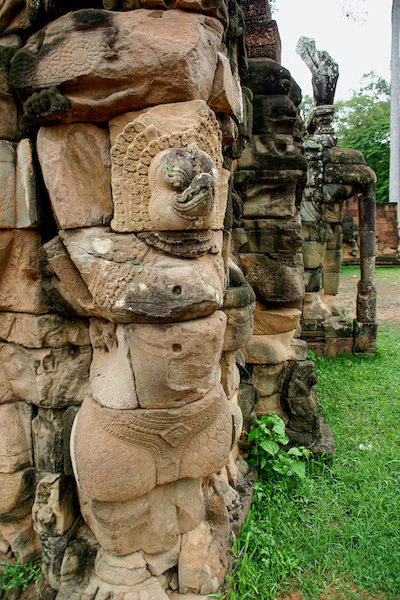
Another temple complex, Angkor Thom sits on the west bank of the Siem Reap River. Several bridges lead in to the area which span the moat in front of each tower. These have a row of large stone carved gods/deities on the left and asuras (power-seeking deities) on the right, each row holding a Naga and resembling a tug-of-war. This could be a reference to the popular Angkor myth…the ‘Churning of the Sea of Milk’, a Creation story depicting the victory of good over evil. Built in the twelfth century by King Jayavarman VII, Angkor Thom was the last capital city of the Khmer empire. At its centre is the Bayon. Stone faces of Brahma gaze out serenely and there’s an ‘elephant gate’ which Mr Von Ny insisted we climb in to to have our photograph taken.
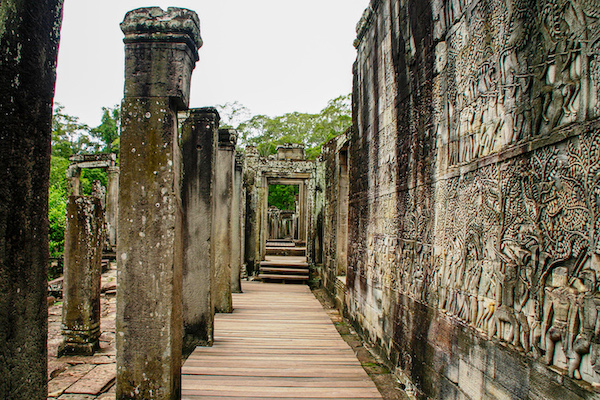
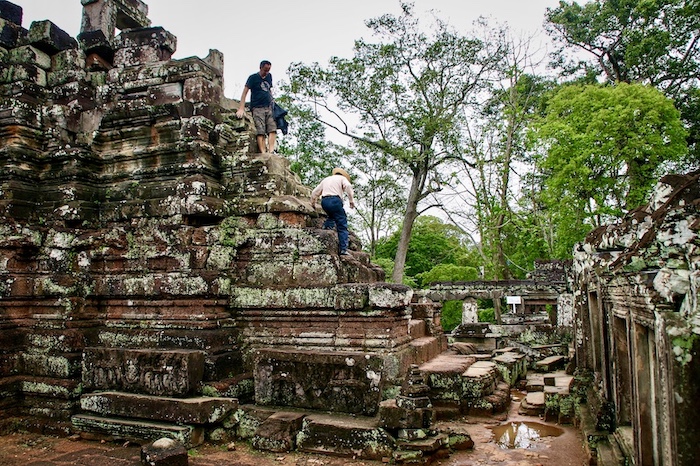
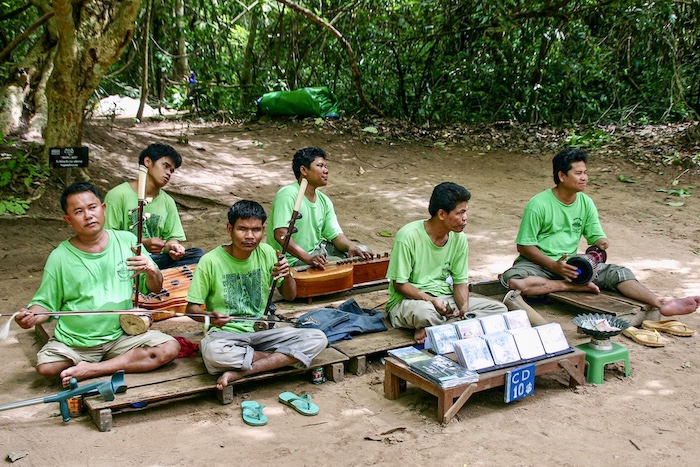
The state temple of Suryavarman, Baphuon Temple is located in the grounds of Angkor Thom. Mr Von Ny encourages Dave to climb the ruins with him, something which in the moment we think nothing of but later are incredulous that people climb on these 11 century structures. We see local musicians who are amputees and in some cases blind; victims of land mine accidents, performing to tourists to earn donations. We’ve been shocked by the number of amputees we’ve seen whilst being here. Mr Von Ny introduced us to a local musical instrument with only 2 strings, ingeniously made from bicycle brake cables. The bow is played between the 2 strings rather than across them. To be brutally honest after a a couple of minutes we’re relieved he stops playing…it’s possible he’s not a musician as the din he made was ear warping but amusing.
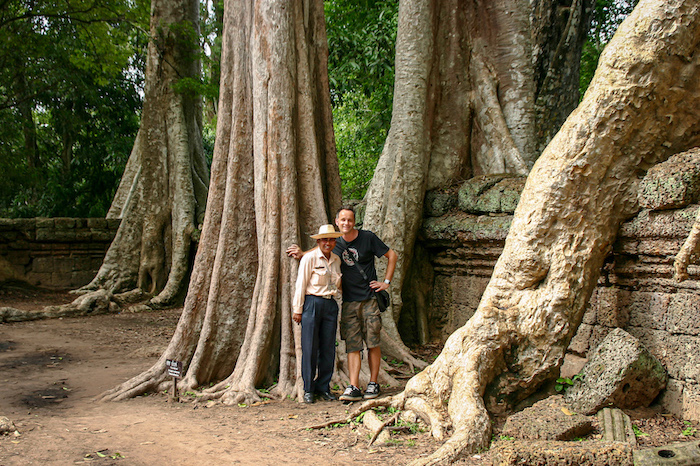
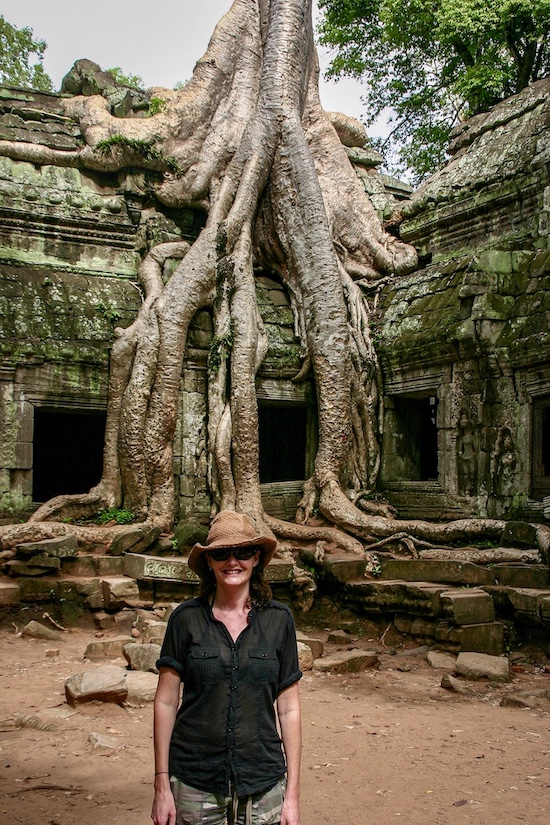
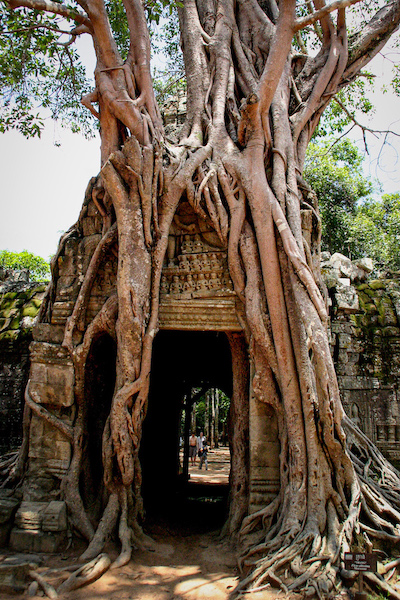
It’s difficult to keep track of all the temple names, I’m trying to make notes as we go along and it’s confusing….but less than a mile from Angkor Thom, the 12th century Ta Prohm Temple has become one of the most famous due to it being a film location used in the Lara Croft Tomb Raider movie in 2001. And you can see why it was chosen. Built without mortar, Strangler Fig trees took root, creeping through the loosened stones, pushing through these ancient structures…in some places pulling them apart, in others hugging them into an immovable embrace. It looks surreal and alien.

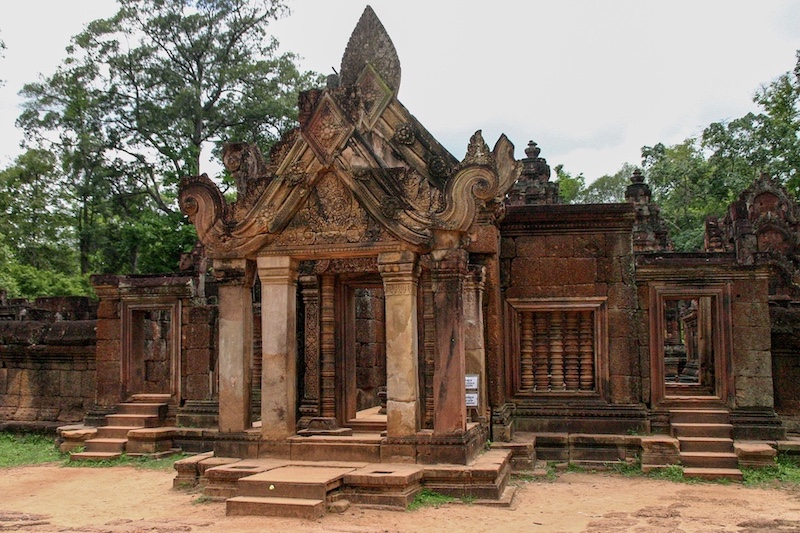
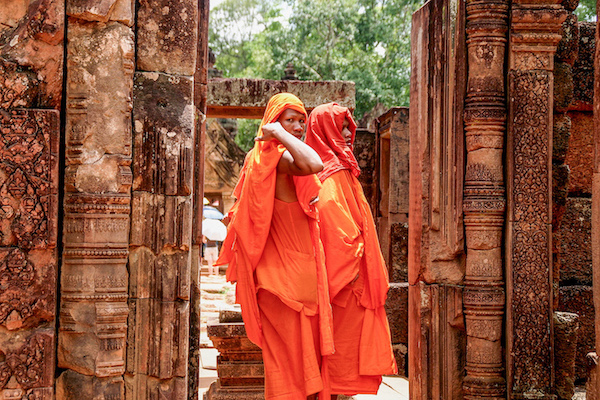
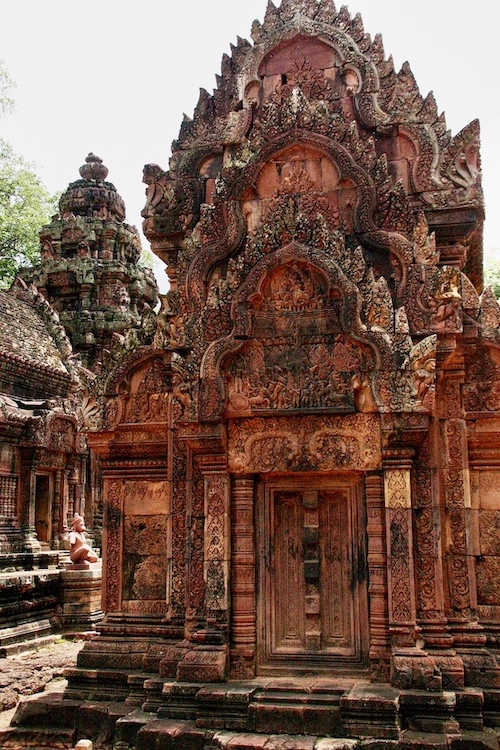
Banteay Srei, The Citadel of Women is the most beautiful temple site we’ve visited today. Built from red sandstone and intricately carved with devatas (female deities) or dvarapalas (gate guardians)….the stone glows warm in red, pink and orange. Built in the 10th century it was dedicated to the Hindu gods Shiva and Parvati. Very different to the other temples in Angkor these structures are small, almost miniature in comparison and its construction is credited to courtiers rather than rulers.
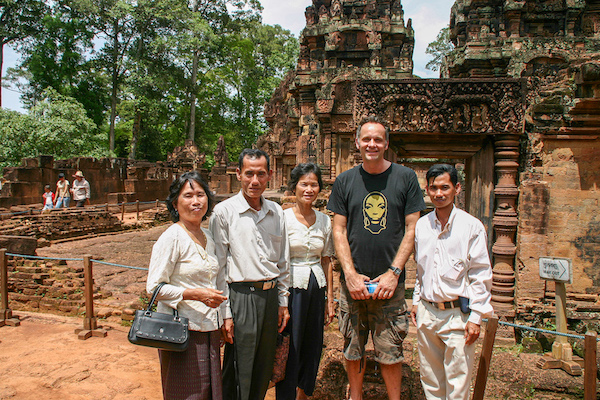
As a tourist it’s very common here to be asked to have your photograph taken with people who treat you like visiting film stars. This particular scenario depicting Dave and a very friendly family who were taken by his height…went on for about 10 minutes as they also wanted individual photos taken with each of us and each of them. We are always happy to oblige and although we don’t share a language it always involves a lot of laughing and smiling.
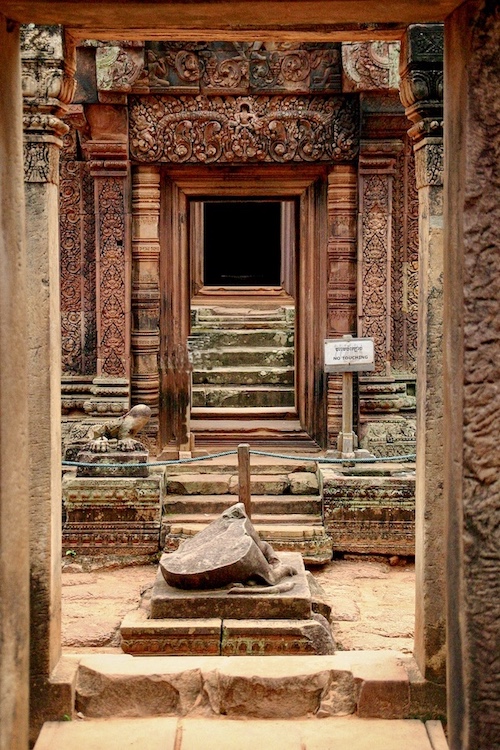
Ta Som is a much smaller temple located near to Angkor Thom and Neak Pean. Built in the 12th century for King Jayavarman VII who dedicated it to his father Dharanindravarman II (former King of the Khmer Empire 1150 to 1160), it consists of a single shrine enclosed by walls and like Ta Prohm has been taken over by trees and vegetation.
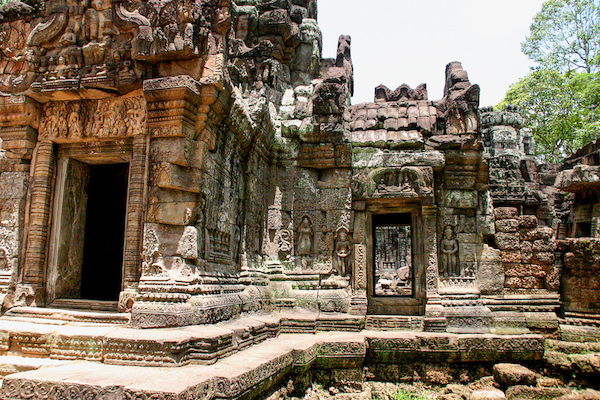
Another nearby temple, Preah Khan (12th century) translates as ‘Royal Sword’ and was built on the site of Jayavarman VII’s victory in 1191 over the invading Chams. At its centre where originally a statue of Lokesvara would have stood, is a stupa (Buddhist place of meditation) which would have been built several centuries after the temple’s original construction.


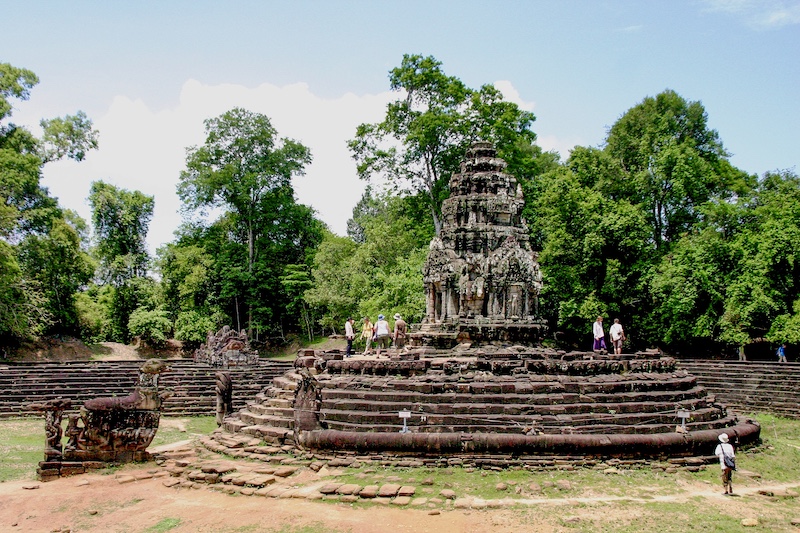
At Pre Rup Temple (dedicated in 961 or 962) I take a single photograph and delete it…I’m flagging from trying to take it all in. My camera is having issues, I think it’s the humidity…it’s frustrating. At Neak Poan Temple ‘The Entwined Serpents’ built as an artificial island surrounded with healing waters…I only take a couple of photographs. What we thought we could cover in a single day has easily overwhelmed us…we realised our folly. You could spend weeks visiting these temples, years trying to comprehend it all. It is astonishing.

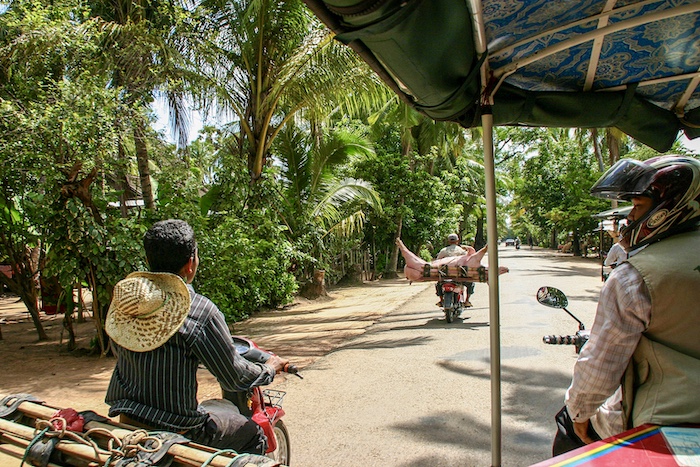
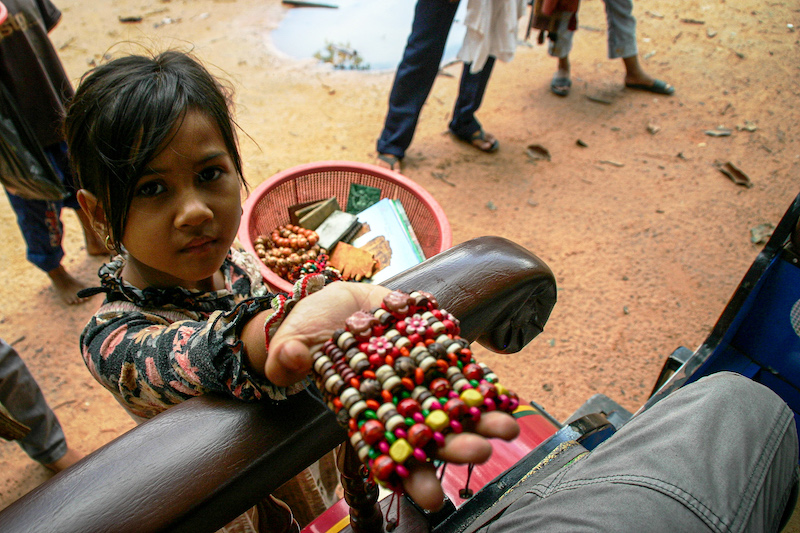
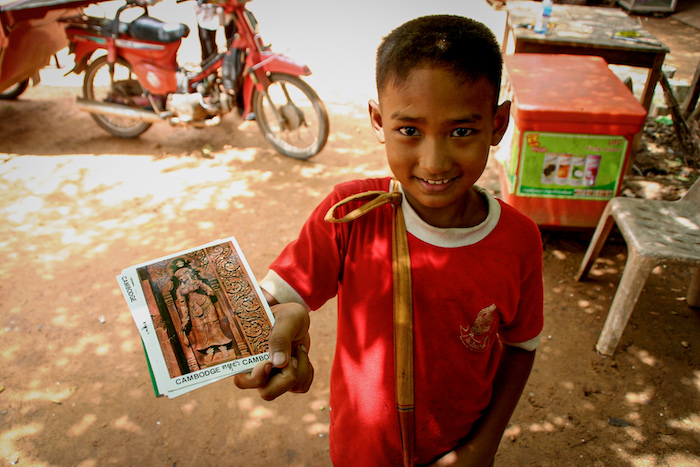
There are children at most of the sites selling postcards and bracelets…other small things they hope to catch the tourist’s eye with. It can get relentless as there are so many and competition among them is fierce, but we keep smiling and politely saying no, this is an economic necessity for them. One enterprising little girl comes to me in the rickshaw…counting numbers in several different languages to hold my attention…an impressive marketing skill. Leaving the temples feeling hot, thirsty and a little overwhelmed we say goodbye to Mr Von Ny and take our tuk-tuk back to the hotel…passing a large pig strapped on to the back of a small motorbike.
Phnom Penh.
We leave Siem Reap and take a bus to the capital city of Phnom Penh. We visit the tragic Killing Fields and the interrogation centre known as S-21. In 1976 during the reign of the cruel dictator Pol Pot and his Khmer Rouge army (made up of hard line followers, enlisted peasant workers and the under-privileged), Svay Pray High School in Phnom Penh was renamed Security Prison 21 (S-21). Turned in to an interrogation torture and execution centre, the privileged and educated were subjected to unimaginable treatment. Even to wear a pair of spectacles was seen to be a sign of privilege or of being educated. People were rounded up in to this repurposed prison which was enclosed with barbed wire; at the time of use the wire was electrocuted to prevent escape attempts. Tiny brick cells were built into former classrooms. Entire families were incarcerated and those that survived S-21 were taken in trucks to Choeung Ek, a former orchard 11 miles south of the city centre now known as The Killing Fields…where thousands of men, women and children were executed.
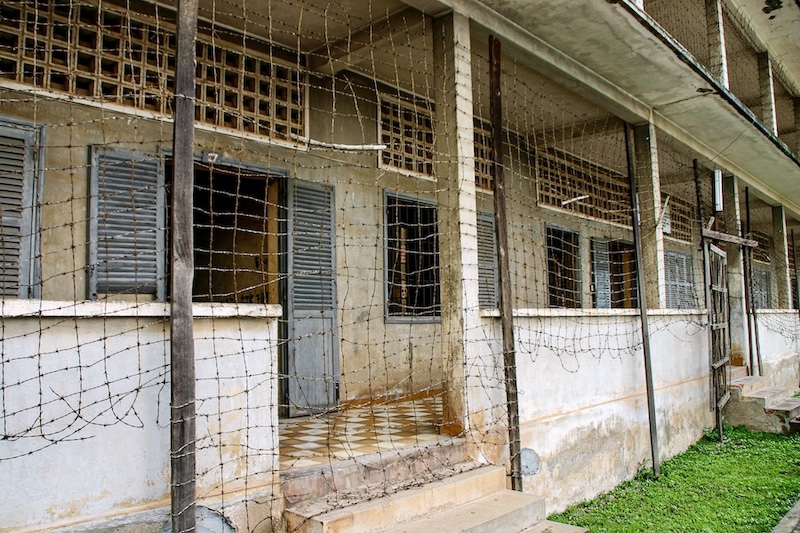
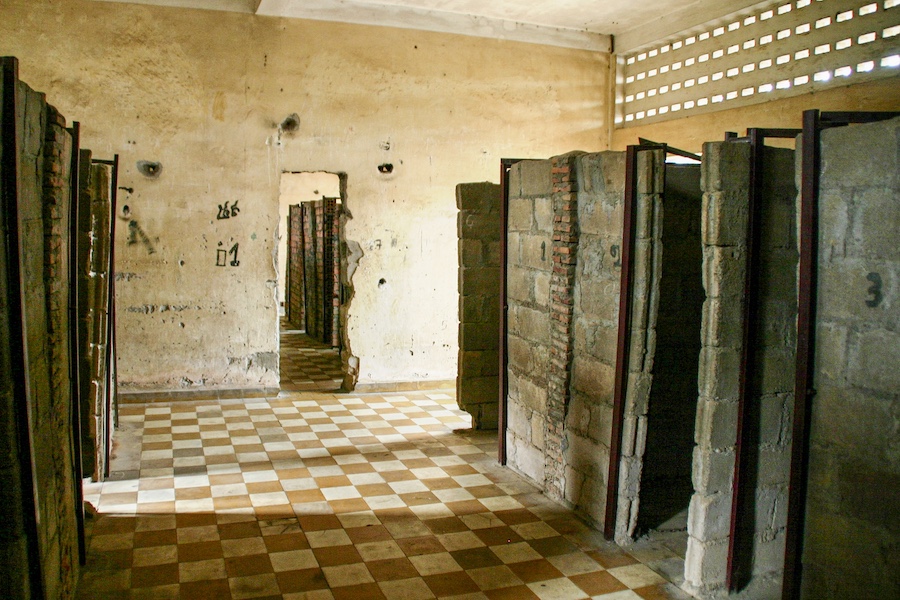
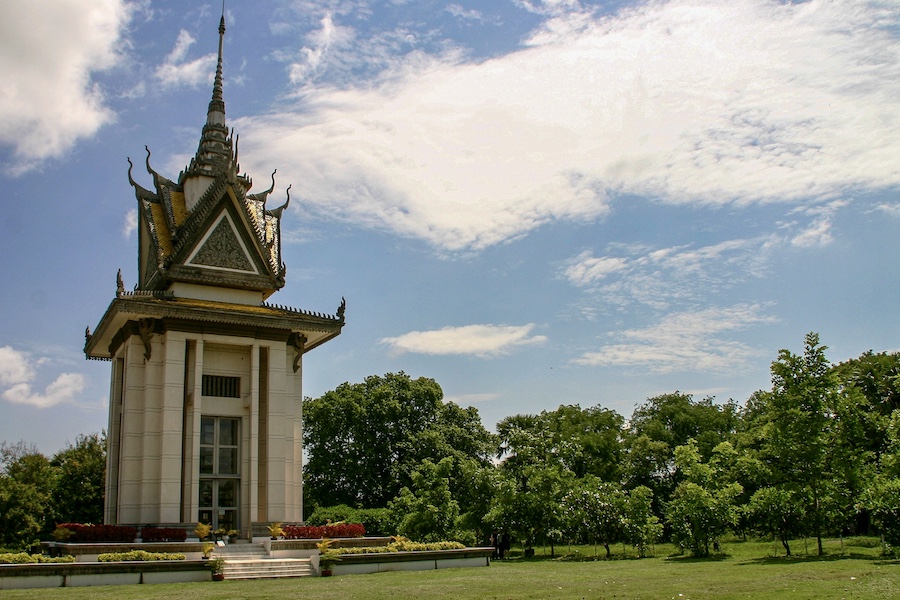
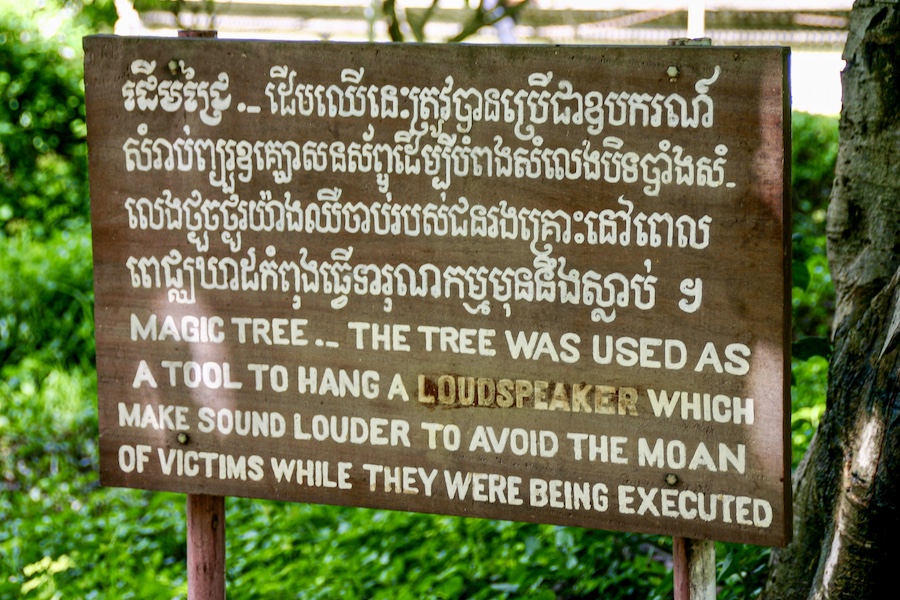
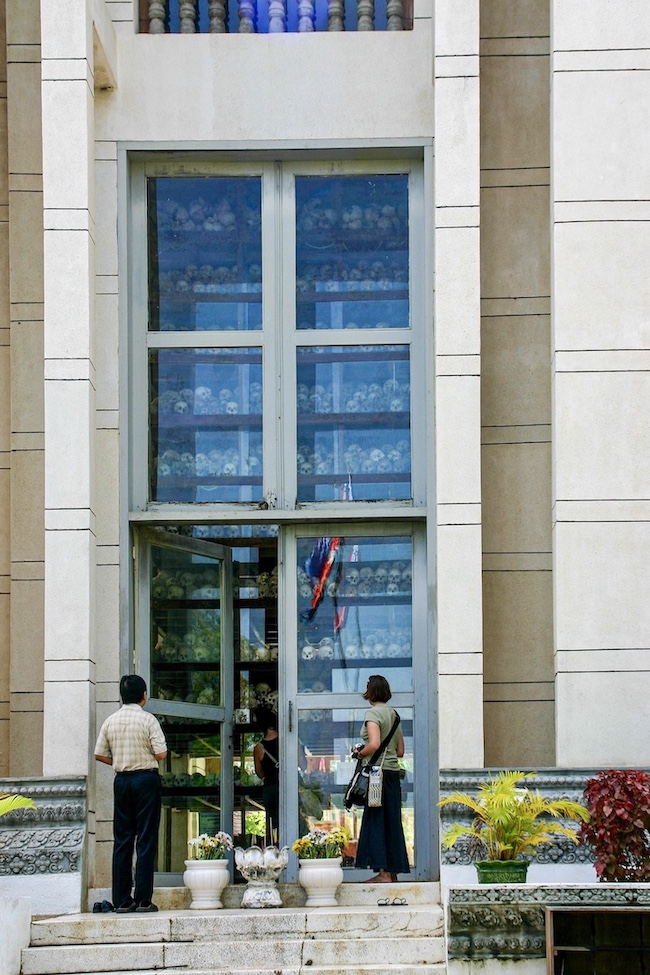
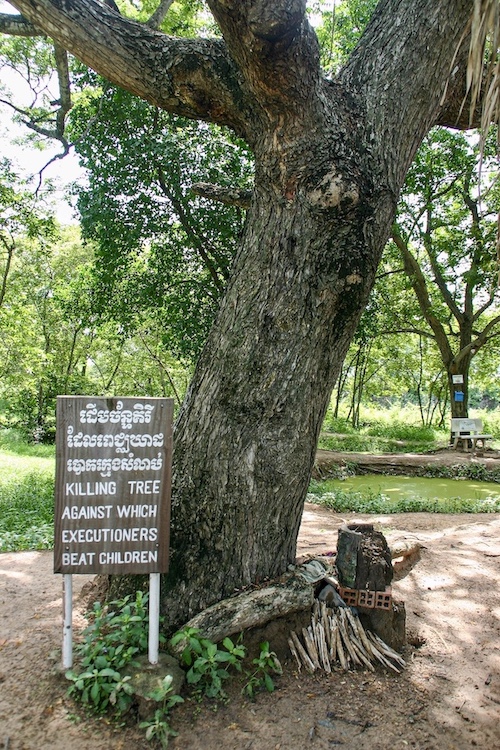
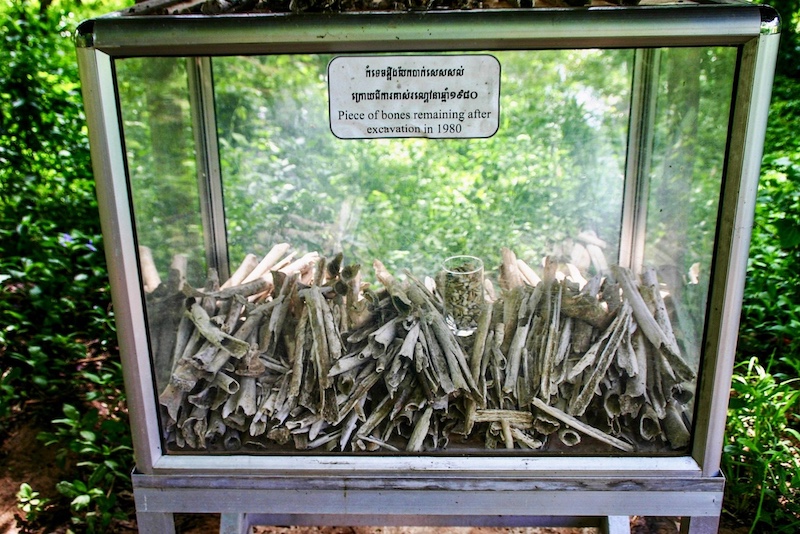
Visiting the Killing Fields is profoundly disturbing, understandably heartbreaking. Human bones, teeth and the crumpled mud embedded clothes of the executed lie underfoot, often visibly close to the surface. Visitors are encouraged to pick up teeth and bones and post them in to glass boxes…something we couldn’t do…we simply couldn’t cope with it. What I first thought was firewood was a small stack of human bones at the foot of a tree, more splintered bone remains were in a box. A stupa monument was built to hold the skulls of over 8,000 of the executed men, women and children. The skulls line glass shelves which climb upwards…shelves and shelves of former lives. The stupa opens at the front and local guides pick up skulls to encourage tourists to hire them for a tour of the grounds, holding out the skulls to be touched. A tour was something we would have been interested in but once Dave saw the guide handing the skulls to tourists to hold, we vetoed hiring someone. Signs across the site detail a horror of atrocities; a mass grave found containing 166 victims without their heads, a truckstop from where people were unloaded and taken directly to prison cells or execution…details of a ‘Killing tools storage room’.
Choeung Ek is the best known of what is thought to be approximately 300 Killing Fields where the regime of the Khmer Rouge killed over one million people in the Cambodian genocide between 1975 to 1979.
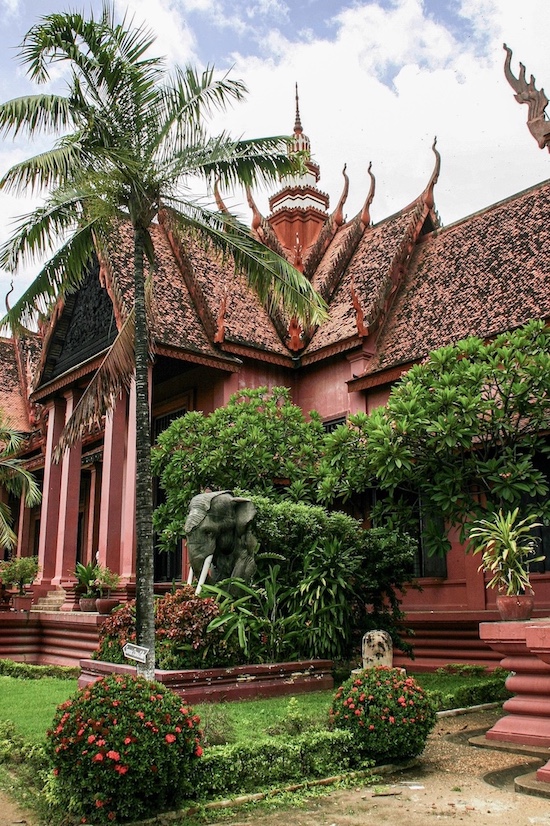
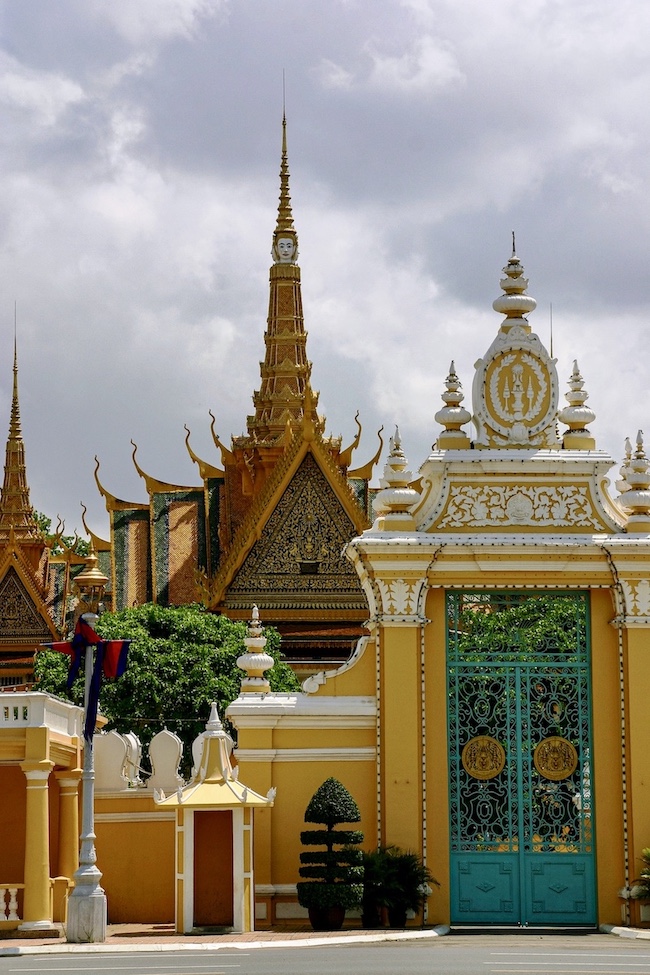
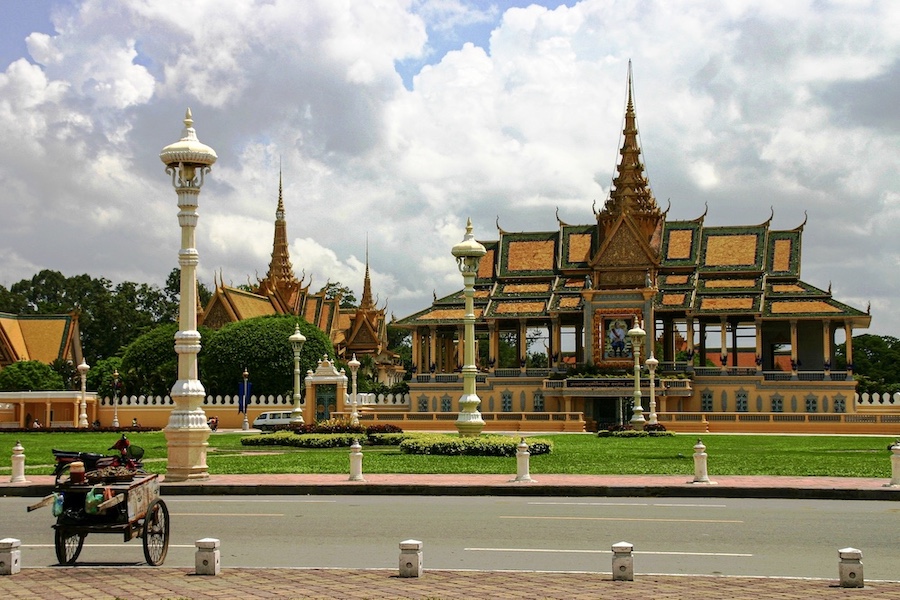
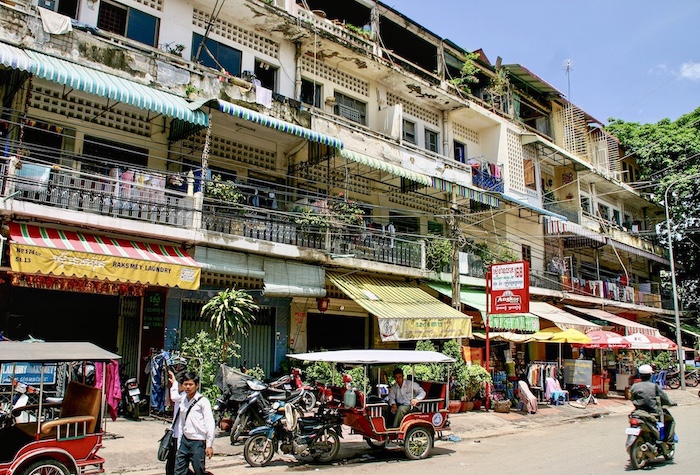
It’s difficult to ‘enjoy’ Phnom Penh, the weight of its recent history is impossible to emotionally move beyond….and everywhere we walk in the city we see more amputees. We have never travelled anywhere where the visibility of war has been so prevalent. The National museum in Phnom Penh houses hundreds of artifacts some illegally removed from the Angkor Wat temple complex. The Royal Palace in yellow and gold is beautiful…but this is a sombre city.
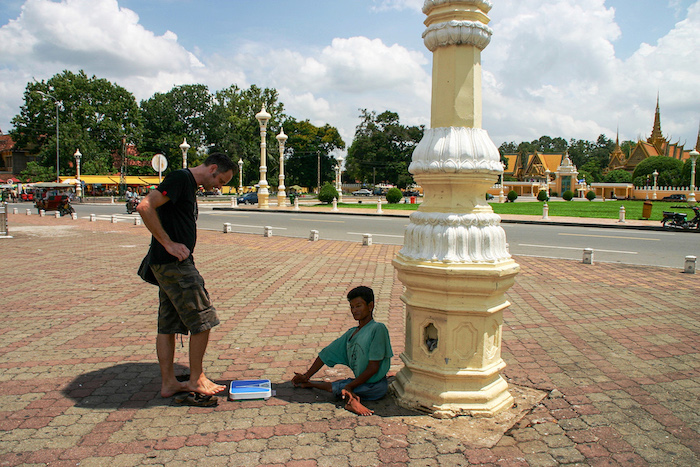
We stop for a severely disabled man who has a set of weighing scales on the pavement across from the palace. He has found an unique way to make a living, charging a small fee to people to weigh themselves.
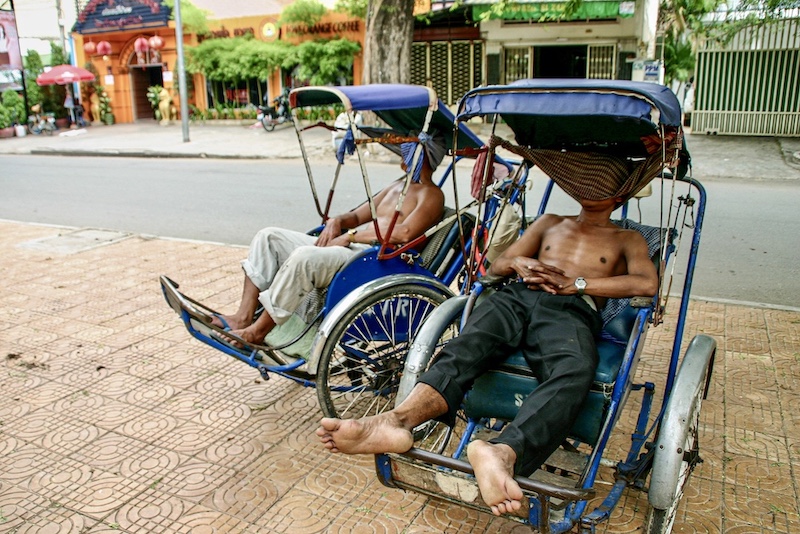
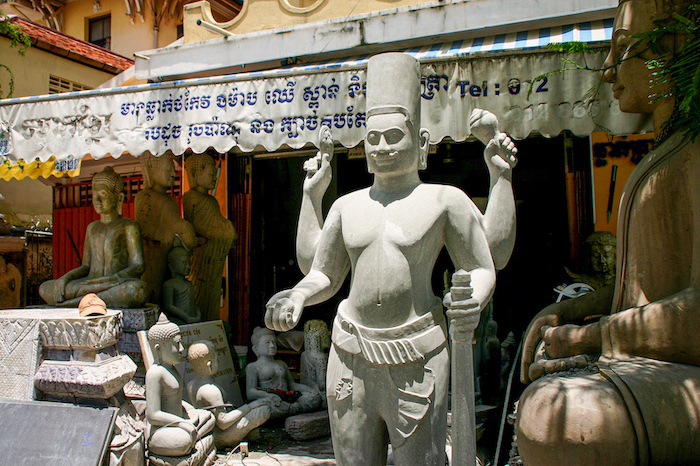
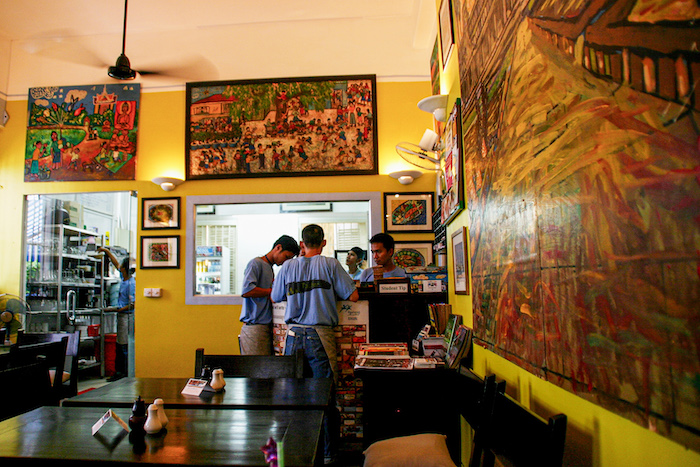
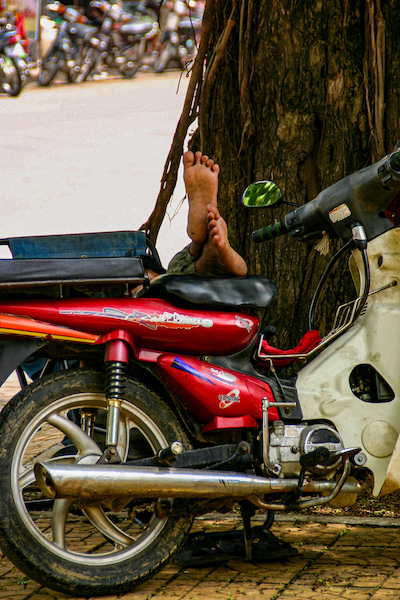
Everywhere we walk we see the familiar sight of sleeping motorcycle taxis and tuk-tuk drivers, catching up on some sleep between passengers. Hindu and Buddhist stone carvings are for sale at a shop and we stop at a cafe to get drinks, colourful paintings on the walls.
We have learned a lot visiting Cambodia…an education spanning centuries from the Kingdoms of temples to the cruelty and horror of the genocide. We feel it’s time to move on so we plan our next destination…Thailand.
 The Travel Diarist