June 2008

Orangutangs, Long Houses and wild natural beaches. We are spending our last day in Borneo after arriving here from Singapore with Air Asia. We loved this beautiful place, we’ve been based in the Malaysian part of the island in the North West in Sarawak state, which used to be a country in its own right. Borneo, not a country but an island shared between 3 countries; Malaysia, Indonesia and Brunei.
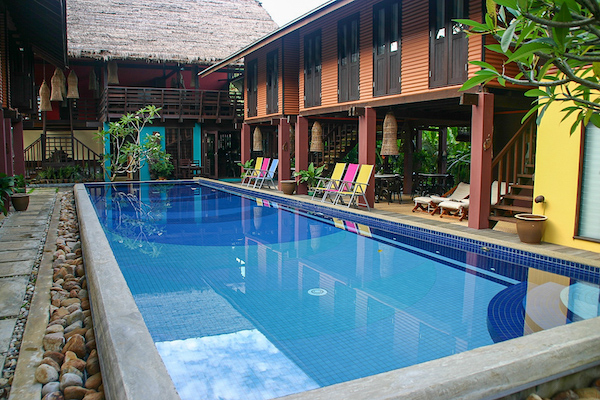
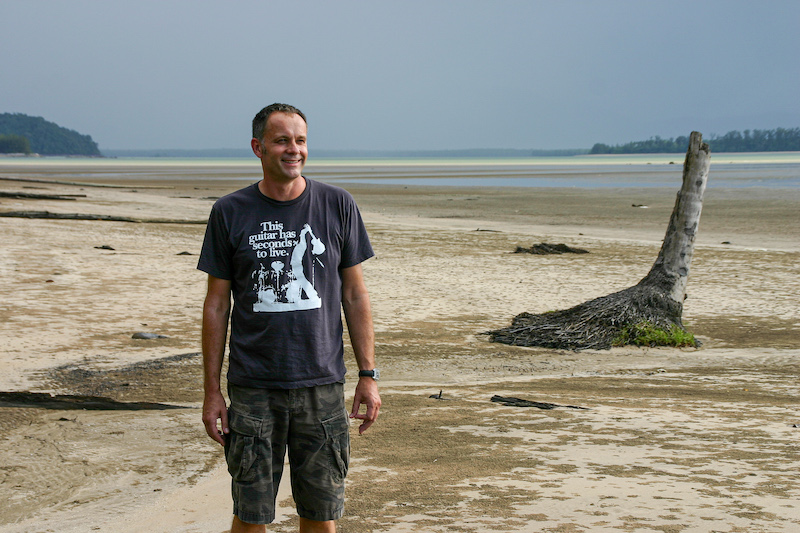
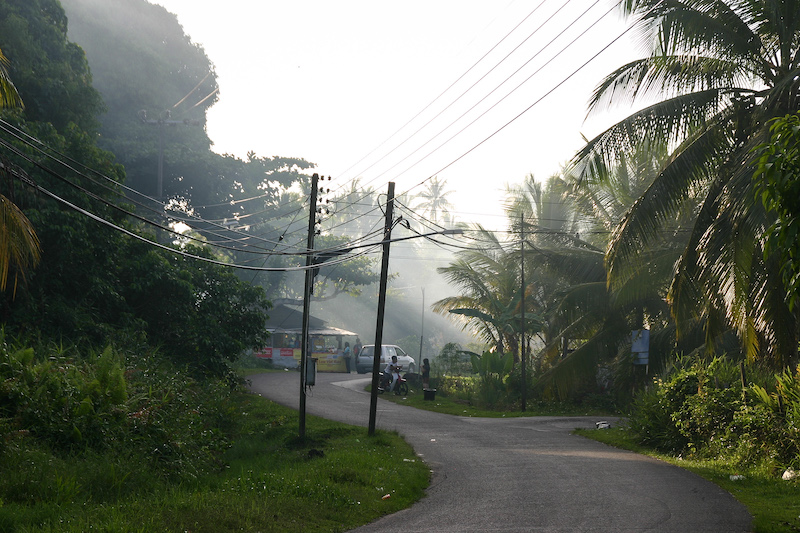
We found a fantastic place to stay at The Village House a 40 minute drive from the city of Kuching. Situated in scenic jungle countryside at the foot of the Santubong mountains, a guest house with rooms built on stilts around a compound with a pool and palms. It’s a 20 minute walk from the Kampong (village) of Santubong and 2 minutes walk to a natural wild beach at the end of the short road leading from the guest house. The owners are lovely people, we get on well and we’ve made a new friend in Laurence, an Englishman who’s been living here a while and currently working at Village House.




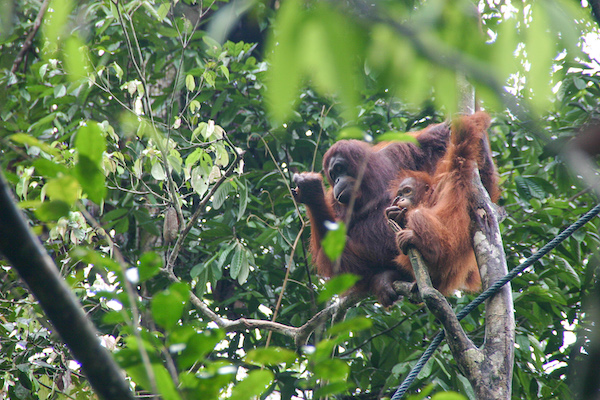
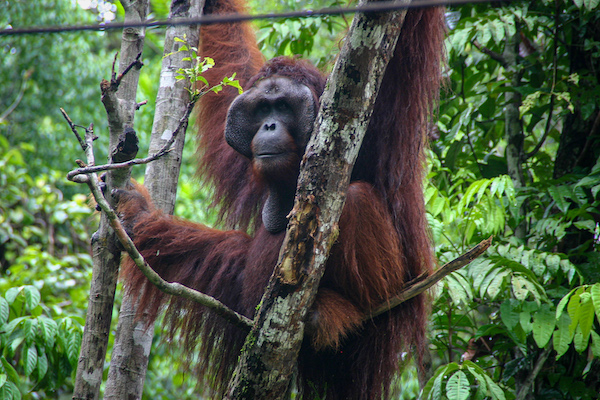
Semenggoh. On our first day the owners of Village House connected us with William a local taxi driver. First stop Semenggoh Wildlife Rehabilitation Centre. The centre rehabilitates orangutans and other monkeys orphaned or illegally caged, once rehabilitated the animals are set free in to their natural habitat. Outside of the forest’s natural fruiting season several orangutans return independently to the centre to feed from fruit left out on raised wood platforms. The food is put out at 9am and again around 2-3pm, so when visiting at these times there is the chance (but no guarantee) of seeing the orangutans. We visited early and were privileged to see a mother and baby and the largest orangutan called Ritchie. Ritchie is huge; the centre estimates him to be 6 to 7 times stronger than a human. Our guide at the centre warned us against going anywhere close to Ritchie who, unnervingly, came down to the main buildings close to us. We were also warned against standing directly under any tree that an orangutan was in…advice ignored by a lady intent on taking a photograph looking straight up a tree trunk to an infant orangutan…who released its bladder soaking the woman directly beneath. Always listen to your guide!


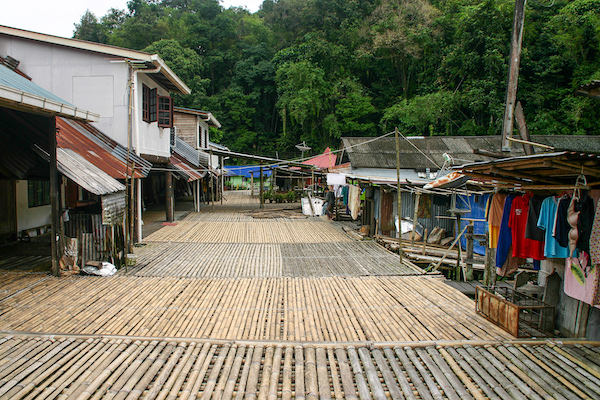
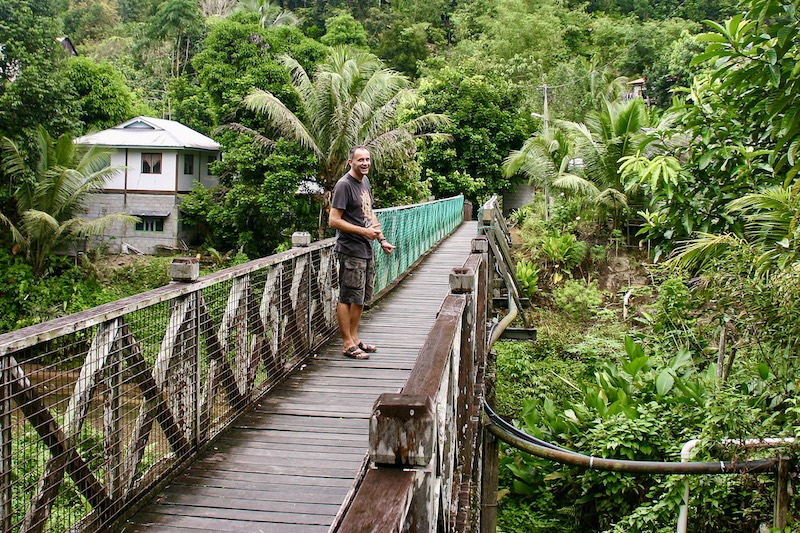
Annah Rais. Leaving Semenggoh William drove us further in to Sarawak to Kampung Annah Rais; a small village known for its traditional Bidayuh longhouse. The Bidayuh are a tribe in Borneo and their longhouse is a large wooden structure built on stilts within which the entire population of the village live under ‘one roof’. This structure is added to as the population grows with separate rooms leading to one long communal veranda made from bamboo. Small bridges in the village cross the river; many are narrow bamboo structures held together by rope and only the width of our feet. Dave and I braved a crossing…rickety but good fun, I wouldn’t want to walk across the higher bridges. Modernisation has reached Annah Rais with tin roofs replacing local palm roofs and satellite dishes providing access to television. Human skulls left on display in the elders meeting room demonstrate the ancient tribal methods of head shrinking or burning of tribal enemies…thankfully a practice long abandoned.


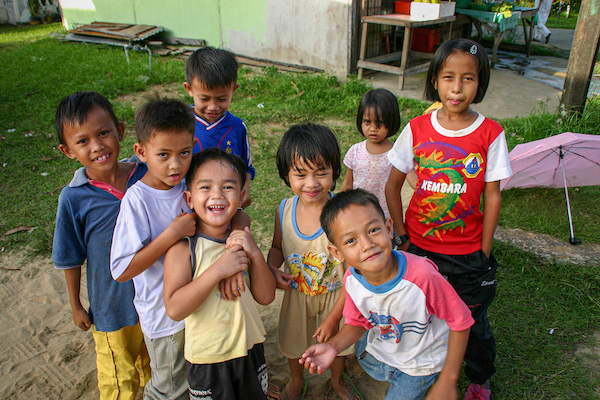
Later that evening back in the village of Kampong Santubong local kids showed off their dancing skills. They are big fans of a Malay band called The Shuffle Boys. I asked them what they were called they replied: “The Shuffle Boys 2.” We need to suggest a more imaginative name. Their friends appear, mobbing them and mobbing us…gleeful at the sight of my camera.


Bau. Next day and we’re back with William in the taxi. There are hundreds of cave systems scattered around Borneo and close to the former goldmining town of Bau are two accessible and spectacular caves; the Fairy Cave and the Wind Cave. We couldn’t take photos inside the Wind Cave as it was pitch black inside. Slippery wooden boardwalks lead you through the unlit cave system; a network of underground streams on the banks of the Batang Kayan. Using dimly lit torches we dragged William in to the caves with us; chittering fruit bats swooped and nesting swifts clung to the cave walls. Their nests are highly prized for the rare and expensive Bird Nest Soup made from bird saliva. The Fairy Cave is 5km further south and much higher up. The treacherous stone steps were replaced by a steel and concrete structure which we climbed to access the elevated cave chamber 30 metres above ground in the side of a limestone cliff. Generations of Chinese have come to make offerings in the caves leaving burning incense sticks at the foot of large stalactites. Inside we follow narrow walkways, some slippery from dripping water. Wandering off the paths away from the cave mouth it becomes pitch black, leading deeper into vast grottos and cave systems, treacherous without light…towards the back of the cave we stand at the edge of a yawning expanse of total darkness.


Near Bau is Lake Tasik Biru which fills an old gold mining area. The Chinese started mining here in the 1800s chased out during the time of James Brooke, the pits eventually flooded in 1921 forming the lake. Because of its mining history the lake is said to suffer from high levels of toxicity due to arsenic. In the 1980s locals said they had seen 3 large monsters under the lake’s surface, a medium from a nearby temple claimed they were evil and talismans were burned at each corner of the lake…the monsters driven out. William claims the lake was drained a few years after by the government to prove that there were no monsters. Other rumours allege that Japanese soldiers used the lake to dump weapons from WWII…though if any were found it’s unknown.

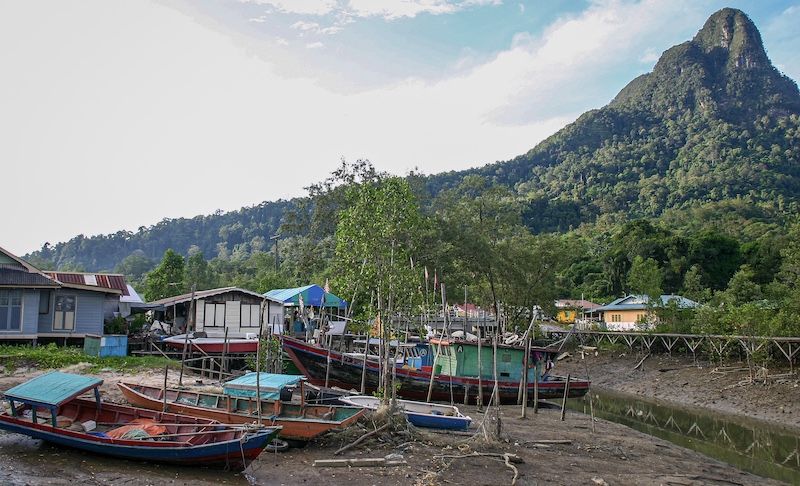
Back at Village House we wander in to Santubong, looking at the local houses and fishing boats, backdropped by lush jungle mountain. We wander to the beach where Laurence has organised a football game, some of his local friends and kids from Santubong join us. As the sun begins to set we are rewarded with a spectacular sunset.


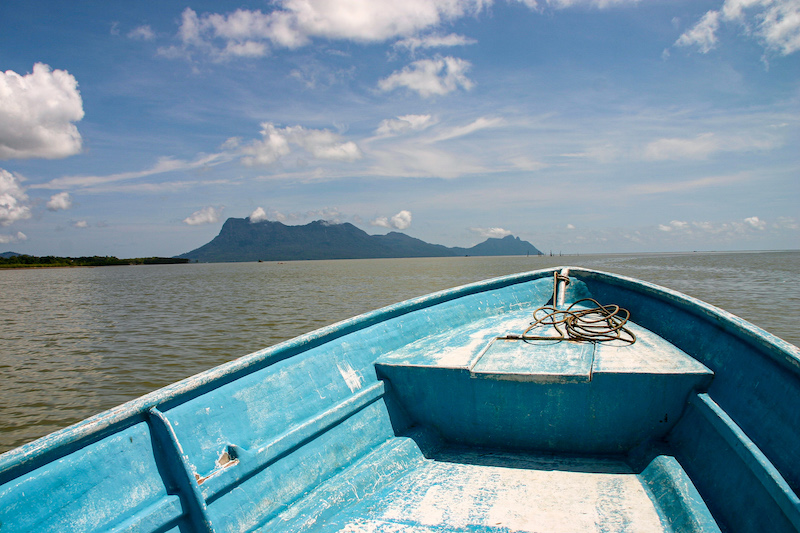
Baku National Park. So I had this great idea of a jungle trek and I just knew that once we were deep in to the Borneo jungle Dave would REALLY appreciate it….instead of making comments like “I am very happy appreciating it from the outside and from a distance”. We packed a small backpack and William drove us to the boat launch to take us out to Bako National Park where we’d stay for one night; the oldest park in Western Sarawak protecting over 27 kilometres of jungle between the mouths of the Sarawak and Bako rivers. We stopped to drift by a croc lazing on something which must have been a buoy but looked like a floating torpedo. We landed on the beach walked around the corner and got our first glimpse of the jungle we were about to venture in to.


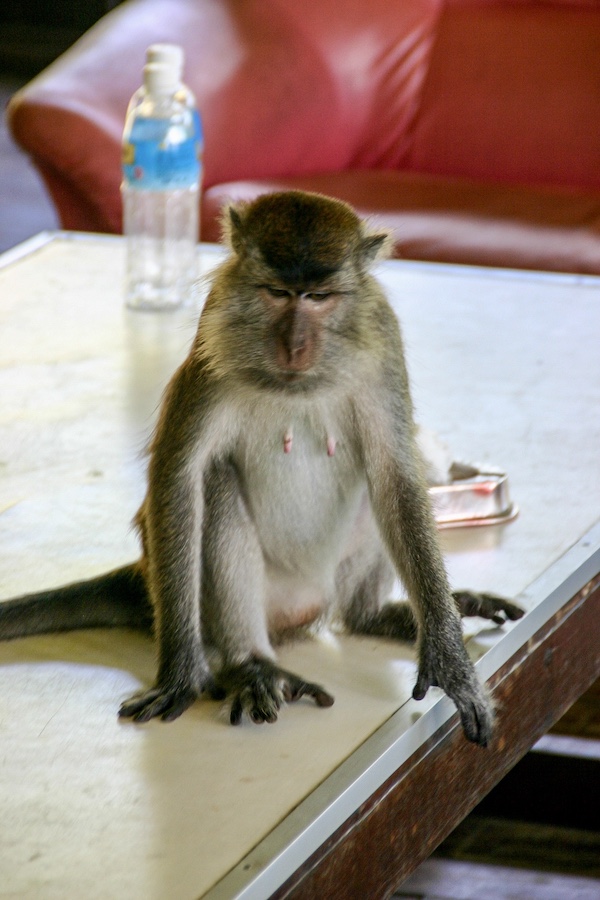
Before we could accost what looks like an impenetrable wall of jungle vegetation, (its paths are regularly cleared) we devised tactics to avoid the Macaque monkeys nicking our stuff at the registration area. You register and name the trail you are taking in case hours later you haven’t come back and they can send out the search party. Dave sorted our bag; bottles of water, insect repellent, sunscreen…and the life savers that are Pringles….leaving behind what we didn’t need at the camp. A macaque moved closer so it could get a view in to Dave’s bag…but each time I alerted Dave to look, it hilariously averted its gaze nonchalantly staring studiously at its fingernails. A male macaque arrived, aggressively slamming a stack of plastic chairs against the veranda to draw attention. They might look fun but the forestry commission has warning notices posted around the lodge. They slyly undid the zipper of a woman’s backpack, stole a plastic bag from inside, ran up a tree where they dumped the contents out; suncream, water, clothing dropping to the ground.

We set off, me in my Adidas trainers and Dave in his Fallen trainers; a great advert for what those shoes can stand up to. Adidas please feel free to contact me with big money offers. It’s humid as hell, there’s no breeze. Dave checked the map to make sure we were on the 6 kilometre trail and not one of the much longer ones…. which frankly would have killed us. The cleared path climbed gradually upwards, an assault course of knitted tree roots which we had to step through to get across, concentrating to avoid tripping. You cannot veer from the path as it’s surrounded by dense vegetation, in some places large rockfaces and deep ravines fall away. Palms, some with sawblade sharp edges, tree ferns, pitcher plants, spider webs…it’s fascinating. Photo opportunities became great excuses to stop and let my heart beat regulate. At virtually impassable sections of the trail they have built wooden staircases up the rockface, the only alternative to rock climb which is way outside our skill set.

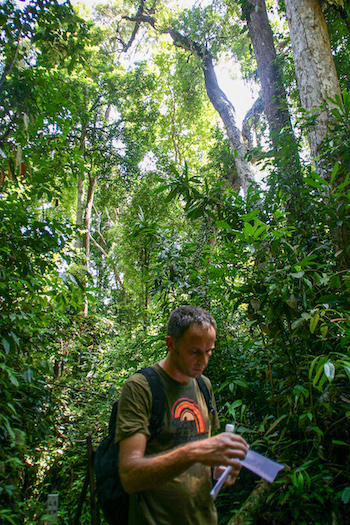
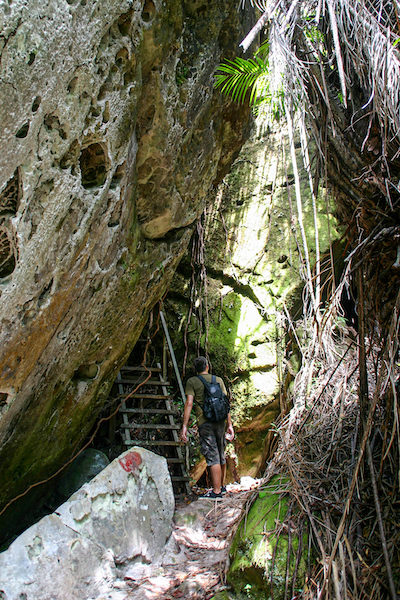

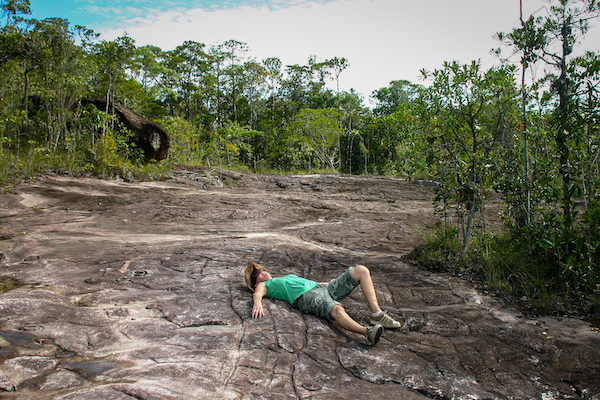
Just over 2 kilometres later – all of which was pretty much vertical (f***!)…we reached the top of the jungle clad mountain with stunning views across the sea. 38 degrees and 100% humidity; our clothes plastered to us, sweat running from arms and faces…absolutely knackered, I wanted to lie down and expire somewhere quietly.
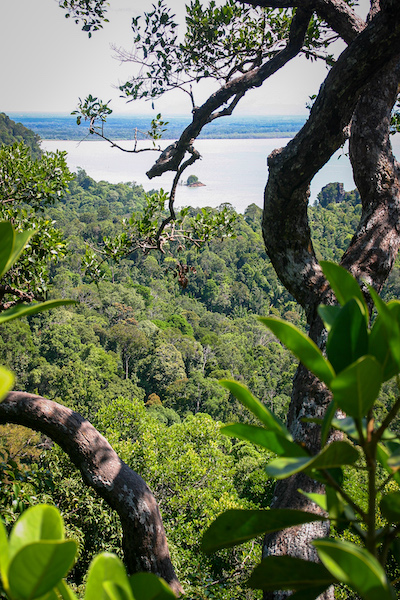
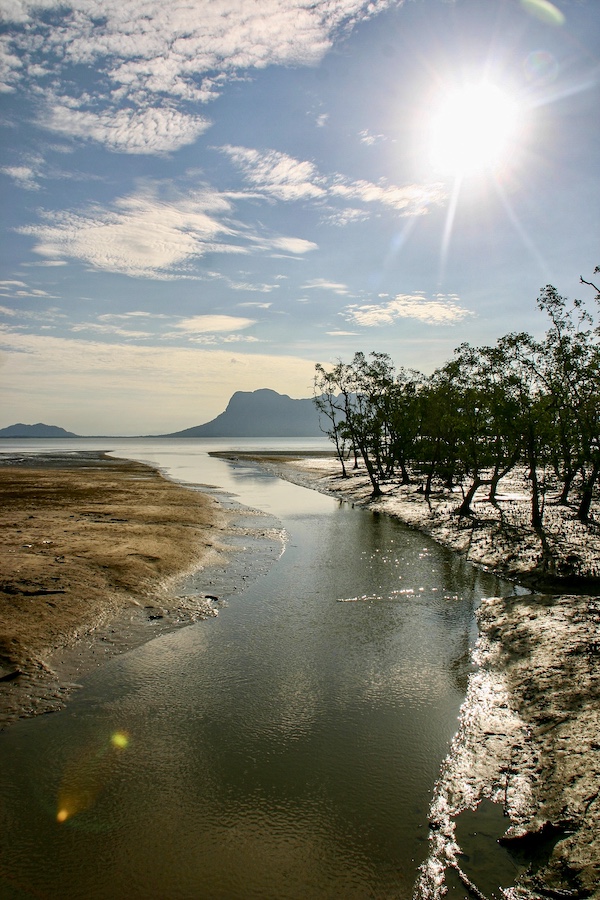
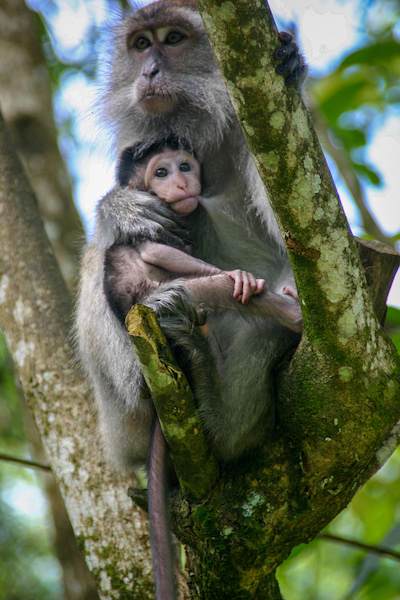
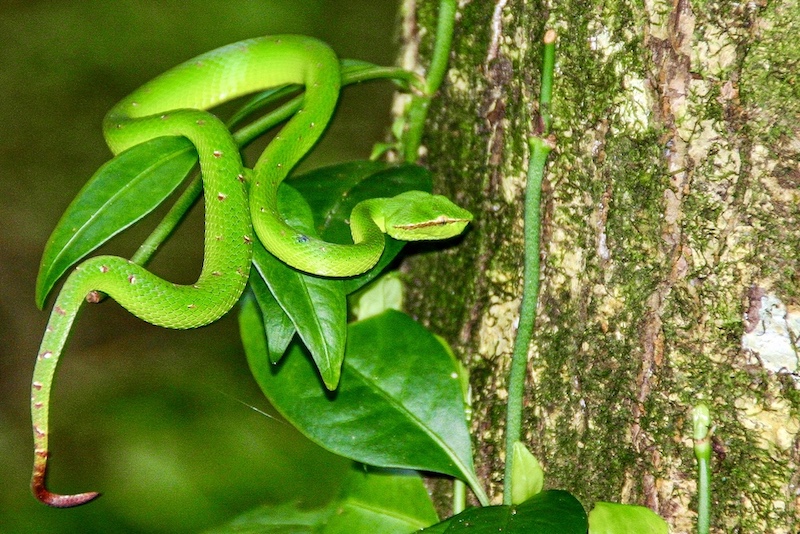
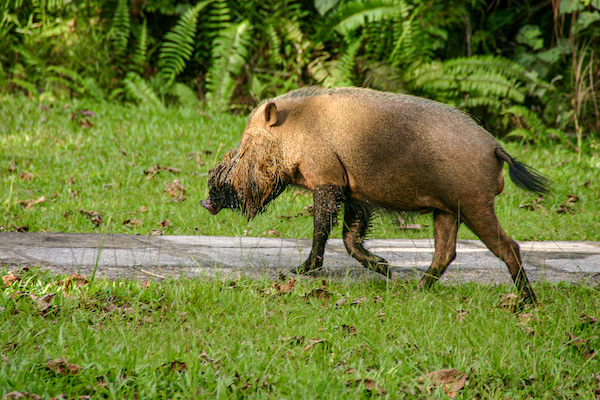
The landscape changed at the top, the trail became sandy…a welcome relief. Walking on a flat surface after so long on hard tree roots, and now thankfully heading down we picked up the pace. The landscape changed again to dark rock, slippery with rivulets of red stained water and steep drops. We finally reached the mangroves that fringe the shore 3 and a half hours and 6 kilometres later….we’d seen 2 ants, 1 spider, a massive bloody black insect which hovered over the path blocking our way because we were too scared to walk near it….and one limping French bloke who had fallen over and was hobbling back to camp. Where were the monkeys, the bearded pigs, the shy rare Probiscus monkey? Back to the camp and we headed to the caff….where we saw loads of Macaque monkeys including one nursing its young, wild bearded pigs…ugly with evil yellow eyes and can allegedly kill a tiger, 2 venomous pit vipers curled in a tree right outside the cabin we’d be sleeping in and the following morning just a few metres from the cafe, a rare large Probiscus monkey contentedly sitting in a tree eating his breakfast.

We checked in to our room and got a shock; a plastic white chair with part of one leg burned leaned against a wall covered in a large dark greasy stain…it resembled a murder scene. The bed looked like someone had just got out of it. Knowing we couldn’t leave because the tide was out and boats wouldn’t be coming back until the following morning, we resigned ourselves to covering the bed with various articles of clothing before falling asleep…so exhausted that we passed out pretty fast. Ironically one of the best night’s sleep on the trip so far.
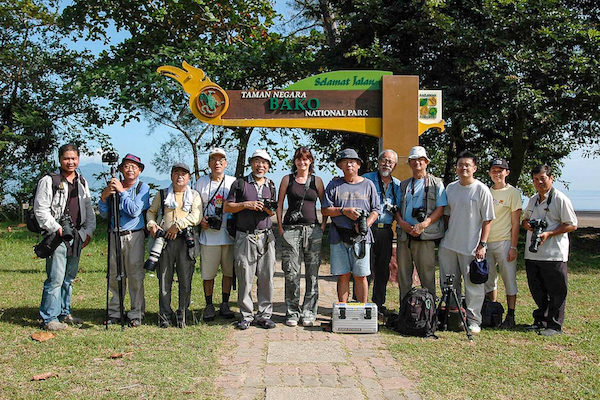
We’d got chatting with a group of gentleman from the Kuching Camera Club at Bako, leaving next day at the same time, we grabbed a group photo before heading out to the waiting boats. The man in the white baseball hat is Peter Wee and owns a camera shop in Kuching and they’re all members of the photography club that Peter’s well known photographer uncle set up in 1938. The man with the longer grey hair and blue shirt is a famous Malay artist called Rafael. Heading back to civilisation on the fast boat ride; this was the bit Dave liked the best…it only took 20 minutes!
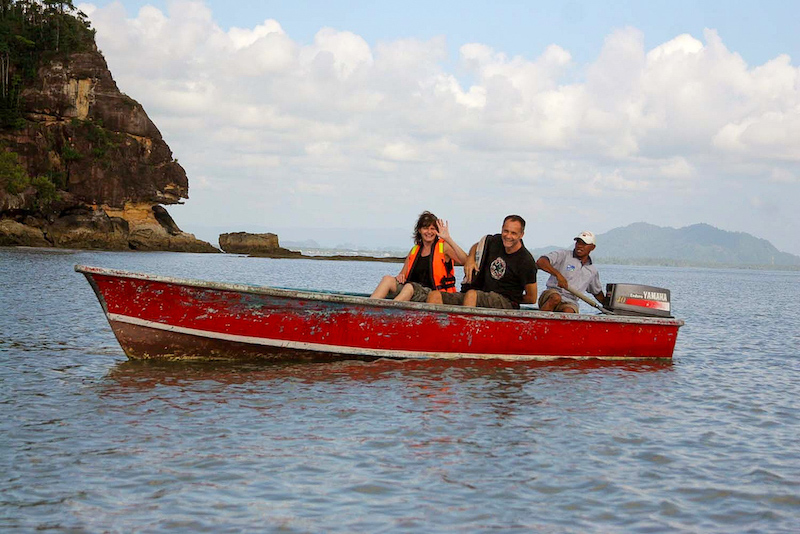
Heading back on the fast boat ride; this was the bit Dave liked the best… only 20 minutes from civilisation…hah!
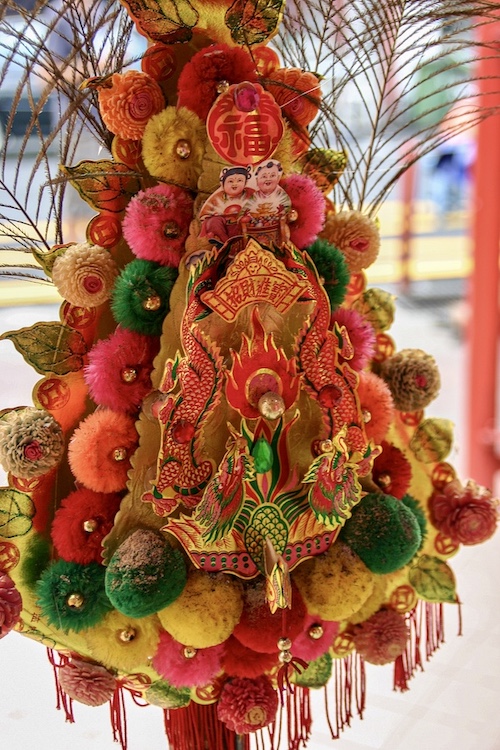
We didn’t get to spend much time in Kuching but had a wander around the small city located on the banks of the Sarawak River… visiting Tua Pek Kong Temple, a Chinese Temple with an ornately decorated rooftop featuring dragons and phoenix inlaid with mosaic. The colours and detail were extraordinary. According to folklore the British adventurer James Brooke pointing at the city asking its name…in a moment of miscommunication with his guide who thought he was pointing at a cat… received the reply ‘kucing’, hence the name Kuching. The city has since grown a reputation as the cat city. Brooke assisted the Sultan of Brunei in fighting piracy and insurgency among the indigenous peoples. In return he was granted the province of Kuching in 1841, receiving independent kingdom status and thereby starting the White Rajah’s dynasty. In the early 1960s governance was rightfully returned to Sarawak and it subsequently became one of the founding members of Malaysia.



I hope the cat ‘kucing’ story is true. There are statues of cats at several locations including the eccentric iconic cat monument at the centre of the city and a giant white cat at Padungan roundabout.
An unusual architectural anomaly in the city, Majlis Bandaraya Kuching Selatan (MBKS) or the City South Council building sits near the Padungan road; funnel shaped bold in brilliant blue and white, it is a base of administration.


One week wasn’t nearly enough and we’d love to return one day to explore Sabah and the Kingdom of Brunei and the Kalimantan regions of the south. But now we fly back to Singapore to plan the next leg of our journey…mainland Malaysia our starting point.
Comments
Vardi: So loved your comments and lovely phots….My husband, my 81 year old mother and I will be catching a ship in Hong Kong and cruising to Kuta Kinabalu and Kuching (among other places) and hoping to see the orang-utans in the wild. This should be the highlight of our trip! I so appreciated your notes on the best times to view them.We look forward to exploring Kuching and the neighbouring areas that you mentioned, however I am concerned that the bridge crossing(s) will prove too daunting for my Mum, even though she’s fit and very mobile!We also visit Nha Trang and Halong Bay in Vietnam and then Singapore.Warm regards,Vardi,melbourneaustralia (August 2008).
Chaeles Bagli: mann i love bird’s nest soup too even IF its made from spit!!! i eat it like once every monthish and used to bought from website hongkong-bird-nest.50webs.com/index_e.htm sometimes, my mom went back to hong kong and bought a full suitcase of it cause its cheaper there XD (August 2010).
 The Travel Diarist