October 2008
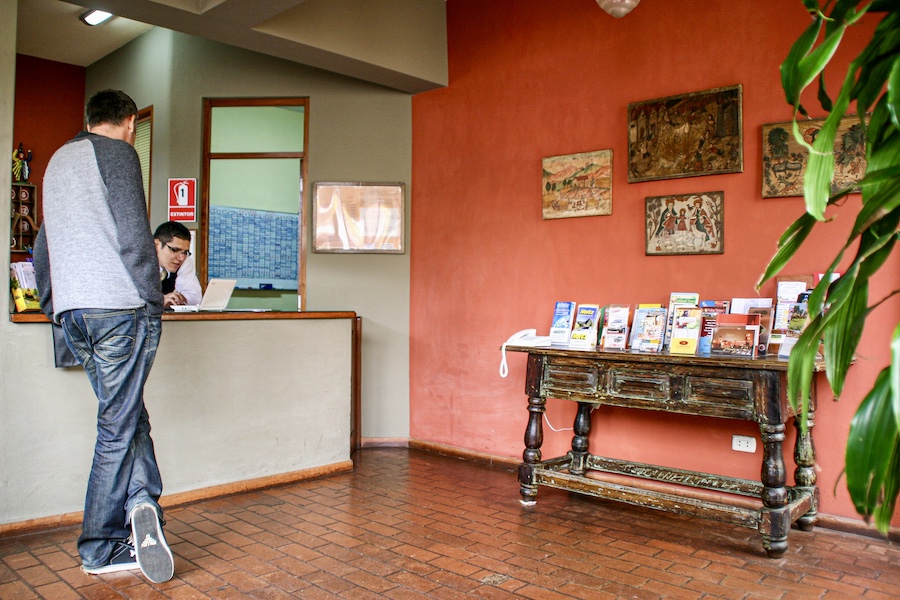
Lima Miraflores. On the 4th October we left rain soaked Guatemala and flew out of Central America for South America, to Lima the capital of Peru. We changed planes at Costa Rica, watched as they fuelled and loaded, pilots took turns for photographs in front of the engines. 5th October and we’re now in the capital city of Lima. It’s overcast, smoggy and large areas of it are a dump. It’s bloody cold and we can’t wait for the flight out of here tomorrow to Cusco, to base ourselves in the valley to visit Machu Picchu. The drive from the airport to the Miraflores region of Lima city was miserable, stifled with polluted smog. Taking a taxi, we drove along the seafront which looked like a huge building site; dirty cliffs edge a dirty grey sea under a dirty sky. The city outskirts ramshackle and poor…dilapidated one storey cement buildings smattered with broken windows. Everyone looked worn, downtrodden and broken…no-one smiled. In the more affluent Miraflores buildings grew taller, more greenery. We couldn’t get in to our preferred lodging so instead stayed in an $80 room at Habitat, a contemporary hotel which looked hurriedly erected and likely to collapse at the first tremble of an earthquake. The doors were carpentered for different frames, windows hung loose. The corridors echoed with nothing to absorb sound and doors banged all night. We had TV and a comfy bed and luckily got in to the Hostal El Patio for our second night…greeted by friendly staff, chirping canaries, a flower filled patio and the owner’s ancient dog. A lot cheaper a lot simpler a lot more character for $45 a night. 2 single beds with blue gingham bedspreads and alpaca blankets.

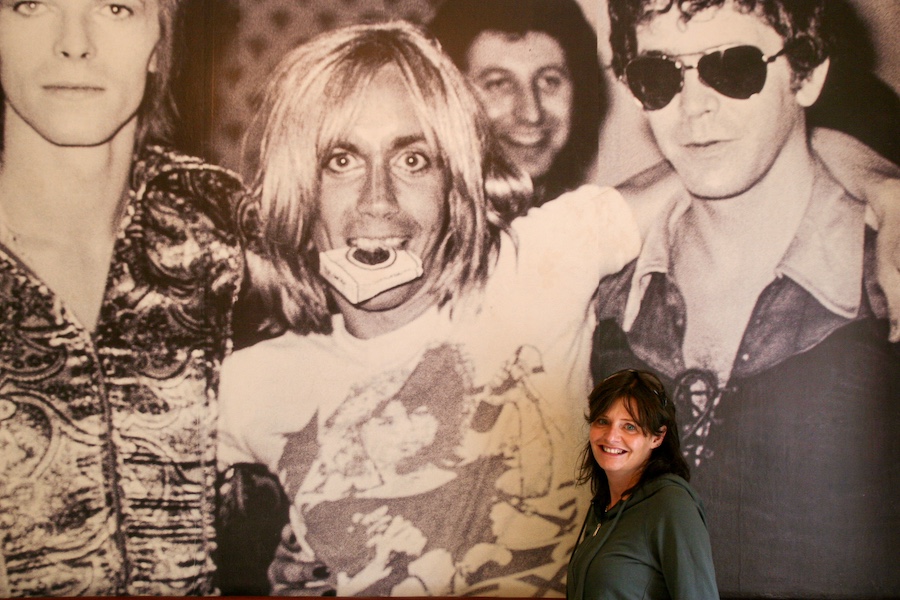
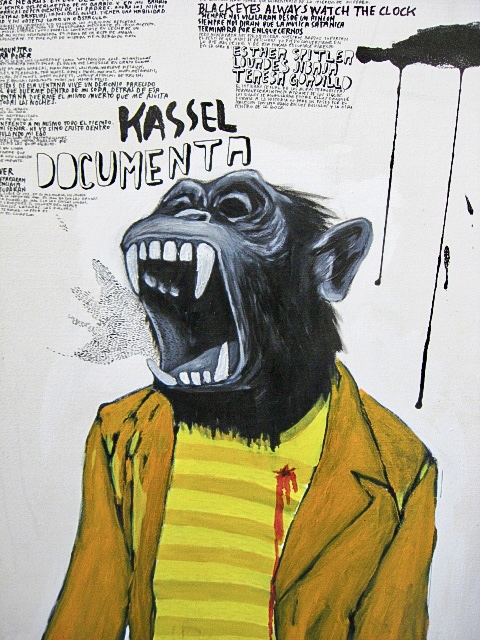
I didn’t take many photographs (I’ll regret it later) but we did find some cool places… evidence of a great music and arts scene. At an arts cafe ‘La Maquina’ we talked with Saito…in a hard core punk band and producing for two other bands. His Japanese grandparents as many of that generation did, moved as fishermen to Peru. We talked music and about the local art scene. A large wall was papered with a poster of Lou, Bowie and Iggy. A gallery in the cafe shows Peruvian artists. I wanted to buy a painting of a screaming chimp, it’d already sold for $600, we met the artist in the cafe the following morning.

Peru is known for its seafood. Taking a cab to the seafront we ate great ceviche and close to the hostel we ate seabass in a nice restaurant. We found another independent art gallery and explored basement level shops. But we couldn’t wait to leave the smog and the kids that hassled too physically close…we were looking forward to Cusco and clean mountain air. Perhaps if we’d had time to see some gigs, meet more people like Saito, go to art shows…we would have warmed to Lima more. There’s an underground arts vibe that we weren’t in town long enough to tap into.
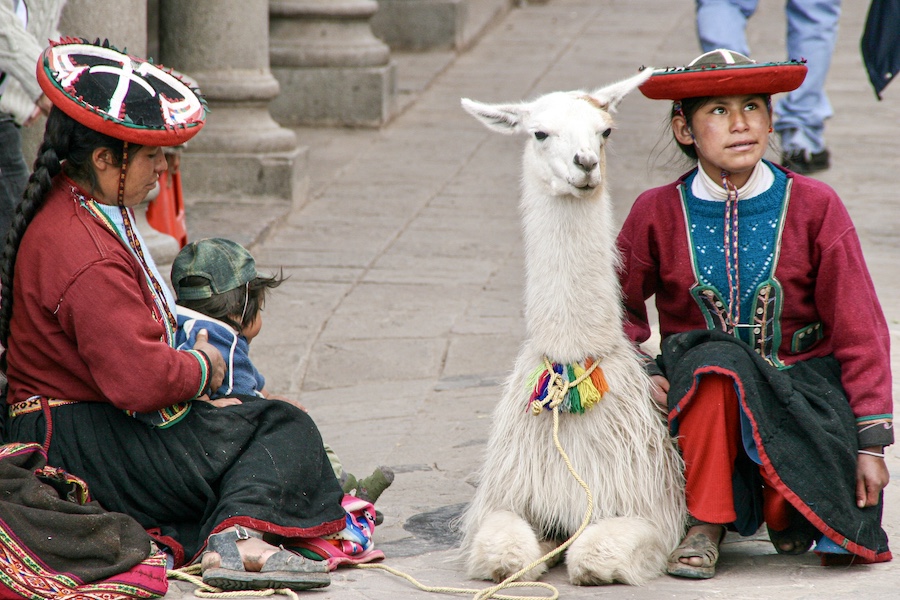
Cusco. Saturday 6th October back to Lima airport for a Star Peru flight to Cuzco. Flights weren’t as cheap or as available as we’d expected, we paid around £180 each combined for a return Lima/Cusco flight and the return Vistadome train which descends from Cusco to Machu Picchu. Luckily we’d booked the train online a few days in advance in Lima, as industrial strike action meant that no trains would run on the Tuesday and were sold out Monday and Wednesday. Landing in Cusco we followed advice to walk slowly due to the altitude difference; flying direct from sea level to 3,399 metres (11,152 feet) to mountains. The air is noticeably thinner and we experienced dizziness…hindered by steep cobbled streets which in some places were only one-man wide pavements, cars hurtling by close enough to clip shoulders. As passing cars bounced down the cobbles we’d put our backs to the wall or leap in to a shop doorway. There are llamas everywhere…it’s wonderful. Ladies in traditional dress embroidered with flowers, striped Llikllas (blankets) on their backs often hold possessions or an infant…shawls, bright colours, so many hats; Andean style (green or brown felt), bowler hats (originally introduced by British railway workers), Monteras (a large round flattish felt hat usually red, decorated and heavy), cream or white stovepipes, floppy bright cloth with doilies, upturned bowl shapes to hold things…woven, felt, straw, material. Hats can depict status, identify mountain communities…and apparently the way they’re worn is symbolic…side of the head at a jaunty angle, top of the head…depicting whether the woman is single or married, widowed, still fertile. Most are held in place with braided chin straps. Many of the men wear knitted chullos with earflaps and tassels made from llama or alpaca wool, the design most travellers buy to take home.


Our hotel room was dismal, I’m not going to name it…but falling asleep looking up at a massive damp stain sprawling the ceiling above our 2 single beds with a threadbare carpet was a bit grim at $40 a night. At least the toilet flushed; but so did the one in the room above…its plumbing navigated through ours. At least we’d eaten well in town, stuffing our faces on good quality pasta in a restaurant with a woodburning pizza oven. We checked out next morning and moved to a hostel closer to town with rooms overlooking a cobbled courtyard, only £15 a night. Cheery blue and white, different levels linked by stone steps, up wobbly wooden walkways and a communal yellow kitchen. We were welcomed with more cocoa leaf tea to help with altitude sickness, but I declined as it also makes you speedy…I’d do Dave’s head in.


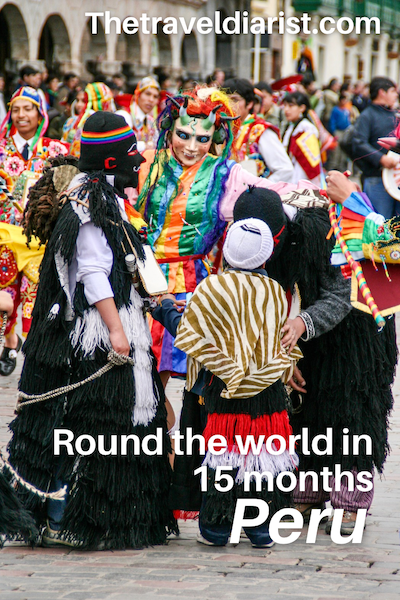
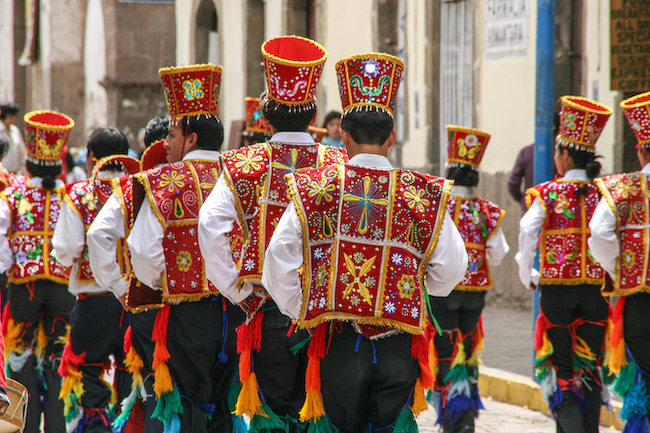
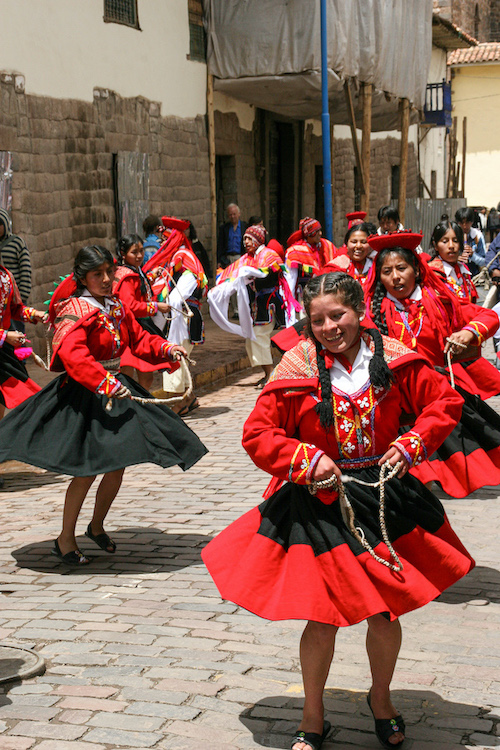
7th Oct: An eventful day on the streets of Cusco. We walked out of the hostel straight in to a passing religious procession for (we think, though may be wrong) the Saint Virgen Navidad or part of the Corpus Christi celebrations. Men carry a decoratively clothed Catholic effigy on a wooden platform above the heads of onlookers, surrounded by people performing a traditional Peruvian dance. The female dancers whirled in skirts whilst male dancers lunged, flapping oversized white shirt sleeves around their heads as musicians beat out a marching rhythm on drums accompanied by trombone and trumpet. Masked dancers with crowns of feathers move among the fantastic whirl of colour as they danced down the cobbled street and out of sight. Locals tell us these processions are frequent…so many religious and cultural festivals in Peru.



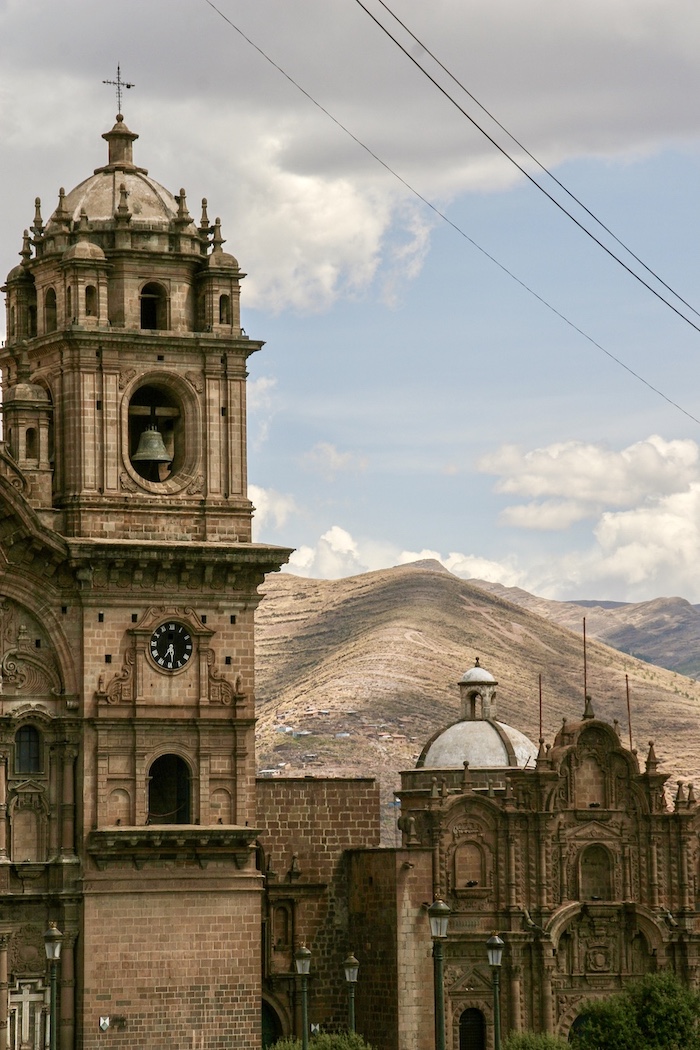
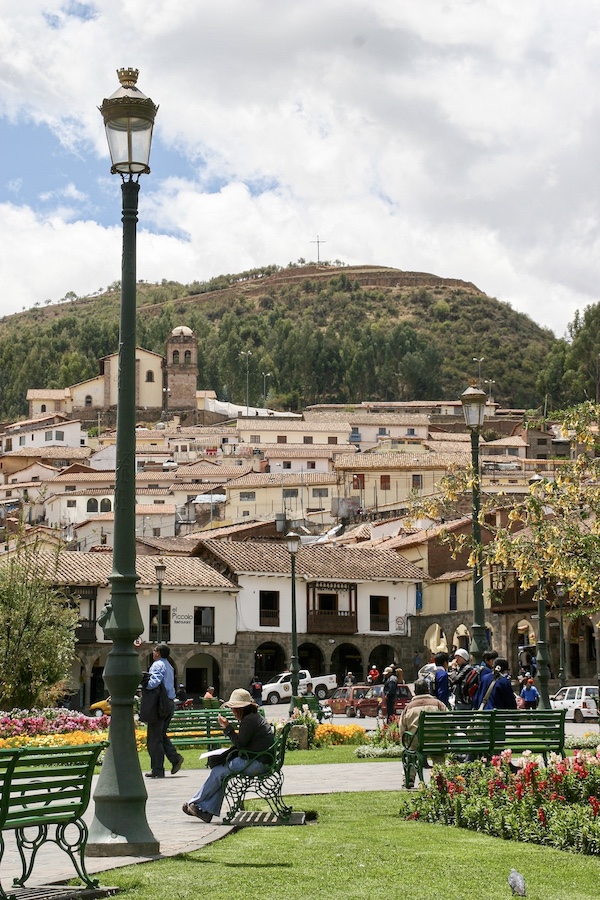
From our hostel the road turns a corner in to a larger street opening on to the Plaza de Armas, a handsome main square dominated by the Cathedral Basilica of the Virgin of the Assumption (1668). Life spills out everywhere in every colour…upstairs balcony cafes, shops…stone colonnaded walkways…there are plenty of other tourists here.


And after the religious procession we encounter a political protest marching through town. Demonstrators rallied for several hours against the ruling President, Alan Garcia Perez; Presidente de la Republica. Slogans posted on walls around the plaza accusing Perez of selling Peru out to Bush and America. Cardboard effigies paraded, flags, banners and pennants. It was peaceful apart from the bangs of exploding firecrackers and the occasional small fire set on the street. Police dressed in riot gear with shields flanked the square.

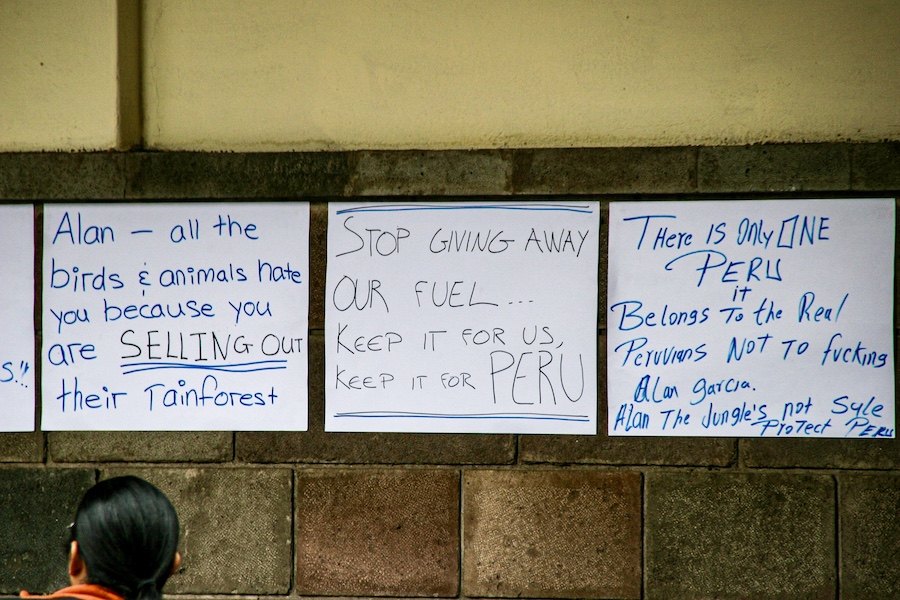
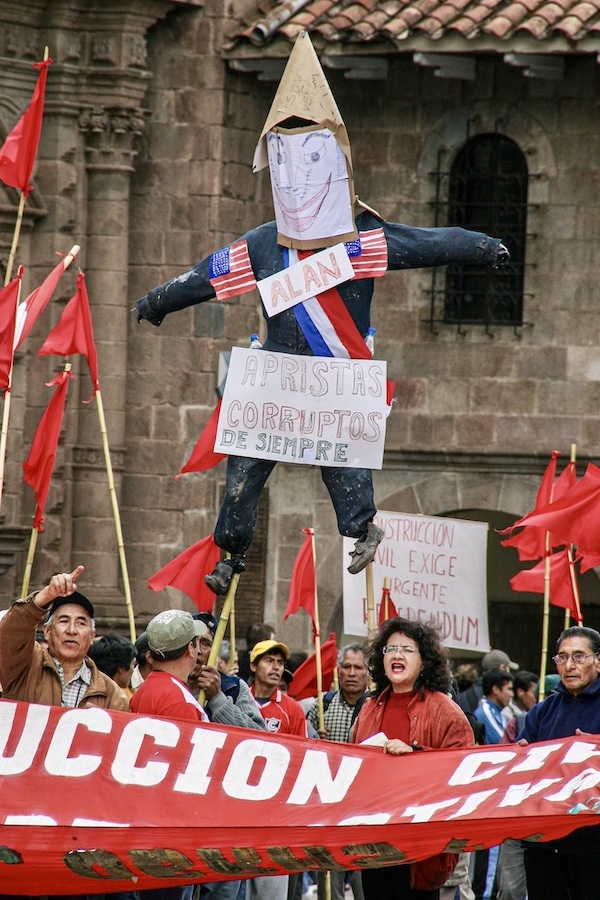


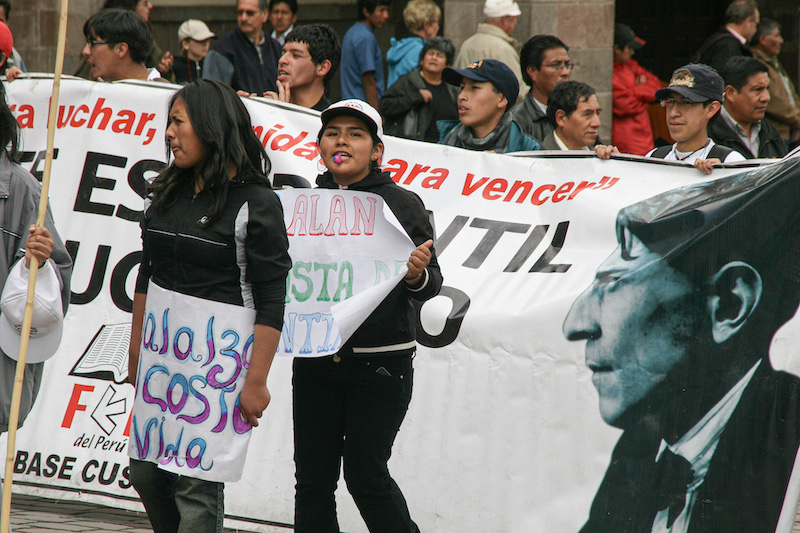

But then it started raining….really raining…crowds dispersed as everyone ran for shelter. People rushed with children, llamas, lambs and banners to take cover under the stone colonnades of the plaza. A sea of primary colour plastic ponchos emerged…someone was doing a roaring trade.

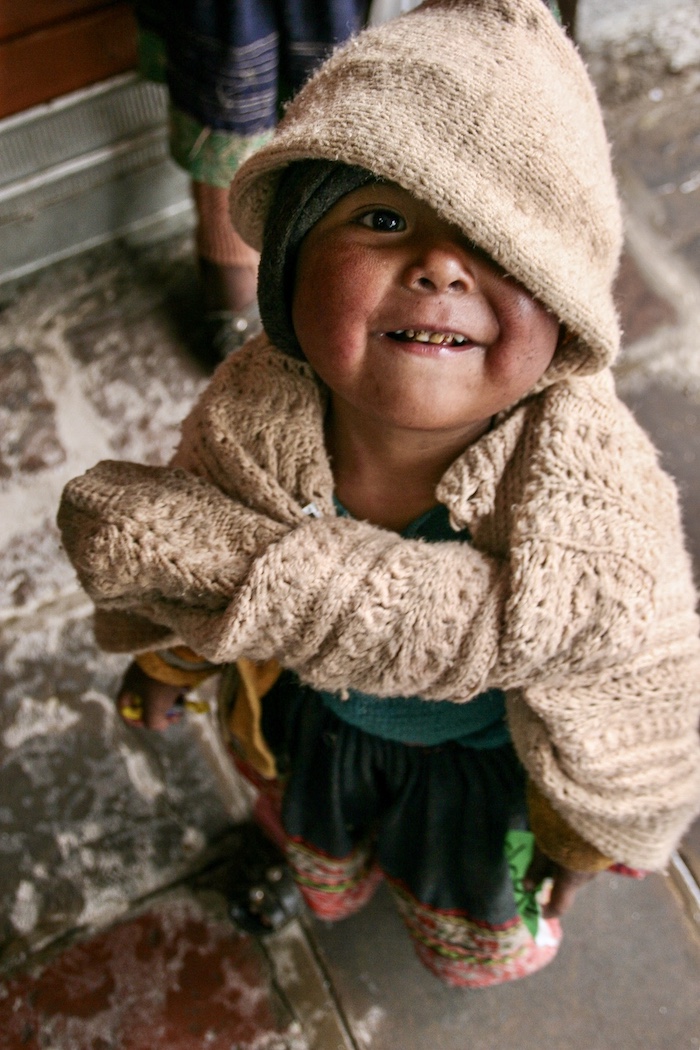
Another day walking out in to another festival featuring mountain dances and costumes. We think it’s the religious festival celebrating Corpus Christi which takes place over several days. It’s an incredible experience, so much colour and life. Costumes are elaborate, all ages are parading. Qhapaq Qollas meaning ‘Mighty Indian’…half human half llama wear knitted white balaclava masks made from dyed llama wool called Waq’ollo or Second Face. Black painted masks represent ‘Negrillos’ the African slaves forced to work in the mines in the 18th century. ‘Doctorcitos’ or ‘Siqllas’ holding a law book and a whip are comedic performers representing lawyers, they wear masks with exaggerated European style noses which poke fun at colonial authorities. We think the masked performer with wild pink hair represents a ‘Son de diablo”…a dancing devil.


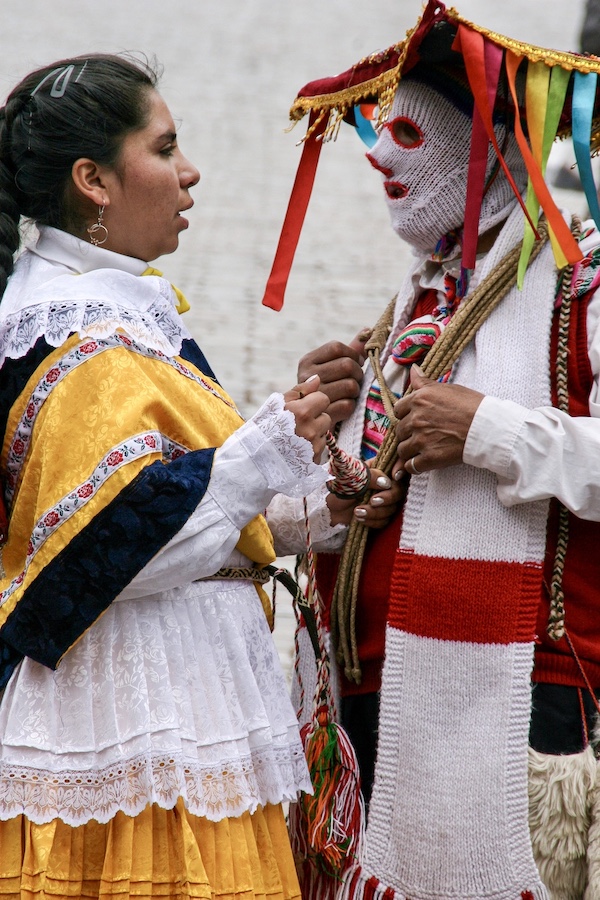
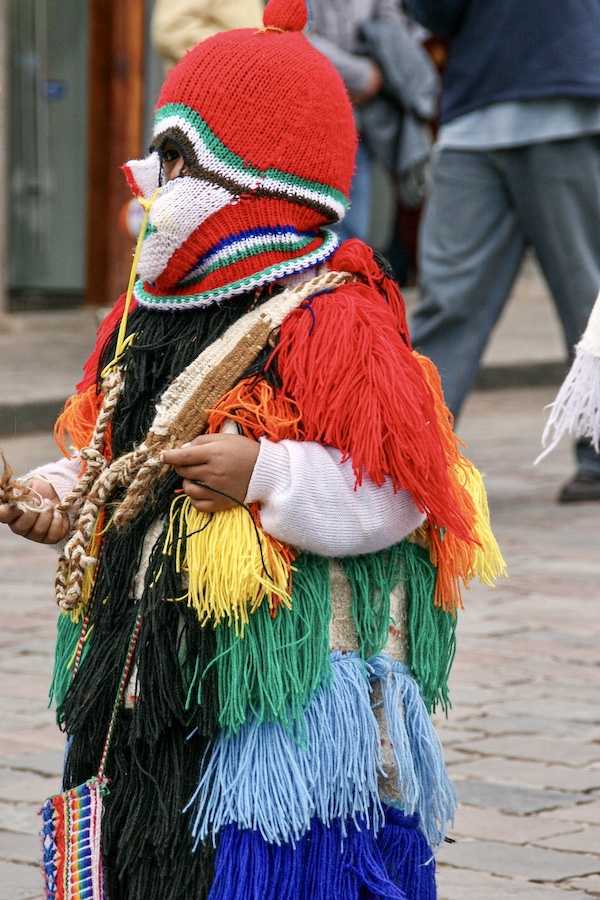
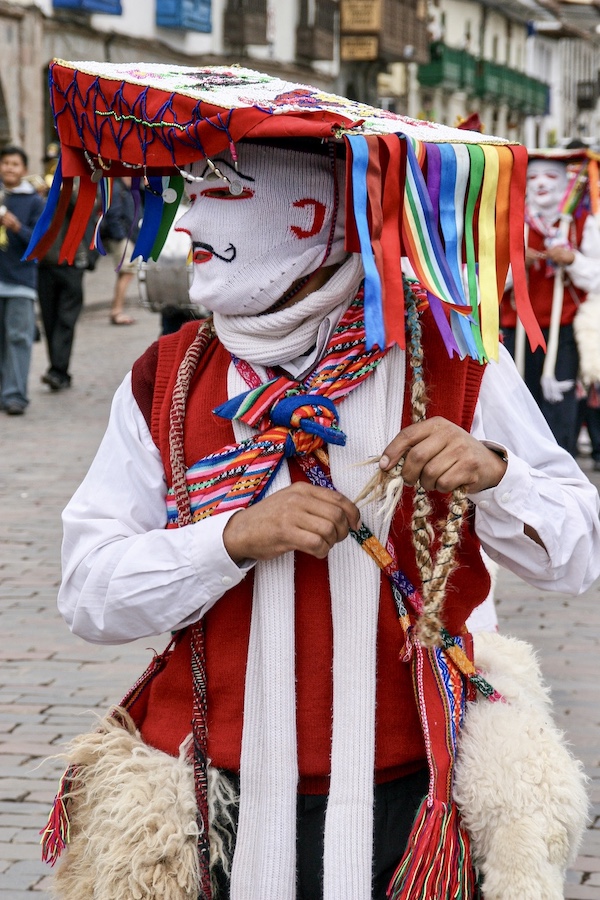
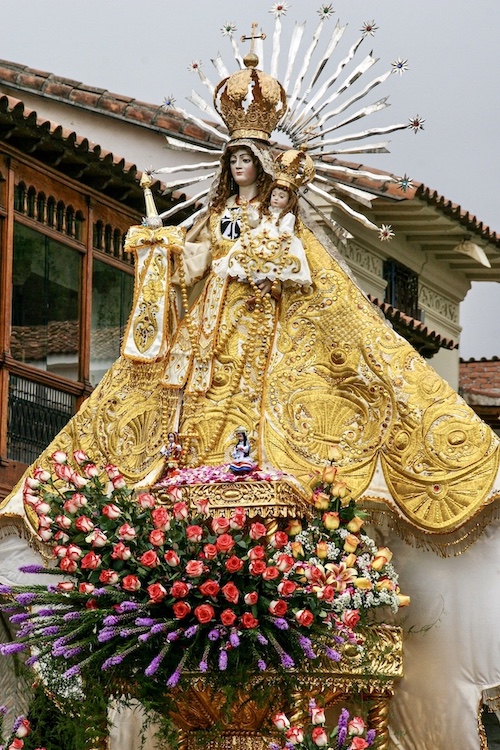
And another Catholic procession of Saints. There are so many, I profess ignorance of which saints…glorious to see. The arrangements of flowers on the dias of each is beautiful.

There is so much going on in this country…but our main reason to visit was fulfilled yesterday, to marvel at Machu Picchu. A mindblowing sight…the skill and grace, the ingenuity…deserved of its Seven Wonders of the World status. Forgoing the 4 day guided trek we took the Vista train, leaving San Pedro station in Cusco at 6.15am with a requirement to be there 20 minutes early. 4 hours through switchback mountains to Aguas Calientes, the nearest town to the Machu Picchu site also known as Machu Picchu Pueblo. The train tickets had to be booked in advance; the vista train $71 per person return, the backpackers’ train was $48 dollars return but without the large viewing windows. We booked with Perurail.com having to collect the tickets from another train station in Cusco in advance taking our passports for ID. Dave and a fellow traveller Jun got talking, he was using GPS to check altitude readings, the descent from Cusco to Machu Picchu is around 1500 hundred metres.

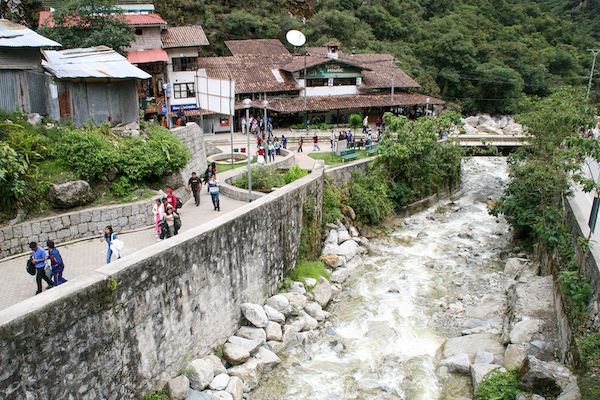

We pulled in to Aguas Calientes station, bombarded by touts we made our way through the tourist market ignoring proffered bottles of insect repellent (regretfully) and across the fast flowing river to the queue of buses…$14 per person return to take you the 30 minutes up to Machu Picchu. The alternative was to walk a steep trail on a scorching hot day adding another hour. We were pushed for time, wanting to use it to explore the site. The bus wound upwards zigzagging a road wrapped around the mountain. The wheels threw up dust and rock chippings. The higher we climbed the more dramatic the scenery…mist haloed the peaks and a mass of trees created a luscious greenery. The wheels bit in to loose stone, the bus negotiating tight spaces at the lip of the road to allow downward buses to pass. At the entrance we were swallowed by masses of people…tour groups, long queues at the toilets and restaurant, tourist trinkets for sale. It was already 10.30am…an overnight stay in Aguas Calientes to join an early morning sunrise trek to the site at 4am would have avoided the crowds. It’s naive to expect to arrive at such a site and not experience crowds. It was also naive to turn up without enough money. There’d been a significant increase in the entrance fee compared to the info we’d been given, now $40 per person cash only….credit cards not accepted. We had a frantic few moments thinking we’d come all this way to be only 70 Soles short. We swallowed our pride and asked around to see if anyone returning to Cusco later could lend us the money. After a few refusals, a young English backpacker called Tom loaned us 100 soles so we could get in. Tom if you’re reading this, you’re a star. It’s great to know that independent travellers have a sense of community and will help each other out. 100 soles is around £15…without it we wouldn’t have got in. We met Tom later that night in Cusco, paid him back plus some extra…which Tom then donated to a charity helping Peru’s orphans justgiving.com/davidmcelhoney


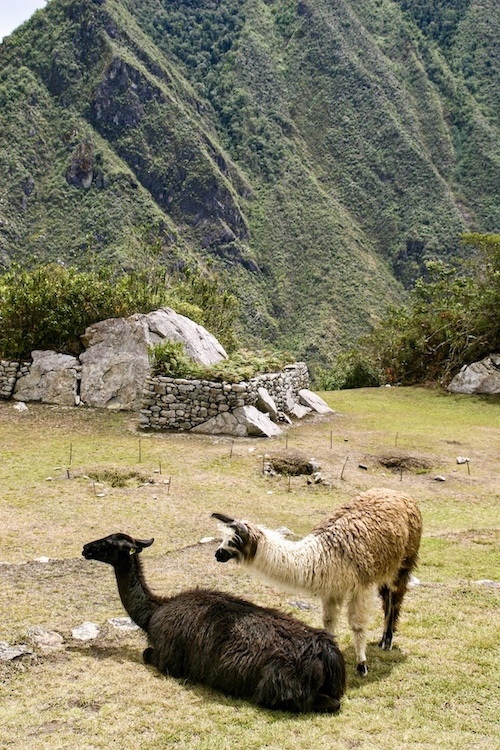
It’s still a mystery of historical speculation how this citadel (established circa 1460) came about and was later abandoned. The Incas built it by hand; no machinery, no packhorses…only llamas moving huge granite rocks. There was no written language and it wasn’t chronicled by the colonising Spaniards. Apart from the indigenous Quechuas, Machu Picchu remained undiscovered until (allegedly) American historian Hiram Bingham led by a local boy came upon the overgrown ruins in 1911 whilst searching for a different site…the lost city of Vilcabamba, last stronghold of the Incas. Local belief is the site was discovered by a mountain dweller which seems plausible; an indigenous person wouldn’t have been able to record or broadcast their discovery. We spent a couple of hours taking in the jawdropping setting and admiring stonemasonry formed with basic tools. Hopelessly unprepared for the sweltering sun (accustomed to cold and rain in Cusco), we’d come with thermals and waterproofs, instead suffering sunburn and relentless insect bites from swarming tiny flies…but incredible clear views for miles. Back in Aguas Calientes we ate at a restaurant with outdoor tables where baked guinea pig was on the menu for £10…served to the table next to us in its original form; skinned, roasted, with teeth and claws intact. We gave it a miss. We returned to Cusco on the reverse bus and train journey…me scratching at my arms…covered with hundreds of tiny bites.

Clear sky for our final day in Cusco. We walked the city again, discovering more alleyways, everywhere busy with people amid a relaxed atmosphere. We have both really enjoyed our time here and have seen and experienced so much in a short time. We fly back to Lima tomorrow to leave Peru for our next destination. And I itched and scratched all the way to Argentina on the plane…the first thing we did in Buenos Aires was visit a chemist. I thrust out my arms and was rewarded with a large bottle of chamomile lotion. When they try to sell you insect repellent in Aguas Calientes, realise there is good reason beyond the hustle!


Comments
Lucy: 7 Oct 2008. hey leza – ah you poor thing having to work so hard to get the blog sorted!! and i thought you guys were taking it easy!the photos of guatamala are so colourful – the boys said they can almost imagine they are there themselves.hope you get to the cinema dave!luv lucyxx
 The Travel Diarist