Oct/Nov 2008

Flew from Peru and we’re now in Buenos Aires in Argentina eating steaks as big as our heads in ‘Desnivel’ restaurant near our small Hotel Babel in the San Telmo district. We have a very comfortable room for £38 a night room, a treat after the hostel stays in Peru. Through the hotel we’ve bought tickets to see one of the most infamous football games in the world, Boca vs River at the 65,000 capacity River stadium on Sunday. We can only go as part of a VIP tour because the match is famous for passionate clashes between teams, rivalry that runs deep between their fans…a history of stadium seats ripped out and thrown at each other, pitch invasions and fireworks being randomly lobbed; so apparently we will be kept safe in a VIP box!
But first things first…we visited Recoleta to see where Eva Perón is buried. The cemetery holds the graves of some of the most influential and important people of Argentina including several presidents, scientists and wealthy families. Crowded with elaborate marble mausoleums and statues, laid out in sections like city blocks with wide tree-lined avenues leading to smaller ones weaving between the graves.

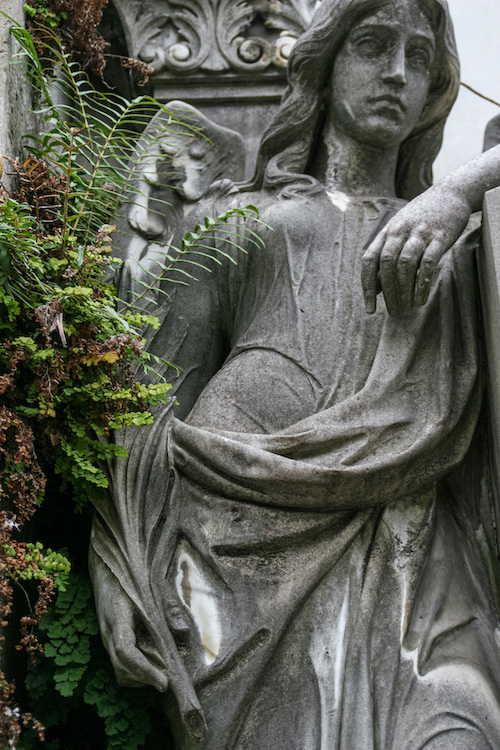
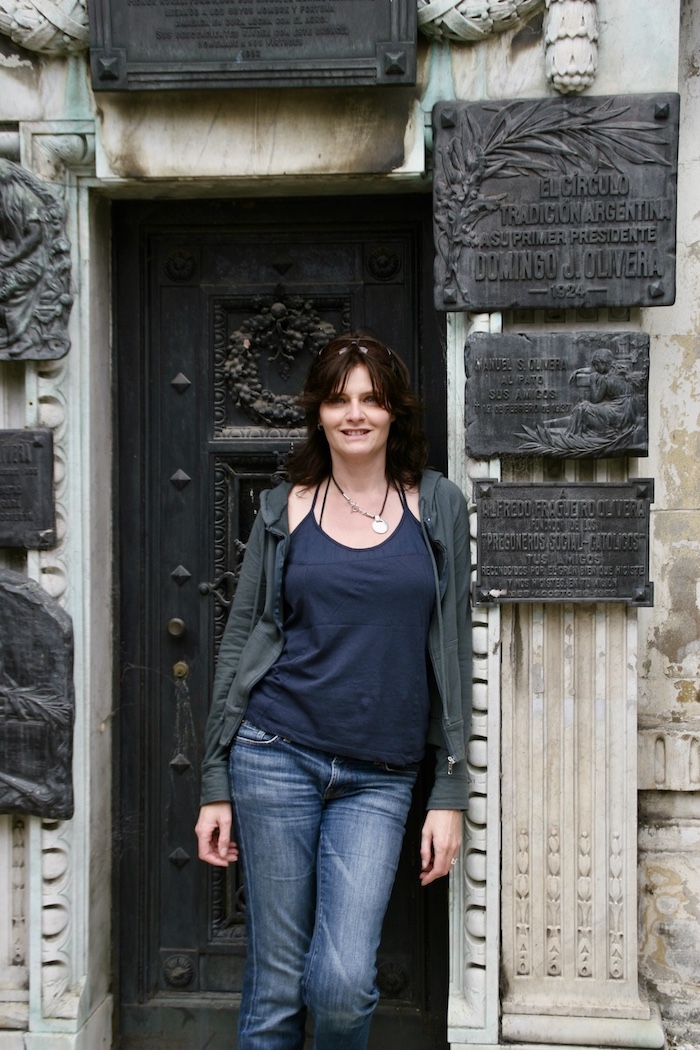


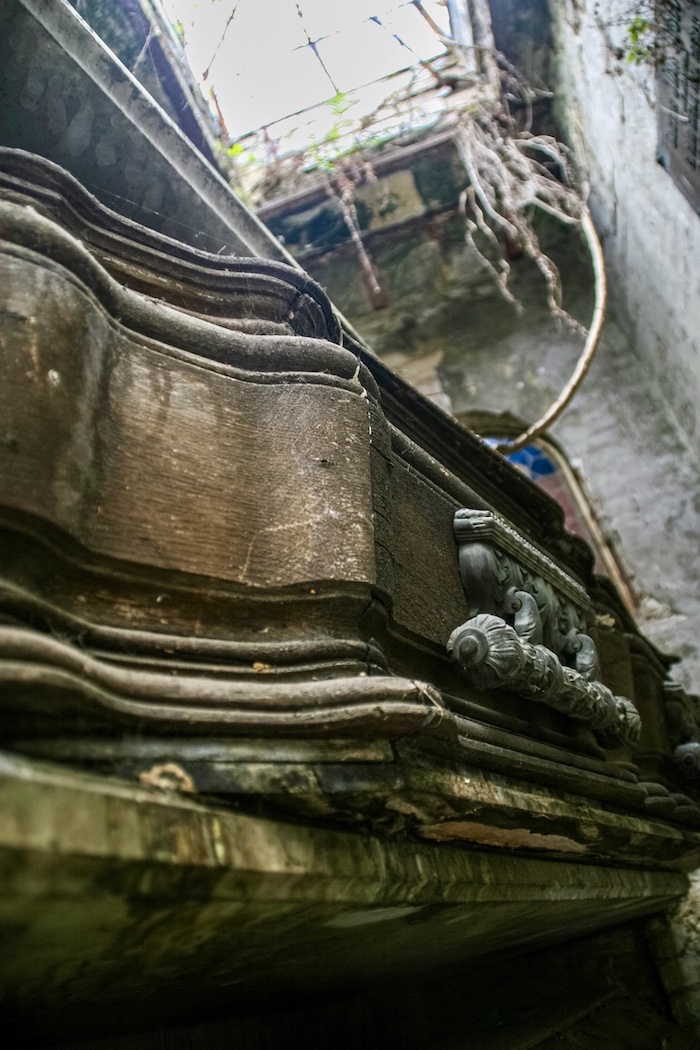
While many of the mausoleums are grand and well maintained others have fallen into disrepair due to years of neglect; broken glass skylights, rotting lace draped over coffins, crumbling plasterwork and collapsing entrances. It lends the cemetery a particularly gothic atmosphere. We peer through broken glass and crumbling brickwork to the coffins inside. Each mausoleum bears the family name etched into the facade; brass or bronze plaques are added to the front for particular family members. La Recoleta is a cemetery where the tradition of engraving a death date but no birth date has been maintained. There’s a colony of feral cats living here, gathering in their dozens near closing-time when locals feed them.

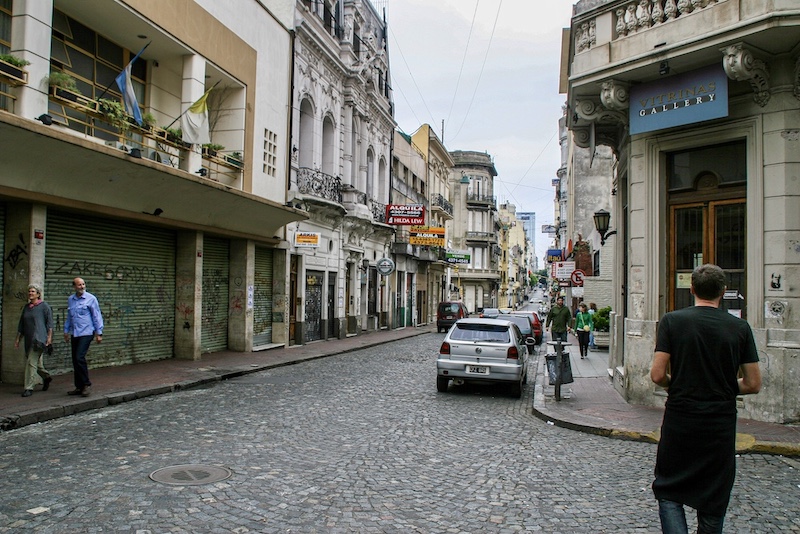
We’ve found some great little cafes and bars in San Telmo, it’s our favourite neighbourhood and there’s a fantastic atmosphere especially in the San Telmo street market on Sundays with musicians playing and locals trading crafts, jewelry, old posters and antiques. Groups of drummers gather to play into the night collecting people en route in to an ever growing train of revelry as they play through the cobbled streets…a rhythmically swaying drinking hollering mad procession. It is fantastic fun.
We’re walking miles around this great city. It resembles Paris with its pale architecture wide boulevards and balconied apartment blocks…and the dog shit everywhere. It’s gritty, an edge to it, but more welcoming than Paris. The Argentines present more as European than South American, there’s a snobbishness to it also familiar from Paris, but directed at other South Americans more than to visitors. Its sensibility is quite disorientating travelling here from Peru and the Central American countries. Police officers on a Metro platform warn me against carrying my SLR camera openly so I keep it hidden in a plastic grocery bag, the strap wrapped firmly round my wrist. We don’t feel prey to muggers or pick pockets, we’ve lived in London a long time and this feels like other sprawling cities…be aware of your surroundings and be street smart.



Falklands war veterans have a permanent protest camp set up in one of the city squares. We are very aware of being british, we didn’t believe in the conflict and we don’t believe in ownership of the islands…but we are wary of our english accents when passing the camp and don’t engage. There’s new development near the riverside, a rotating Calatrava footbridge called Puente de la Mujer (Woman’s Bridge). There’s Tango everywhere, in the bars, in the parks…we watched a couple practicing in a square in San Telmo.


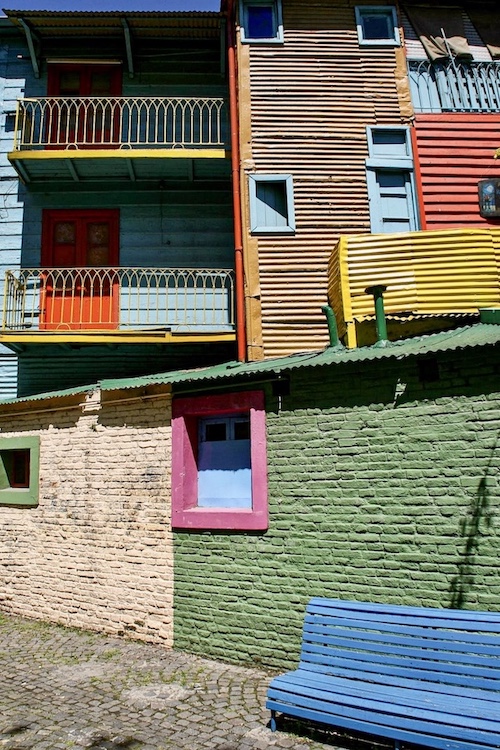
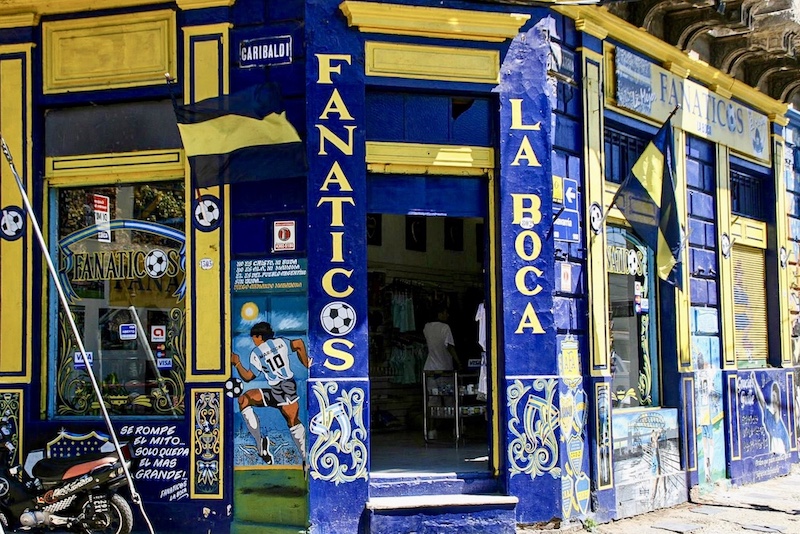
We explored La Boca barrio (neighbourhood), boca meaning mouth possibly referring to the river. Home to the infamous Argentine football club Boca Juniors who Maradona played for. It developed originally through the influx of immigrants to Argentina, many from the Italian region Liguria and is known for Porteno culture…being close to the port and is an important site in the history of tango. Also known for its radical politics it’s a poor high crime area but a couple of streets have been squarely aimed at the tourist market with souvenir shops, cafes, bars which lend the area a forced ‘fakeness’, but if it turns over money for the locals it’s obviously a good thing. The houses made from corrugated tin and wood are painted in bright colours but I only take a few photos…there’s so many other tourists that it doesn’t hold our attention and we left after 40 minutes.

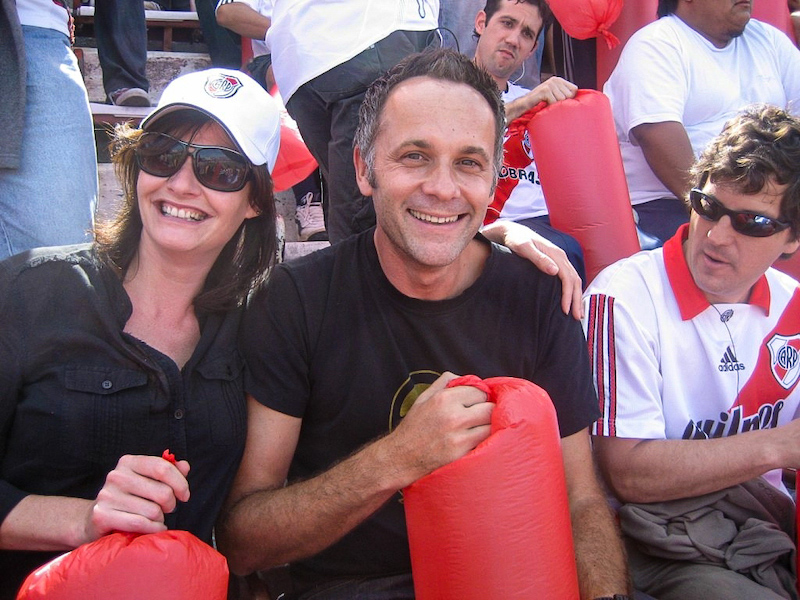
It’s Sunday 19th October, day of the Club Atlético Boca Juniors vs River Plate football match at River Stadium. The game itself was poor with only one goal scored. 1-0 to Boca. 60,000 River fans and only 2,000 Boca fans. Controlled ticket sales to prevent after-game carnage from fighting; Boca and River are huge rivals and matches are infamous for trouble. We were taken in a guided group for safety and sat in the River stands. We haven’t got a dog in the game but I wore a River hat and we were given large inflatable things to bluster with. We got in to it but couldn’t chant not knowing the language. A local school headmaster sat next to Dave translating the insults, he warned us jokingly that the celebratory atmosphere leading up to the match was often more impressive than the game itself. He pointed out the really hardcore River fans coming in to take their seats behind the goal…their entry delayed as police frisk them for weapons.
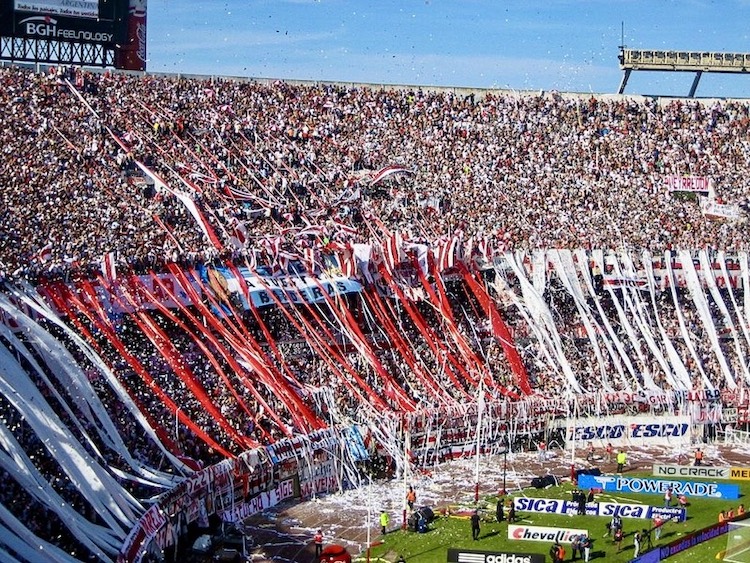
The atmosphere was electric. Fans leading up to kick off were super charged; setting off smoke bombs and waving huge flags. Super long red and white streamers unfurled through the crowds as tic-a-tape showered over the River stands. A large group of drummers entered, the noise fantastic, followed by another group twirling oversize red and white umbrellas. Firemen were on standby to hose everyone down if it got out of control. The Boca fans were contained by 12 foot high fences and barbed wire flanked by riot police and more firemen. A shame more goals weren’t scored, it would have been fun to see 60,000 River fans go bonkers.
Boca Juniors get mobbed by press photographers but fans daren’t run on the pitch, they wouldn’t get by the riot dogs and police. All the photos were taken by an American couple on the same tour, I didn’t want to take my bulky Canon SLR and chance it getting smashed…so a massive thanks to Zee and Joy for making the effort and emailing these to me the next day. Hope you had a good flight!

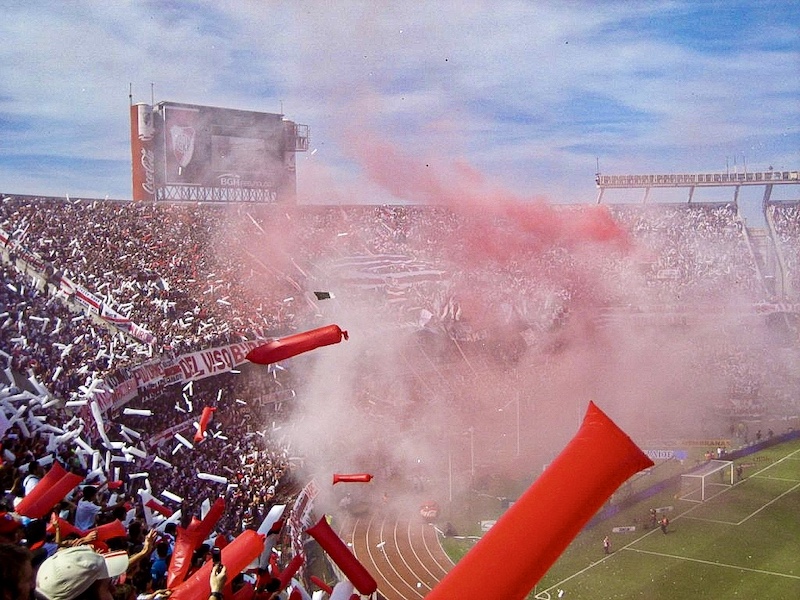
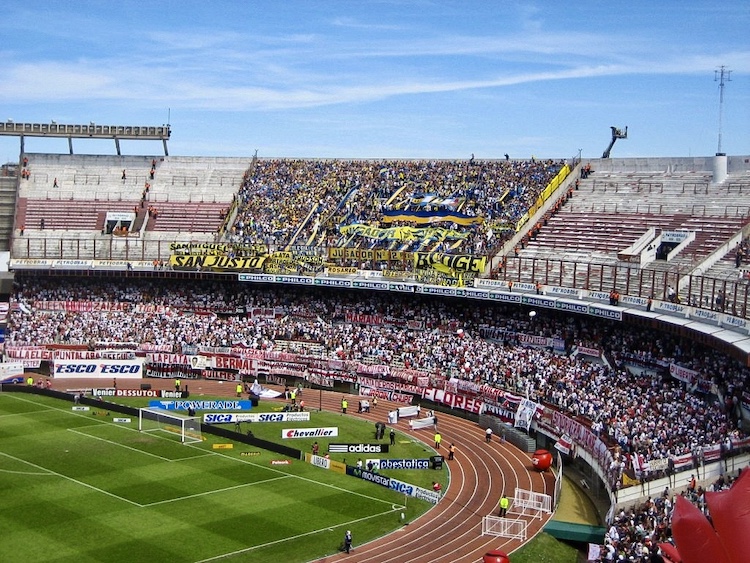
Dropped back at the hotel in time to meet up with my old boss Jonathan from Caroline Exports where I worked in 1988. By fabulous coincidence he was passing through Buenos Aires with his wife Clare on a business trip to Uruguay. We ate the aforementioned giant steaks in El Desnivel along with Natasha who we’d befriended at the hotel. The waiters (including our favourite Elvio), all River fans, were crying in to their Mate drinks at the game result.
Patagonia; Puerto Madryn, Punta Tombo Penguin Colony. We’re in Patagonia, been here a few days in this wind blown barren expanse of low growing shrubs amid stretching miles of arid nothingness under a huge sky. We took an 18 hour bus trip from Buenos Aires here to Puerto Madryn to see the penguin colony and to go whale watching. Luckily it was a (squirrel promoted) cama ejectivo bus; a large squashy seat which reclines a long way back with a pull out padded board for your legs…not a bed but way more comfortable than your average airplane seat in economy and a lot cheaper than a flight. Add the on-board movies, food, toilet and waitress service…and 19 hours flies by. We left Buenos Aires at 3pm, watched 3 movies, ate dinner and fell asleep around midnight. All this for around £24 each. A brief security stop just after midnight woke me when a guard boarded the bus to shine his flashlight on us all…and looking out of the window I noticed they’d taken all the bags off the bus so the sniffer dogs could have a wander through them. We were cleared and continued on with everyone dozing off again, waking around 7am for breakfast and pulling in to Puerto Madryn around 9.

A few notes of trivia; Patagonia was thought to be named after the Tehuelche people’s moccasins which made their feet appear huge. Pata means foot in Spanish. Charles Darwin spent a lot of time researching animal species here, Bruce Chatwin’s most well known book is ‘In Patagonia’ and Butch Cassidy and the Sundance Kid went on the run and hid out in the mines.
Wednesday 22nd October we took a tour to Punta Tombo, a peninsula in the Atlantic Ocean 68 miles south of the city of Trelew in the Chubut Province of Argentina. A strictly protected colony since 1979 Punta Tombo is the most important Magellan Penguins colony in Patagonia and the largest of its kind in South America. The 1.9 mile long 1,969 feet wide peninsula is covered with sand, clay and gravel where between September and April up to half a million penguins arrive from Southern Brazil to incubate their eggs and prepare their offspring for migration. Couples stand in front of their nests/burrows protecting the eggs from predators and one adult will make frequent trips to the sea for food.

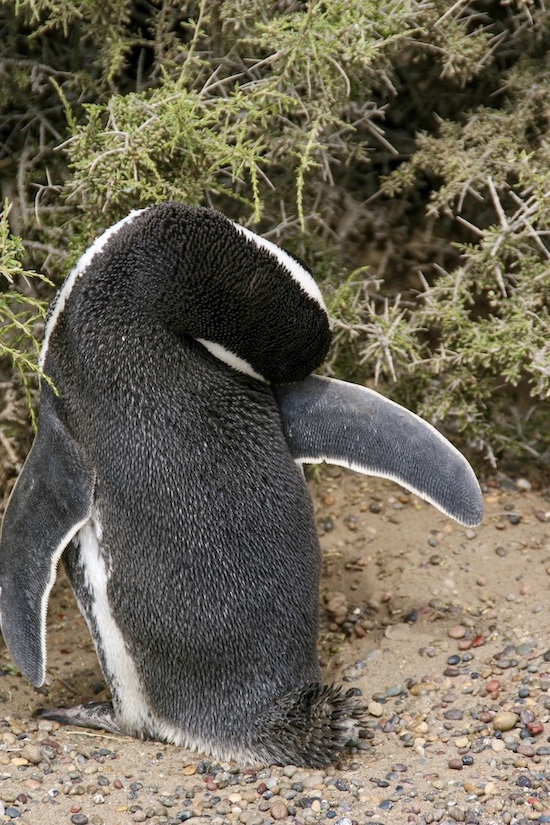
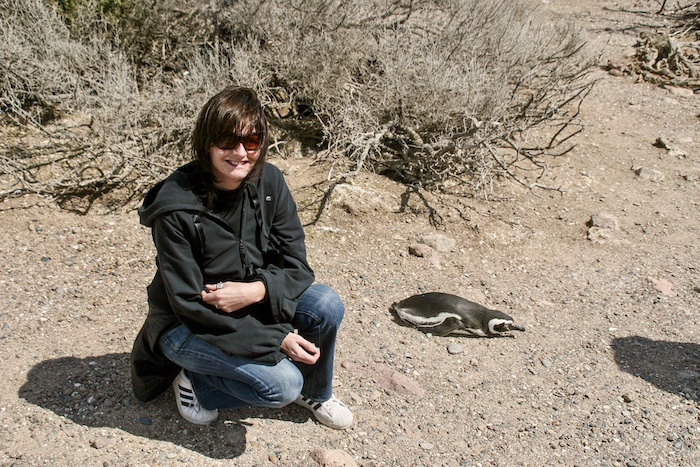
Obviously we were advised to avoid close contact with the penguins but some were very inquisitive, one of them picking at the shoelaces of our travelling companion Nathalie’s shoe. Each time we moved away, it followed us…the guide reprimanding us but what’s the protocol for an overly inquisitive penguin? In the end we gave up and posed for photos with it…when typically it threw itself on the ground…making it look like I’d just pushed it over.

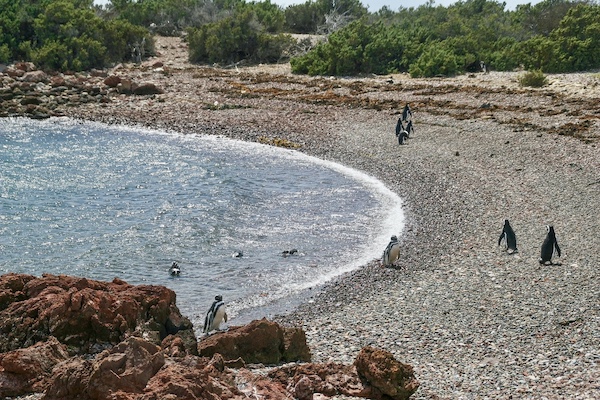
Herds of Guanacos, close relatives to Llamas and a member of the Camel family, live happily among the penguins and we see lizards basking or running to hide in the scrubby plants and rock.

From the penguin colony to Gaiman population around 6,000…a Welsh town incongruously in Patagonia where the highlight of the day is Welsh tea, cakes and scones with jam at 40 pesos each (£8)….a bit pricey but the grub was excellent, our fellow travellers entertaining and the setting of the Welsh tea house rather surreal. Founded as a town in 1874 by settlers from Wales, the Central of Chubut Railway arrived in 1908 connecting it to the nearby city of Trelew. Several hundred people in the region still speak in Welsh as well as Spanish. Unsurprisingly the main industry of the area is sheep rearing and there’s several protestant churches.

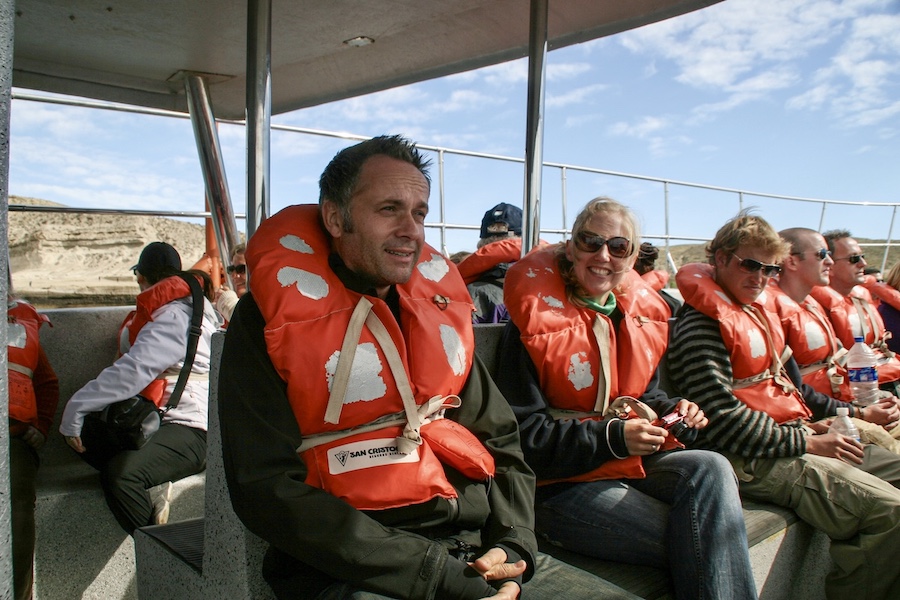
Next day a trip to Reserva Faunistica, Peninsular Valdes to go whale watching. And boy did we see whales. At 8am the bus collected us from our hostel in Puerto Madryn (population 66,000 founded by Welsh settlers in 1886). Scrambling for the shared bathroom at 7am we’re definitely feeling too old for hostel stays. After a quick breakfast of more sugared croissants more ham and more cheese (it’s getting monotonous now), we travelled 90 minutes to Puerto Piramide where we catch the boat out in to the Golfo Nuevo to see the Southern Right Whales. Paul and Natalie from the Penguin colony trip were on the same tour with us. The bus was 150 pesos each an additional 100 pesos for the boat and 45 pesos entrance fee to the peninsular reserve. Península Valdés hosts the largest breeding population of Southern Right Wales with approx. 2,000 whales catalogued. Golfo Nuevo and Golfo San José are both protected bodies of water located between the peninsula and the Patagonian mainland and the wales come here between May and December for mating and giving birth due to gulf waters being quieter and warmer than the open sea. We didn’t see any, but Orcas are in the open sea off the peninsula often beaching themselves on shore to capture sea lions and elephant seals. You know when you watch those TV nature documentaries with the Orca scoffing down the sea lion? That will have been filmed here. Discovery Channel frequently film here and National Geographic photographers and researchers were all over the peninsular when we visited. They claim that this is now the only place in the world where Orcas feed this way and their behavior is learned on this Patagonian peninsular.

Right Whales grow up to 59 ft long weigh up to 100 tons and can be identified from other whales by the callosities on their heads. They have a broad back without a dorsal fin and a long arching mouth beginning above the eye. The body is dark grey or black, occasionally with white patches on the belly. Right Whale’s callosities appear white not due to skin pigmentation, but to large colonies of cyamids or whale lice. Called Right Whales because early whalers considered them the ‘right’ whale to hunt, in the early centuries of shore-based whaling prior to 1712, Right Whales were virtually the only large whales the whalers were able to catch. They were often found close to shore spotted by lookouts and hunted from beach-based whaleboats, they were relatively slow swimmers so whalers could catch up to them in whaleboats and lastly, compared to other species of whale, Right Whales killed by harpoons were more likely to float and thus more easily retrieved by the whalers to tow back to shore. Populations were vastly reduced during the whaling industry’s active years but are now protected.
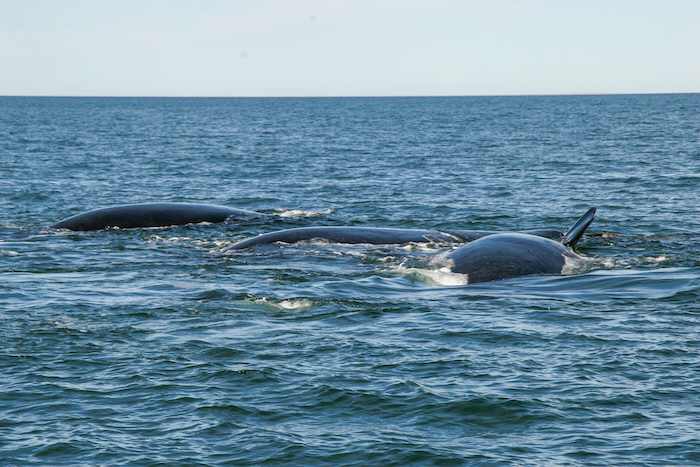
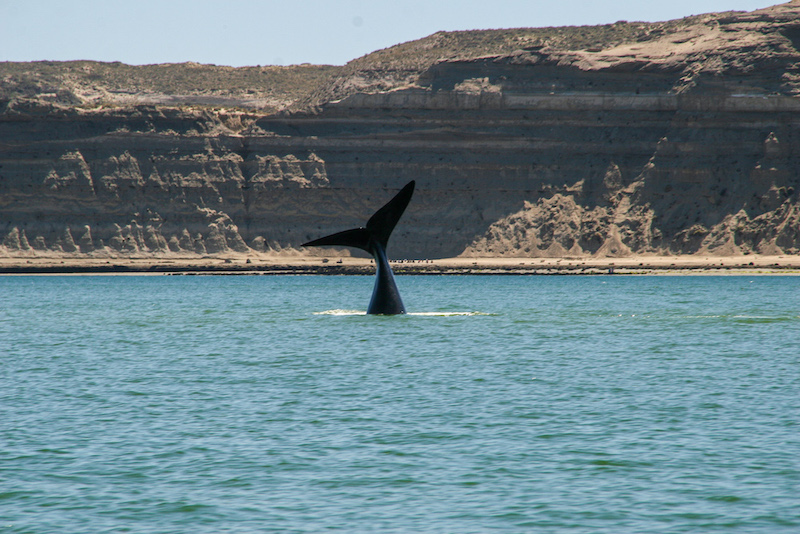
Well known for their acrobatics in the water and their sociability and inquisitiveness, the whales came so close to the boat it was quite nerve wracking…nothing prepares you for how huge a whale is until you experience one swim directly under the boat you’re in; causing the sea to swell and the boat to rock. Three swam close by blowing water whilst another couple flicked huge fanned tales to slap the water. It’s hard to express the emotion of seeing this close up, these creatures are HUGE yet startlingly graceful. On the boat around 2 hours, we were lucky…boats hadn’t been running the previous 2 days due to high winds. We saw around 20 whales including a parent whale breaching the water with her calf. Magical.
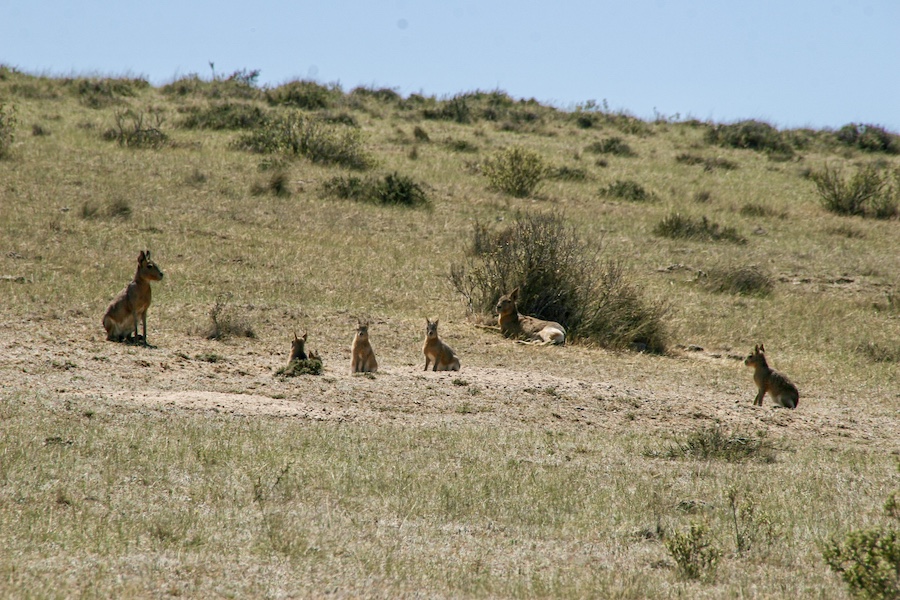
The inner peninsula is inhabited by Rheas which look like Emus; we saw several but too distant to photograph (they also have a few in the bunny park in West Ealing which amuses us), herds of Guanacos and lots of Maras (also know as the Pampas Hare). Maras are larger relatives of Guinea Pigs common to the Patagonian steppes and other areas of South America. They’re the fourth largest rodent in the world after Capybaras, Porcupines, and Beavers growing up to 18 inches in height. We saw a family of Maras guarding their burrows and young. Lizards are common, darting in and out from the cover of brush and rocks.

Further along the peninsular at Punta Norte Elephant Seals bark loud and aggressive, males fight on the beach…others bask in the sun. Hunted to the brink of extinction by the end of the 19th Century, numbers recovered and Peninsula Valdés has the fourth largest Elephant Seal colony in the world. They are so named because of the large proboscis of adult males, which the bulls use to make extraordinarily loud roaring noises particularly in mating season. Male Elephant Seals reach a length of 16 feet and a weight of 6,000 pounds, much larger than the female cows. The largest known bull Elephant Seal weighed in at 11,000 pounds and measured 22.5 feet in length. Glad we didn’t bump into him.


Heading back to the hostel on the tour mini-bus we spotted local town celebrity Che, a black and white sheepdog that rides around town on top of his owner’s car. We saw him several times over the next few days, often travelling along the main road of the harbour. I reckon he’s superglued on.

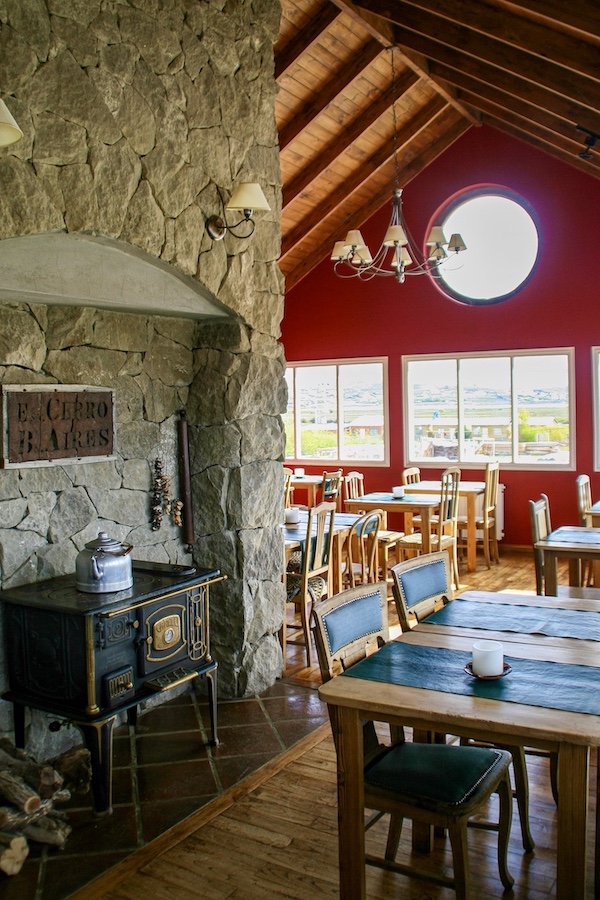
Another bus ride and we’re in El Calafate…and we love the scenery, it’s definitely been a highlight for me in Argentina. Landscapes are vast and wild, ever-shifting in changing light. The sky is wide open, the wildlife bountiful and accessible, birds are vocal and the Perito Moreno Glacier was absolutely staggering….but we will come to that. Right now the wind sweeps across the open steppes and whirls impulsive dust storms in to the brush; you can taste Patagonia in the grit coating your teeth. We checked in to a comfortable hotel 1km out of town, Hosteria Cauquenes de Nimez, £50 a night (pricey for backpacking) but a pleasant change after the hostel in Puerto Madryn.

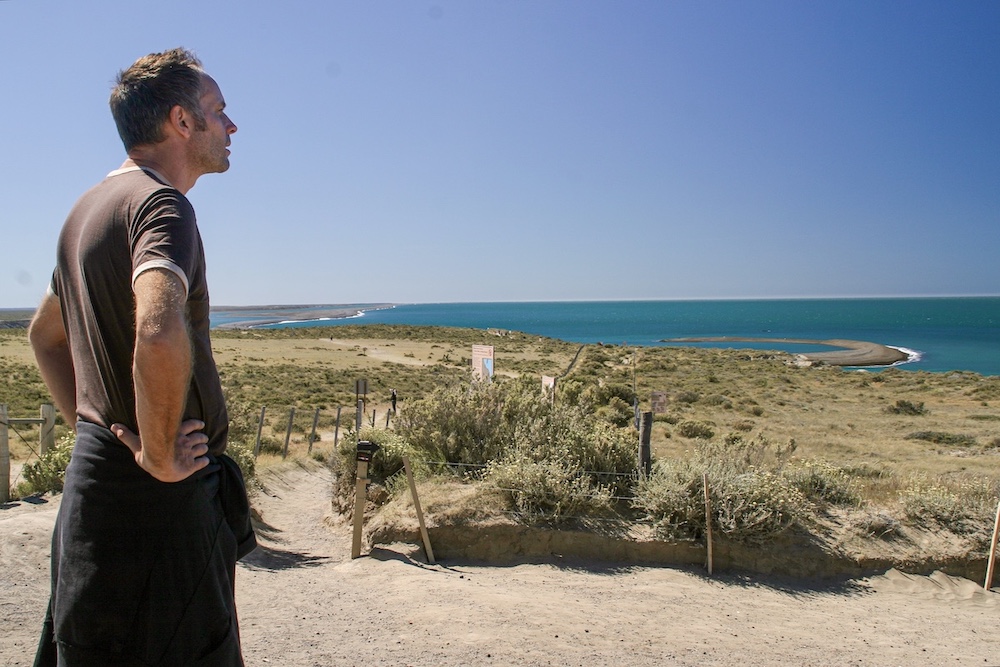
These views are all within easy walking distance or taken from directly outside the hotel. The lake is home to a large flock of pink flamingoes, a bird watcher’s paradise I regret not having binoculars due to the large variety to be seen here. The hotel told us we could cross the fencing boundary line to go to see the lake and surrounding ponds, so we hunted for a natural break to crawl through…too high to vault over, my vaulting days are over.


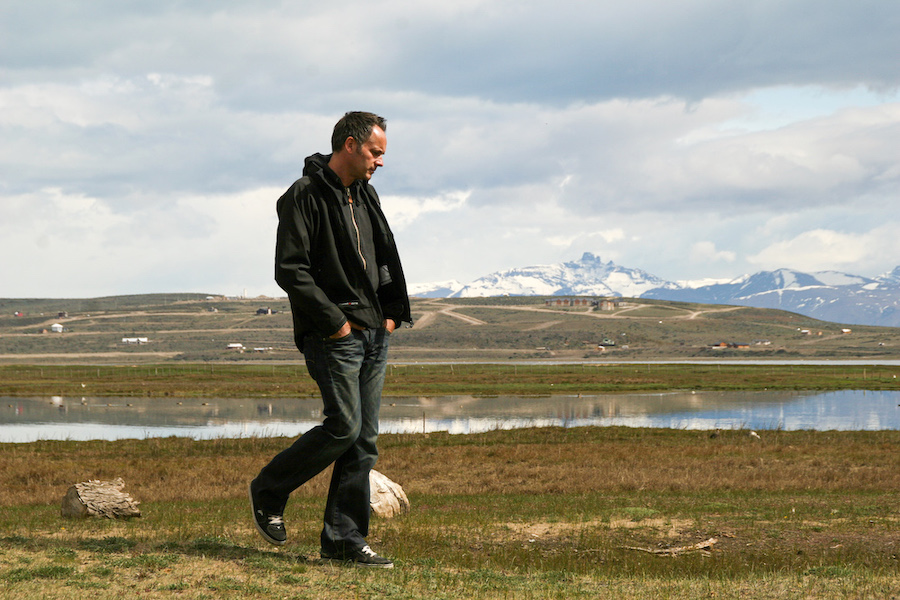

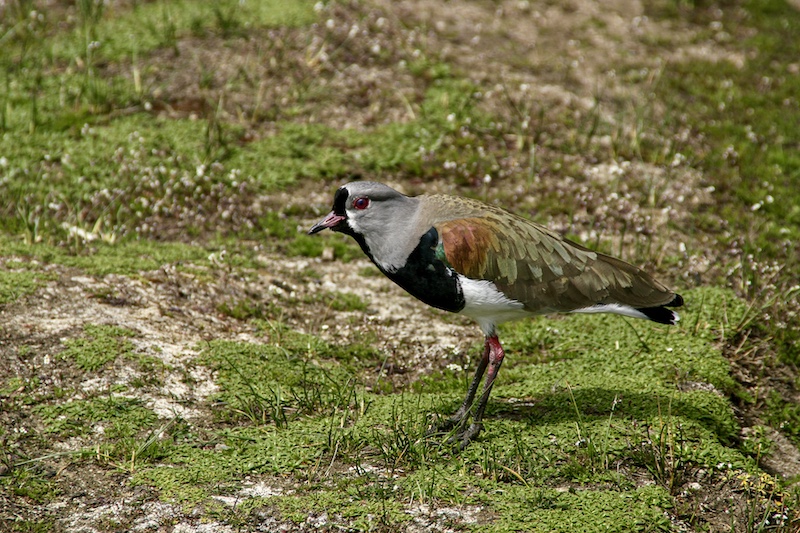
A pretty bird with different shades of green and brown was very aggressive, found in pairs they make a hell of a racket when they see you….I think they’re called Teros. Protecting its nest, one repeatedly divebombed Dave. His city boy claims that the outdoors isn’t ‘his thing’ now justified after being terrorised by wildlife…but I think the rugged outdoors kind of suits him. We spot a Black Headed Ibis with his curved beak too far away for a good photo…the noise they make is quite incredible, they gathered in the trees near the hotel. Male (white) and female Upland Geese honk and watch us furtively.


Close to the hotel, small-holdings collect rusting cars, trucks, old farm equipment. Buildings are practical made for the weather. Dave is oblivious to the charms of man’s best friend but wherever we walk in town there’s dogs roaming around which pick up our trail and follow for a few blocks…especially when encouraged. I try to get as many as I can to follow Dave, it topped out around 6 one day, to me an amusing game. One hung to us all day even waiting patiently outside a restaurant as we ate dinner, staring at us through the glass door. Dogs have free roam, Patagonians open their doors each morning and let them out welcoming them home at the end of the day. So many dogs wander the town, most with collars on, well fed well cared for.


We’re back in a hostel in a private room…hostel’s in El Calafate cost around £35 a night for a double room with private bathroom. It’s a more expensive area to backpack. Clean, warm…great staff and great views, it looks like a ski chalet. Food is getting boring with so little choice. Other than the amazing steak Argentina is reputed for it’s an endless repetition of small rolled slices of ham and cheese, overly sweet croissants, oily over-cheesed pizzas. The prices in El Calafate are high, Dave’s pizza cost 47 pesos compared to 22 pesos elsewhere in Argentina. It’s a shock after the other countries we’ve travelled in. But dietary intake aside this country compensates with the wildlife we’ve seen, the landscapes we’ve breathed in of fresh air dust and sand.

It’s the 28th October. A bus tour to Perito Moreno Glacier with a local tour outfit ‘Always Glaciers’ (150 pesos each plus 38 pesos for the boat to the foot of the glacier), a 90 minute drive from El Calafate. From the bus we see the Andes mountain range on the border with Chile and lots of Condors (Vulture family) flying the thermals with their huge wings. Found in the Andes mountains and Pacific coasts of western South America they’re the largest flying land bird in the Western Hemisphere. Tattered plastic bags tethered to the miles of barbed wire fences flap in the wind.
Situated in the UNESCO World Heritage site of Los Glaciares National Park, the glacier was named after the explorer Francisco Moreno; a pioneer who studied the region in the 19th century and played a major role in defending the territory of Argentina in the conflict surrounding the international border dispute with Chile.
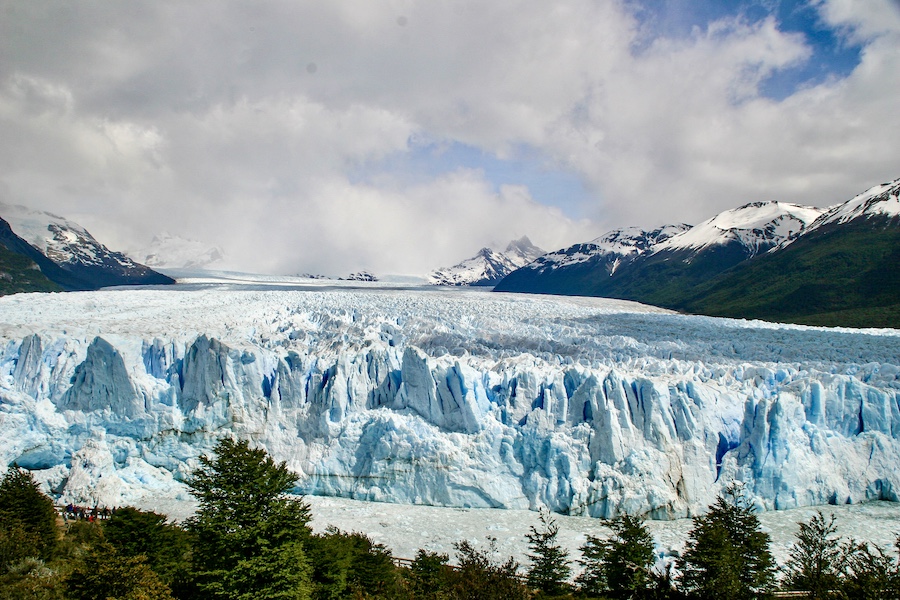
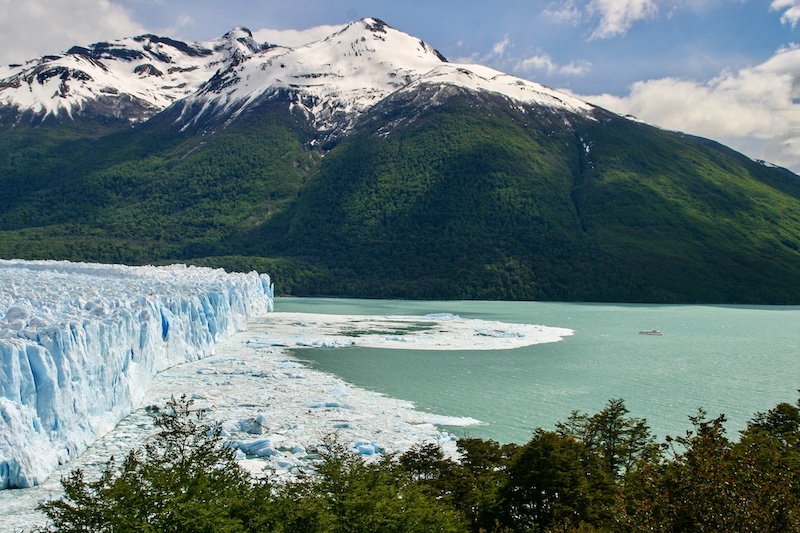
The glacier is vast, startling blue…19 miles long covering 97 square miles, refreshingly one of the only advancing glaciers worldwide at a rate of seven feet (2 metres) per day. At its deepest it measures approximately 700 metres (2,297 ft). Perito Moreno is known for its unique rupturing process. It advances over the L-shaped Lago Argentino forming a natural dam which when reaching the opposite shore separates the two halves of the lake. With nowhere to run off the water-level on the Brazo Rico side of the lake can rise by 30 meters above the level of the main lake. This enormous pressure breaks the ice barrier in a spectacular rupture event recurring between once a year to less than once a decade.
It first ruptured in 1917 taking with it an ancient forest of Arrayan trees. We just missed witnessing the last rupture in July this year…I imagine it was terrifying but incredible.


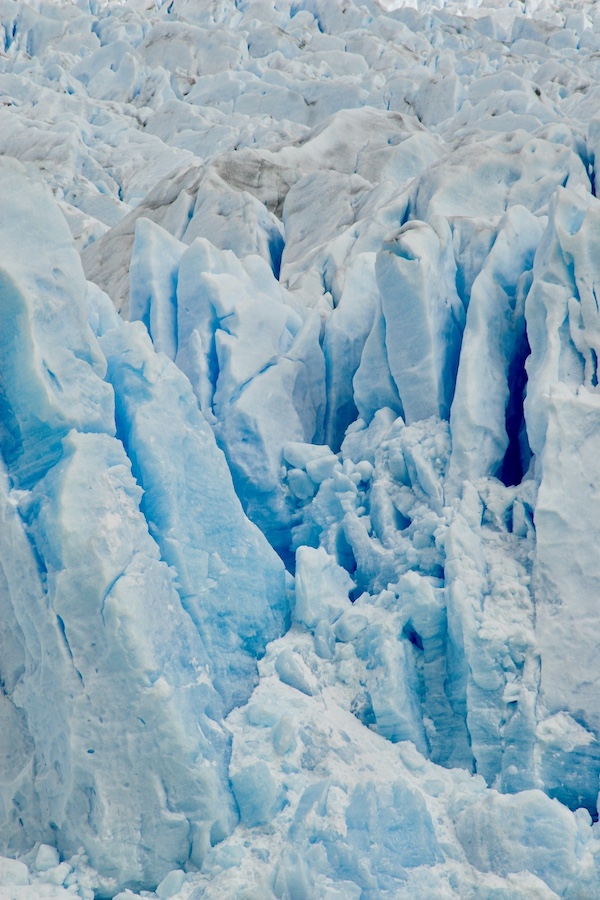
Views from the boat were our first introduction…close to this ancient natural phenomenon we can see some of the layers of the 18,000 years since it’s calculated formation but standing on the viewing platform is even more awe inspiring; appreciating its vast scale and surrounding mountains. We patiently wait, silent…we listen to it creak and groan as it pushes against its boundaries…it’s eerily emotional. Our patience rewarded when a massive chunk of a natural ice bridge calves away crashing into the water with a thunderous splintering sound creating icebergs which displace the water forming choppy waves. The Perito Moreno Glacier is one of the most jaw-dropping things we’ve seen in the last 11 months of travel…it easily rivals Machu Picchu. Gazing across it for a couple of hours it resembles a painting of rich dazzling colour…the ice, spatula daubs in vivid oil paint; sculptured gashes of blue revealed in the cracks.
On 30th October we leave El Calafate in the south and fly north to Buenos Aires (it’s over 2,600 miles by road). A few hours after landing we picked up a bus heading for the town of Puerto Iguazu in the north-eastern Argentine province of Misiones, another 1,270 miles…another overnight on the bus being served food and wine, a mounted TV crackling static through a flickering movie…the heating cranked high around 9pm causing us all to fall asleep. We arrived 19 hours later on 31st October and checked in to the oddly named House of Africa hostel where a flash tropical downpour leaked water all over the floors. We went for a wander around town. The landscape in the north-east is completely different to Patagonia. The earth is mineral rich red, vegetation is lush green tropical jungle, it reminds me of when I lived in Uganda. We visit an area where we can stand looking across the Paraná River to Paraguay on the left and Brazil to the right, both land masses separated by a narrow stretch of river and serviced by a rickety looking launch ferrying cars and people across. We decided against going in to either country; this point of entry in to Paraguay is reported to be unsafe and to cross the river to enter Brazil means possible visa entry fees…and exit fees to come back again. At this point we’ve decided against travelling in Brazil due to the expense and ridiculously long bus journeys; instead we’ve chosen Colombia as our next port of call.
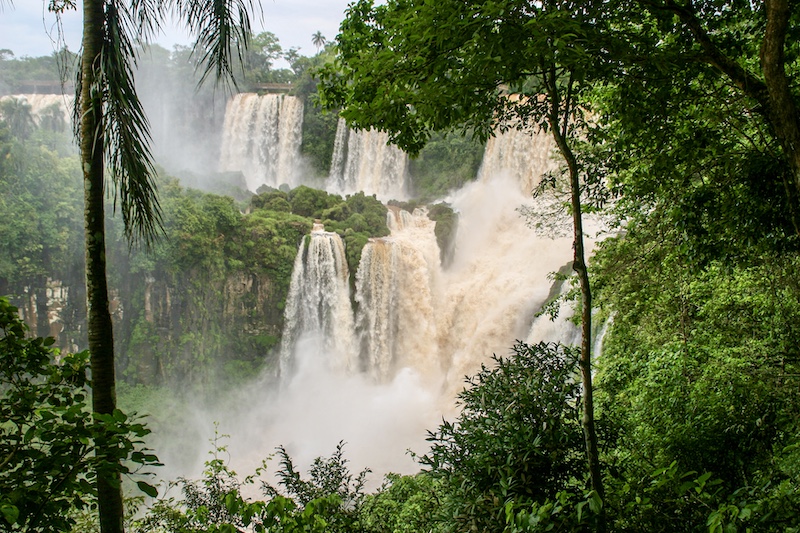
Saturday 1st November we head to Iguazú National Park 20 km from Puerto Iguazú town. A 60 peso each entry fee (£12) on Saturday, (weekdays cost 40). We ride a small tourist train running from one part of the falls to another, it’s possible to trek the distance but would take all day. Once off the train we walk across thousands of feet of metal walkways which cross the Iguazu river, the rapid current sliding by under our feet. We went first to the Garganta del Diablo (Devil’s Throat) a U-shaped 82 metre high, 150 metre wide and 700 metre long (490 by 2300 feet) cliff which marks the border between Argentina and Brazil. The falls featured recently in the new Indiana Jones movie ‘The Kingdom of the Crystal Skull’ and also in movies ‘The Mission’ (1986) and ‘Moonraker’ (1979).
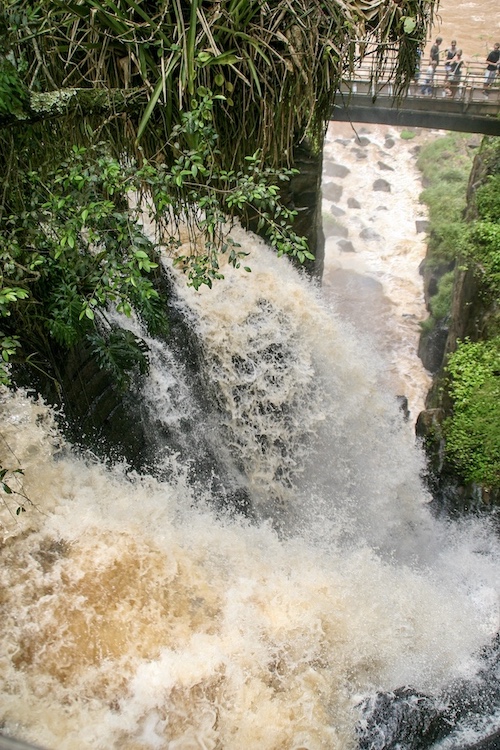

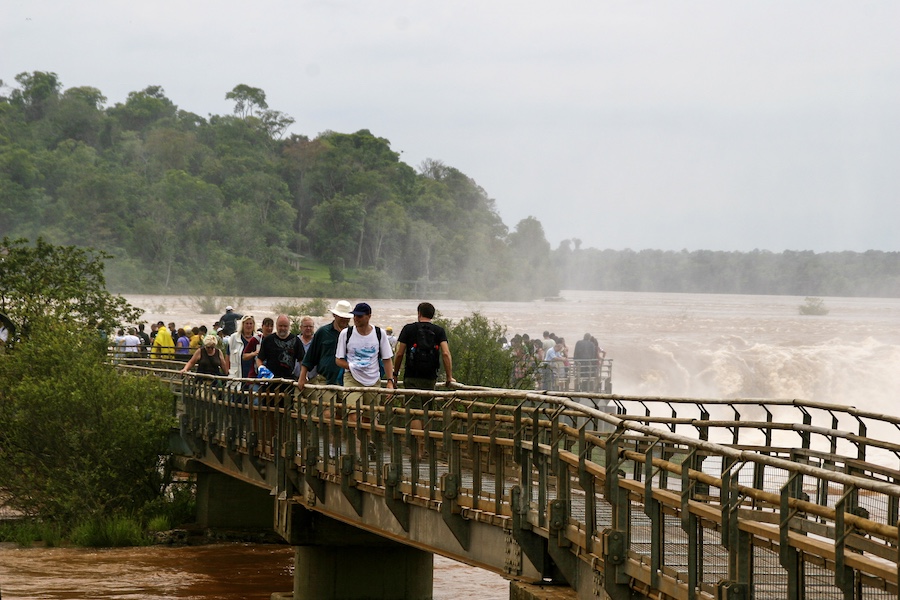
On a viewing platform right above the Devil’s Throat the sound of the surging water is deafening, everyone is soaked. Swifts weave through spray inches from the thundering flow. Heavy rains mean the falls are particularly strong and reddish brown due to the silt being stirred up. Statistics claim the water falling over Iguazu in peak flow has a surface area of 1.3 million ft² and mist rises between 100 and 500ft from the Devil’s Throat fall. The waterfall system consists of 275 falls along 1.67 miles of the Iguazu River, some of the individual falls 269 feet in height and two thirds of them are within Argentine territory. They were discovered in 1541 by Alvar Núñez Cabeza de Vaca and established in 1984 as Natural World Heritage Site by UNESCO. Legend says a big snake called Boi lived in the river. To calm its ferocity Aborigines sacrificed a woman every year but once a brave Guarani Aborigine kidnapped the woman and saved her from the traditional rite. Boi burst in anger, bent its body and split the river forming the cataracts separating the man and the woman. Another version tells that a god planned to marry a beautiful Aborigine named Naipí, who fled with her mortal lover Tarobá in a canoe. In rage the god sliced the river creating the waterfalls condemning the lovers to an eternal fall. In the Guarani language the term Iguazú means ‘great waters’.

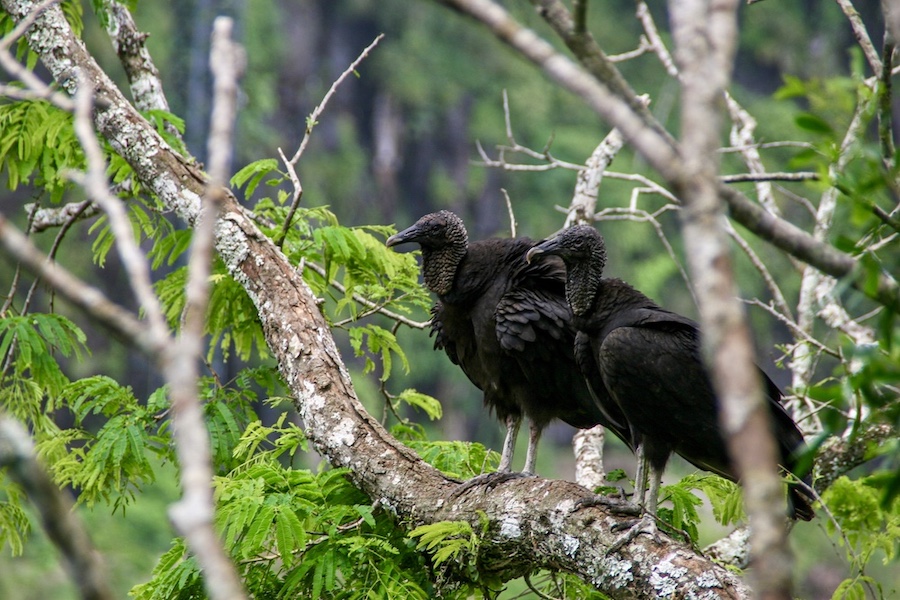
There’s wildlife to spot. We seen an Argentine black and white Tegu lizard, its life span is around fifteen to twenty years and they inhabit tropical rainforests in East and Central South America. They like dense foliage and forage for food consuming as much as possible before hibernation in autumn. They exhibit a high level of intelligence among reptiles along with a high level of physical activity during the wakeful period of the year. I sat down on a wall to photograph one…unusually for a lizard it came very close. Two stately American Black Vultures look like wigged English judges. A large bird though relatively small for a vulture with a wingspan of 5 ft, it has black plumage, a featherless, grayish-black head and neck, and a short hooked beak. Lacking a syrinx (the vocal organ of birds) its only vocalisations are grunts or low hisses.

We think we see a Lagartija lizard but aren’t sure (music fact: Lagartija Nick was the 9th single released by Brit goth art-band Bauhaus). There are hundreds of butterflies…which I thought romantic until witnessing them flying straight in to the bus windscreen smashing themselves to pieces. And more South American Ring Tailed Coatis…snuffling long snouted through the wet vegetation to dig out food.
And so we end our time in this wide ribbon of a country stretching miles…we’ve only travelled the one side of it missing the wine regions to the west…we didn’t cross in to Chile which I know we’ll regret. There is just so much to see in the world. We plan for our trip onwards knowing we are nearing an end…knowing we’ll have to return to reality.

 The Travel Diarist