May 2023

Back in England for a month, primarily to sort out the house for a turnover of tenants. But that’s all in London which I’ve blogged before so this is about the 10 days exploring the Yorkshire Dales, the Yorkshire Moors and the Peak District. After 16 days working 12 hours a day on the house we were exhausted. We escaped London visited family for lunch in Chorlton and an overnight in Manchester. Next day we pointed the car North towards the Yorkshire Dales spending the first night at the delightfully named Throstle Nest Farm in countryside not far from Skipton on the edge of The Dales; fresh air and relax.
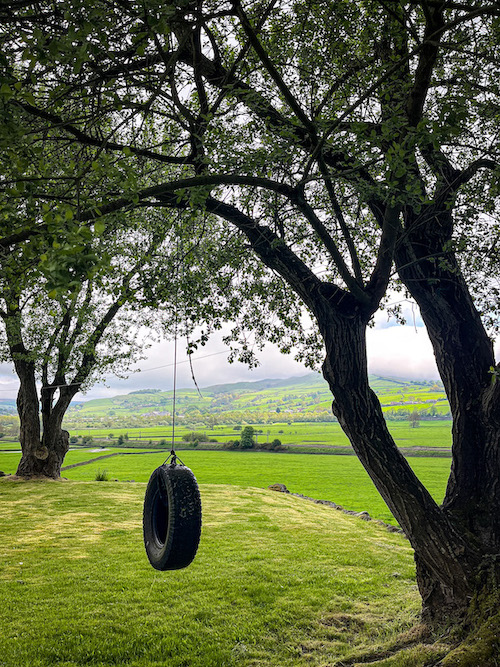

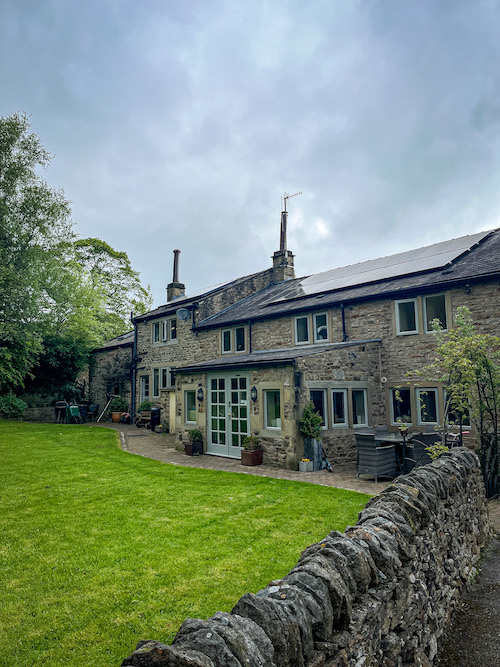
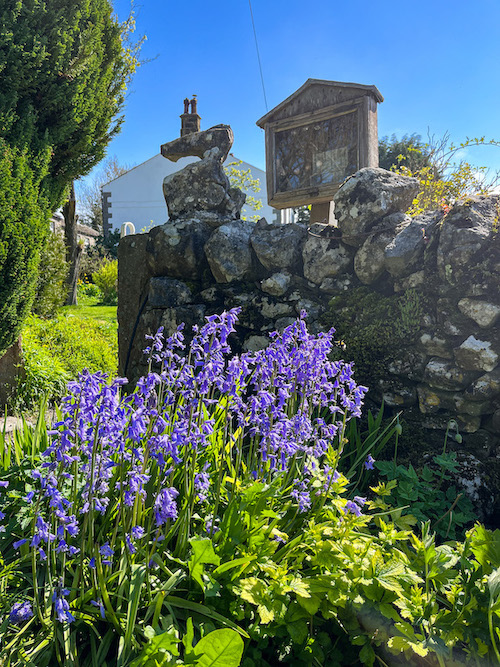
Driving out in the morning the farm sheep run with bleating lambs to the fence. We follow the Leeds and Liverpool Canal entering the Yorkshire Dales National Park, following the A65 through Gargrave turning on to Eshton Road. Crossing the Penine Way and River Aire. Pulling over in Kirkby Brow for rolling pastures roamed by sheep where I write a birthday card to Kat back in New York City. Heading for Malham Cove stopping first in Malham, a picture perfect village of dry stone walls hedgerow, bluebells nodding in the breeze. Malham Beck crossed by humped stone footbridges…grey stone alive with green and golden lichen, cushions of emerald moss. Signs for the Pennine Way which we walk on for a while under the gaze of somnolent cows. Ancient places filled with birdsong and the turning of water.



Just outside Malham we stop for Malham Cove; a large curved limestone formation carved out by a glacial waterfall carrying meltwater at the end of the last Ice Age. It looks like something alien crash landed…I can’t do it justice in photos.

Worn stepping stones break the walls and everywhere your eyes settle there are sheep…grazing, ambling, hugging the walls protecting their lambs.

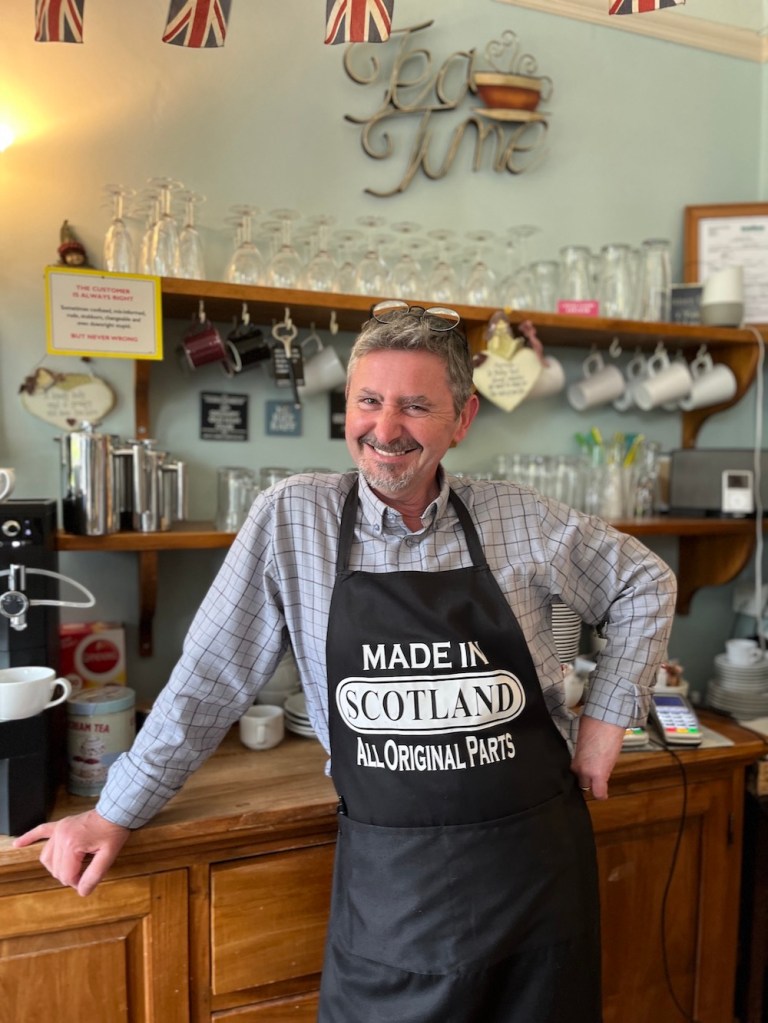
Driving through Arncliffe, Hawkswick, Kettlewell, Starbotton, Buckden, Cray, Kidstones, Bishopdale. Fog clinging to Dale crags, rolling over the stones. At Aysgarth in Wensleydale we stop at Hamilton tea rooms…interrupting a sitcom of characters Alan Bennett could have conjured. Scones a pot of tea Wensleydale cheese. The Scot running it with a stream of barbed banter, called Hamilton he said; as he was a sharp and witty man I don’t know what I’d believe. Locals enjoying lunch all known to him and to each other.
Customer: Going to a funeral. A friend of ours. Steve Best, he was a wrestler.
Hamilton: Never heard of him. Can’t have been any good.
Customer: He used to be. But not anymore. He’s dead.
It’s cold up here…cloud moves in over Aysgarth village. Over the bridge we see old mill buildings, we visit Aysgarth Falls. One of three waterfalls in the area.


A 10 minute drive and we’re in the village of Askrigg where we look inside St. Oswald’s 15th century stone church…a church has stood on this site since 1180. The village is the setting for the television series based on the books by James Herriott ‘All Creatures Great and Small’. I read and watched both when I was young…hugely popular tales of a Yorkshire vet. Wide pavements of local stone are lined with small shops.

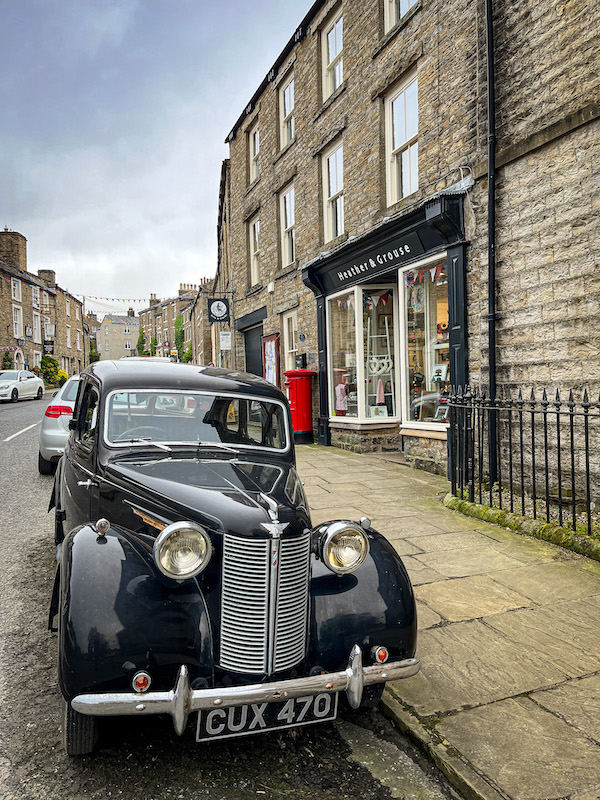
Not far from Arncliffe the landscape of the Yorkshire Dales undulates…a vast green mantle jagged with interruptions of hard sedimentary limestone.
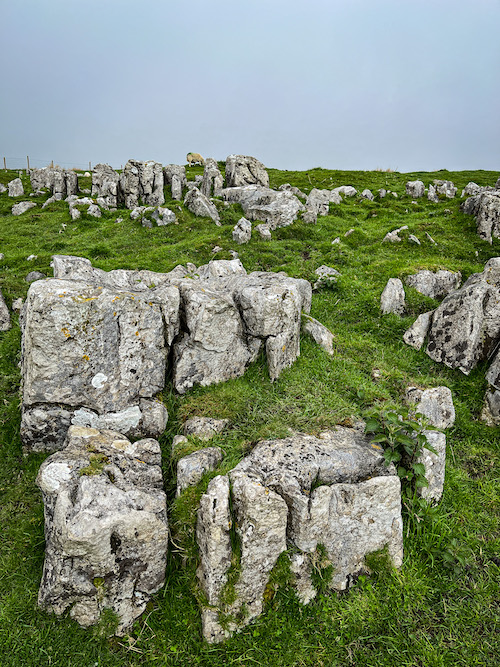
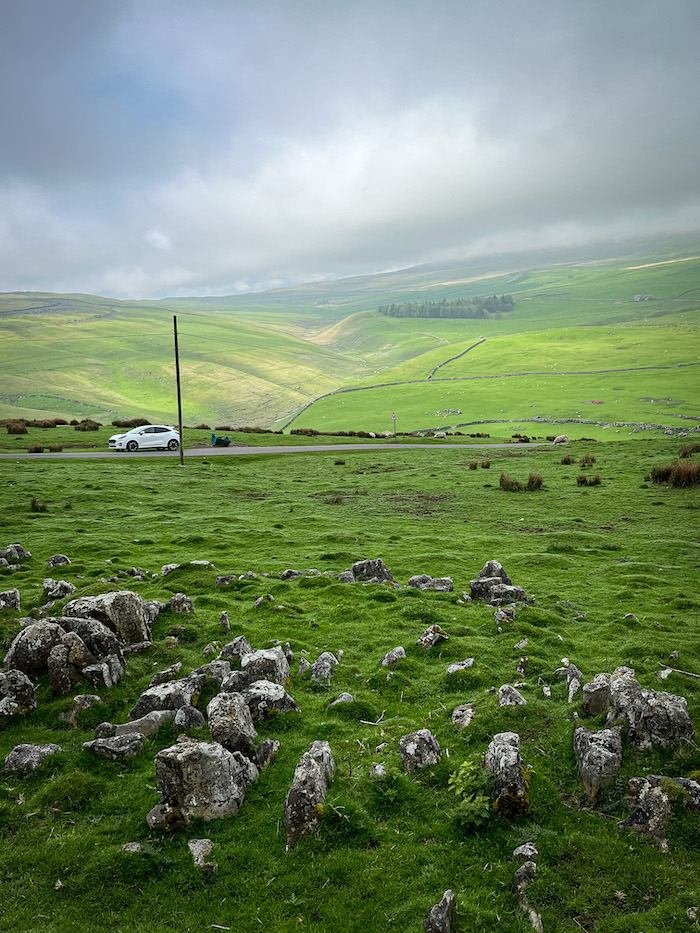
We follow Cliff Gate Road to Buttertubs Pass, high moorland between Wensleydale and Swaledale. Thousands of years of acidic water has eaten away at the limestone creating deep fluted edge shafts and grykes (cracks) in the slabs. Thought to be used by farmers to store butter between market runs some of these ‘potholes’ are 25 metres deep.


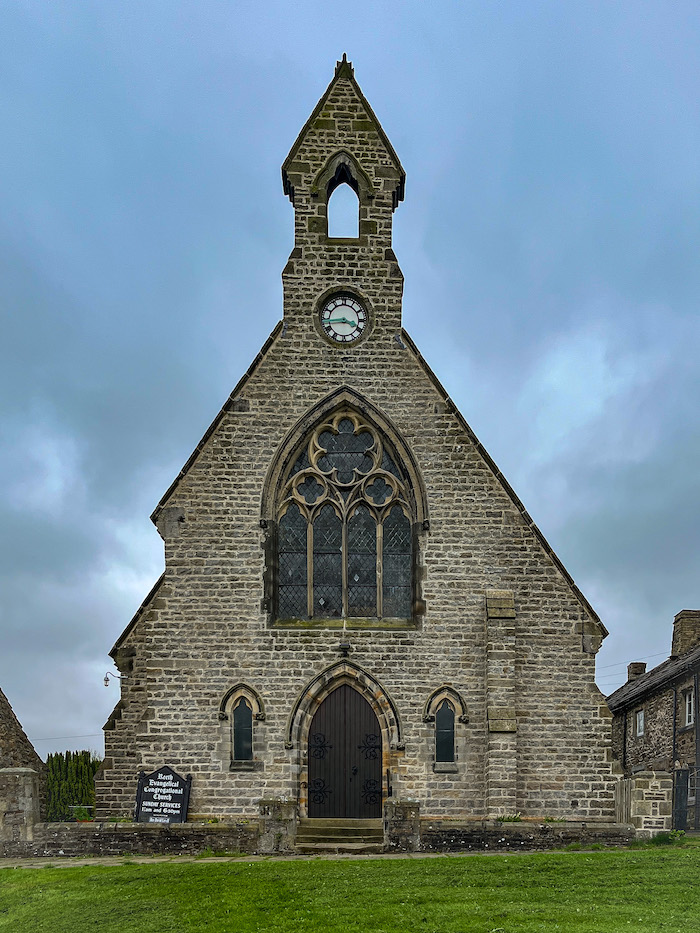
Driving through Muker on to Reeth. Another scenic stone village grey under overcast sky but the entire village centre a parking lot for visitors and locals. A settlement in Saxon times…later expanded significantly during the Norman conquest to feature in the Domesday Book (the Doomsday Great Survey completed 1086). The 1866 evangelical hammered stone church broods over the main green.

We drive to end our day with family, staying at my sister’s place not far from Whitby, reunited with my Dad visiting from East Africa….because of covid we haven’t seen each other for 4 years. We’re up early and out with our niece, photographing ourselves in a field of glorious Golden Rapeseed.

Driving the Roman Wheeldale Road across North Yorkshire moorland; passing ancient standing stones the roadside bristling with yellow gorse…Sarah identifying Lapwings, Curlews and Wagtails. Telling us about the beetle pest eating the bark of the heather preventing it from blooming. We turn off at Keys Beck Road to wander by the side of the beck.
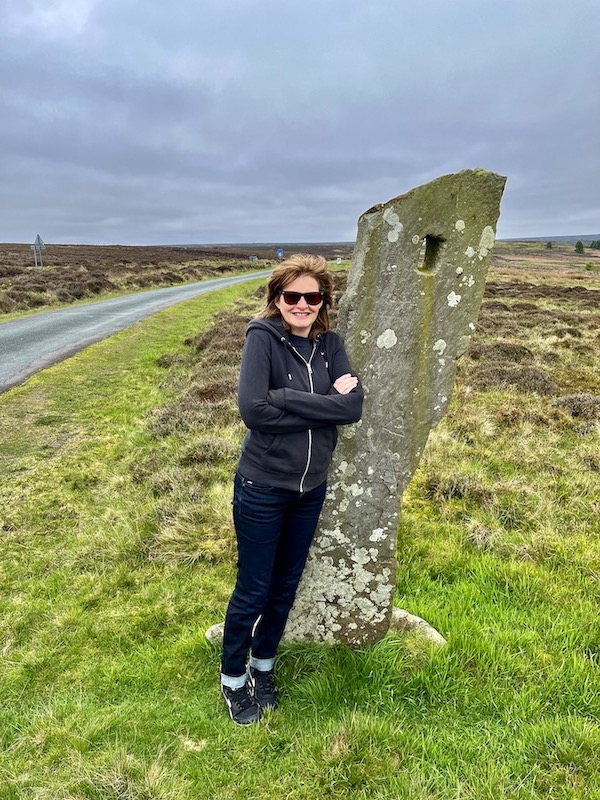
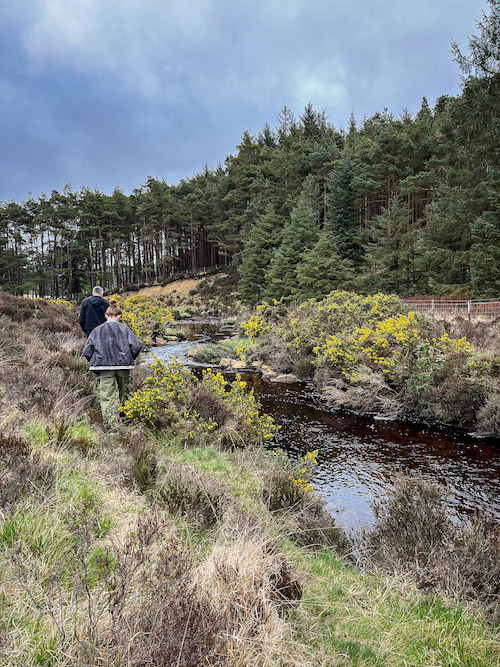

Passing through Newton Radcliffe on to Stape Road, Rawcliff Road, Yatts Road and Undercliffe. By the North Yorkshire Moors railway where steam trains run, passing Pickering Castle, Little Edstone, Kirbymoorside, Howkeld, Nawton and Helmsley where a skeleton of the castle stands and finally to Rievaulx to visit its Abbey… and I don’t have the words to describe these beautiful ruins. Sun through ancient arches throwing gold across the fields.

Founded in 1132 by Abbot William Aelred and 12 monks of the Cistercian Order Rievaulx was sacked during the reign of Henry VIII, shut down in 1538 as part of the dissolution of the monasteries to force religious and political reform overseen by Thomas Cromwell. Every abbey and priory in England Wales and Ireland was dissolved or forcibly closed…some 800 in total. The dwindling number of monks dispersed as Rievaulx was sold and dismantled…its roof lead and bells reserved for the king.


By Sproxton, Stonegrave, Hovingham, Slingsby, Amotherby, Swinton…stone villages filled with ruddy faced cyclists, flowering hedgerows, pubs and village stores. Not much to hold us in Yorkshire’s food capital Malton; we eat sausage and black pudding rolls and a Yorkshire curd tart for me. (Bothams in Whitby is superior). The mainstreet in town looks tired and worn. So onwards for Rudiston through Duggelby Wold, stopping at the Sledmore War Memorial…we are now in the East Riding of Yorkshire. Constructed by the Sykes family of Sledmere in 1896 it was originally designed as a Village Cross but engraved brass plaques were added after the First World War converting it to a War Memorial.
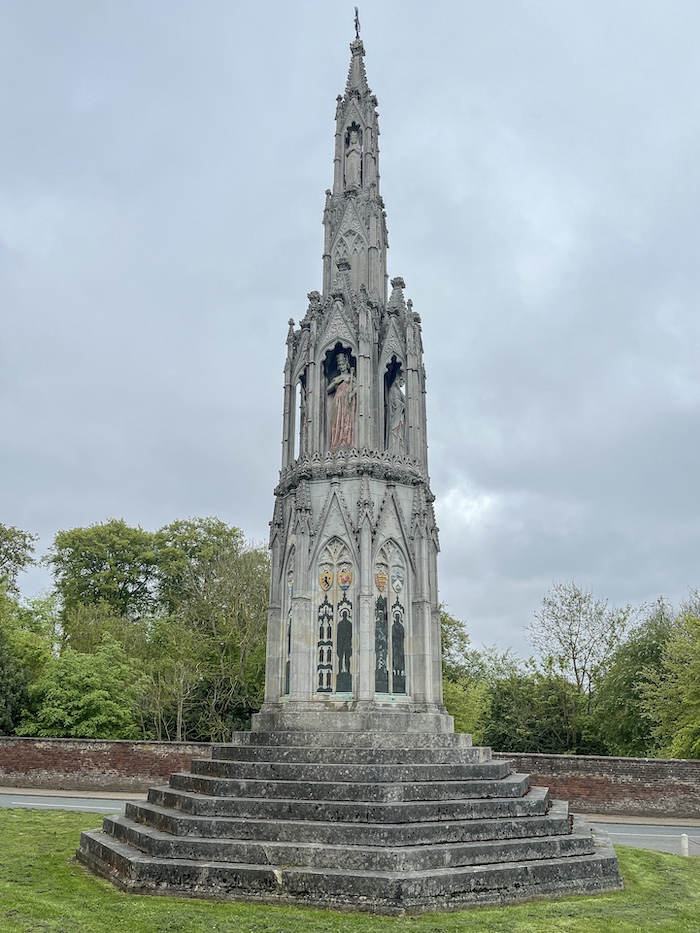
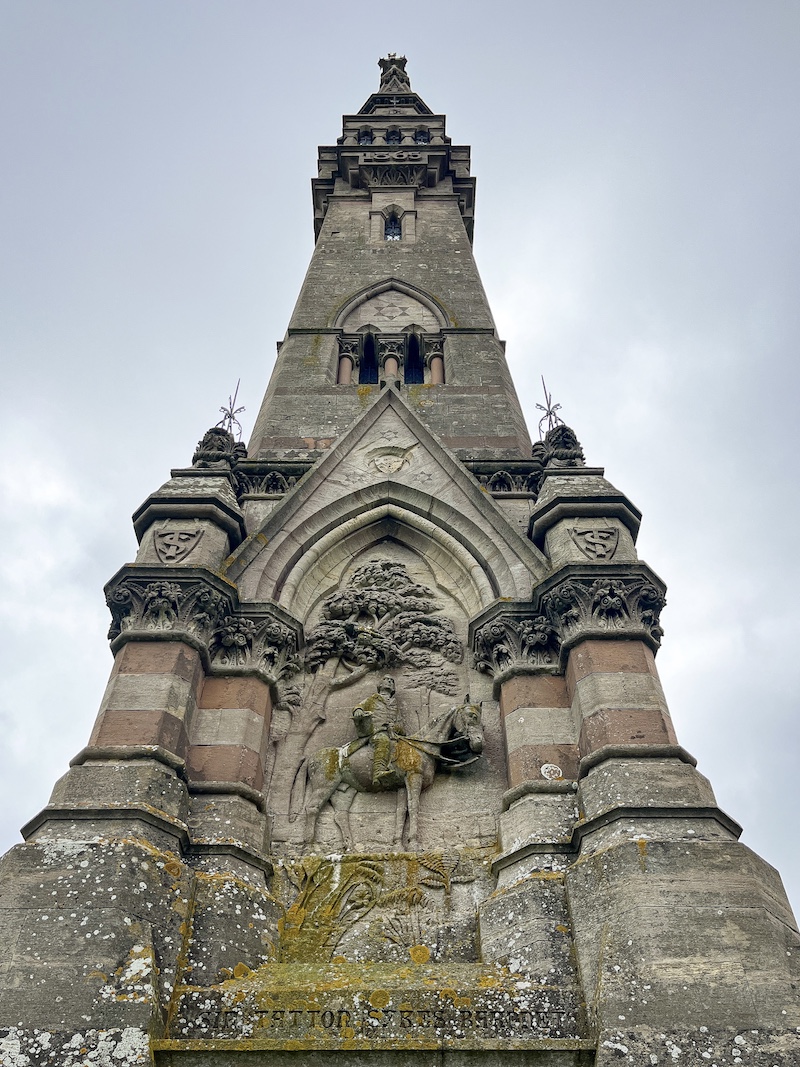
Off Garton Hill in Driffield we stop to see Sir Tatton Sykes Monument. Sykes was the fourth Baronet of Sledmere. The cost of the 147 feet tall memorial was raised by 600 of his friends and tenants and the sculptured relief shows Sir Tatton on horseback under a tree. An inscription reads: “Erected to the memory of Sir Tatton Sykes Baronet by those who loved him as a friend and honoured him as a landlord.” I hope he was a good man and this wasn’t history being written by those with the money. The pretty caretaker’s cottage sits behind a primrose yellow gate across the road.
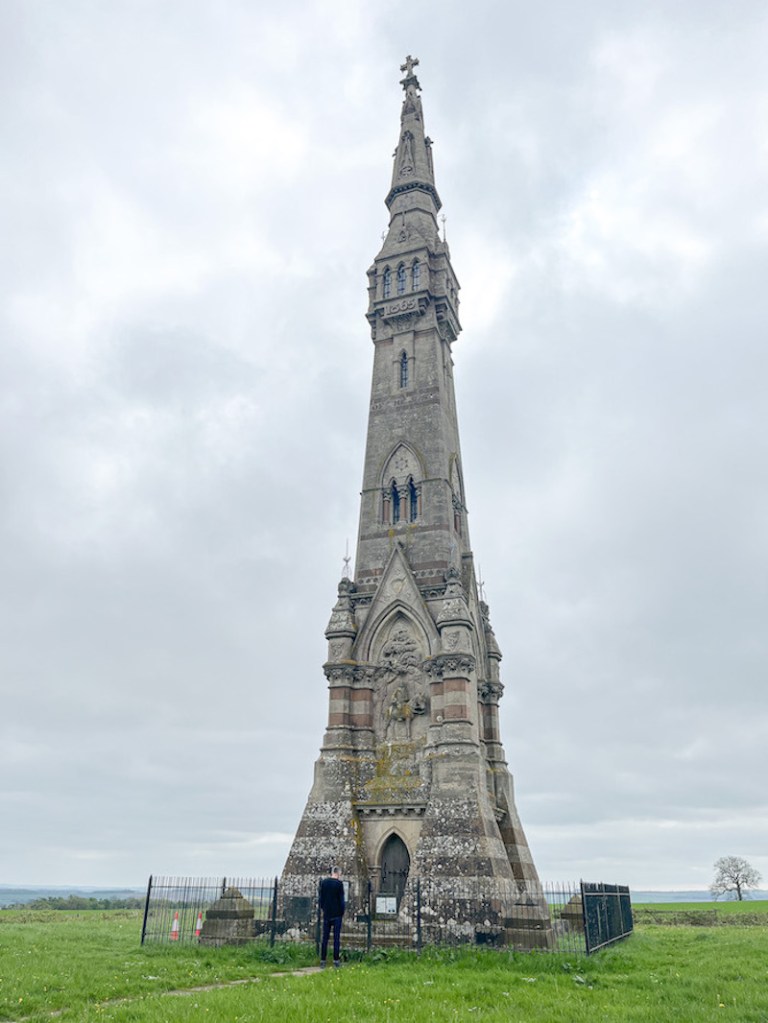

We followed Limekiln Hill Road to see the Rudiston Monolith in the grounds of All Saint’s Church (14th century origin restored in 1861) in Rudston Driffield. The tallest standing stone in Britain; 26 feet above ground with 15 feet of it under, no-one knows exactly how old but experts put it at around 4,000 years. Teenage Sarah quips whilst Dave is reading about it …“Says Ikea on it.”


From fields of golden Rapeseed. Sarah: “Check out those amazing tramlines, that’s proper skill.”..we crest gorse and heather moorland heading towards Whitby.

Next day I meet for breakfast with my old friend Val; sitting in the window of a coffee shop on Flowergate eating butties before she heads to work. Dave and I walk from Whitby to Sandsend…literally where the sand ends from Whitby beach. Old lobster pots lean against sandstone houses, kids poke with sticks in tide pools, an ice cream van sits on the slipway to the beach, tourists flock the cafe and the gift shops. We find a quiet alley away from other people, walking on loose shingle between houses to find a glorious overgrown field.


We walk back along the cliff top, people eating ice-cream at Clara’s. By the crazy golf and the curved crescent of guesthouses showing ‘no vacancy’ signs on West Cliff.

An early morning view from our room in Whitby across rooftops to the clifftop Abbey gothically wreathed in sea fog. We’re staying again in the wonderful Horngarth Luxury Lodgings on Skinner street.

I’ve blogged on Whitby before in a post about England, we walk some different streets. We meet David a gem jeweller at Ebor Jetworks making beautiful jewellery from Whitby jet and selling antique pieces. He’s visited gem shows in the US; we swapped roadtrip stories talked music, we’re all fans of The Specials.


We venture in to yards and alleyways; old street lamps, flowerpots, pretty small houses. Arguments Yard on Church Street where visitors take turns for photographs not realising it leads down to views of the Pier extension. Smugglers Yard leads from the main shopping street of Baxtergate through to the train station and River Esk.
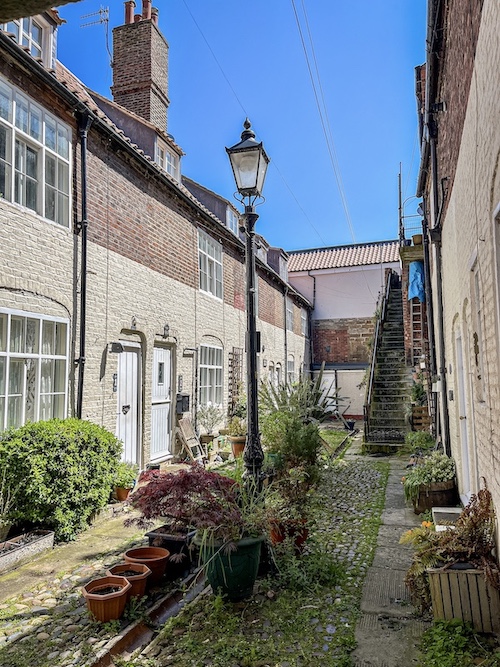


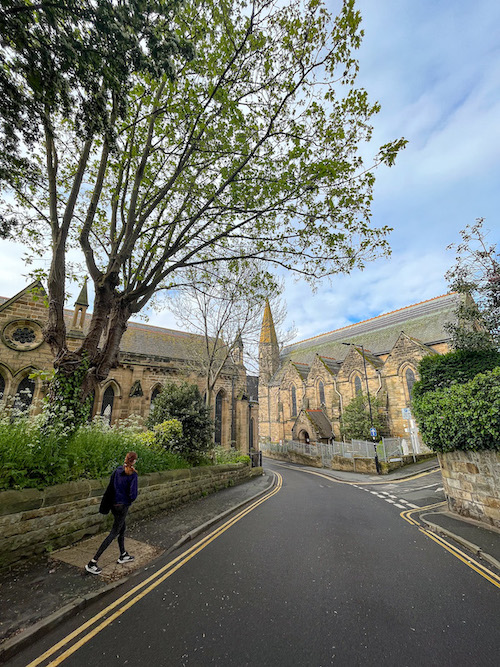
Mullion windows, stone entryways… and churches, churches, churches on Brunswick Street.


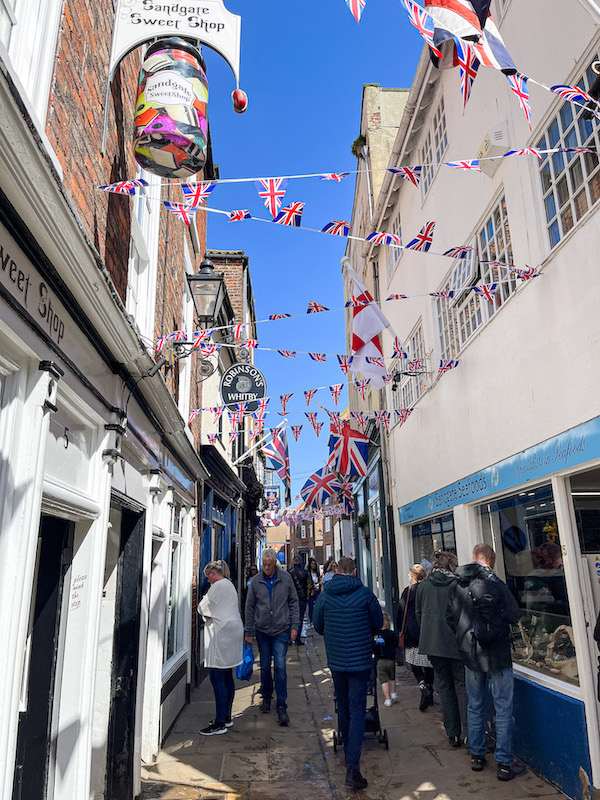
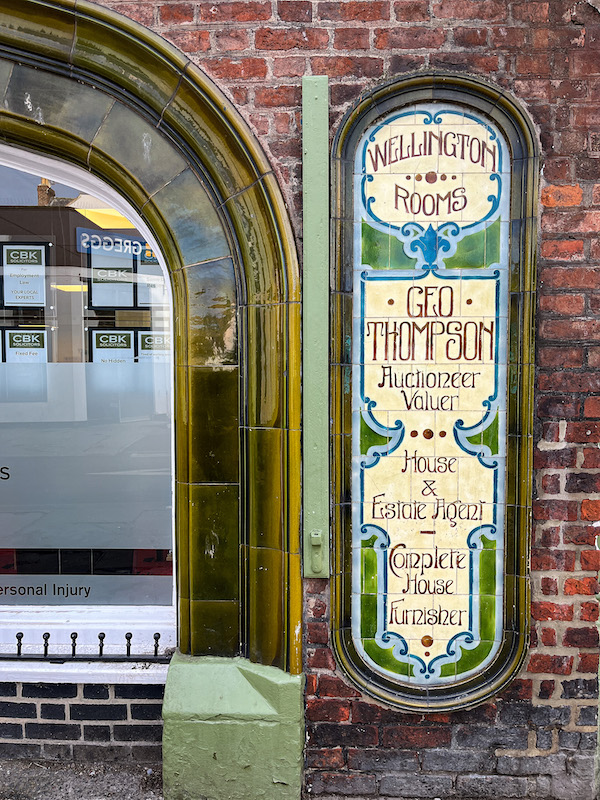
Coronation bunting on Sandgate where my favourite sweet shop serves in measures from glass jars in to paper bags. On Grape Lane where Captain Cook once lived, original bow windowed shopfronts. A tiled sign on the corner of Wellington Road.

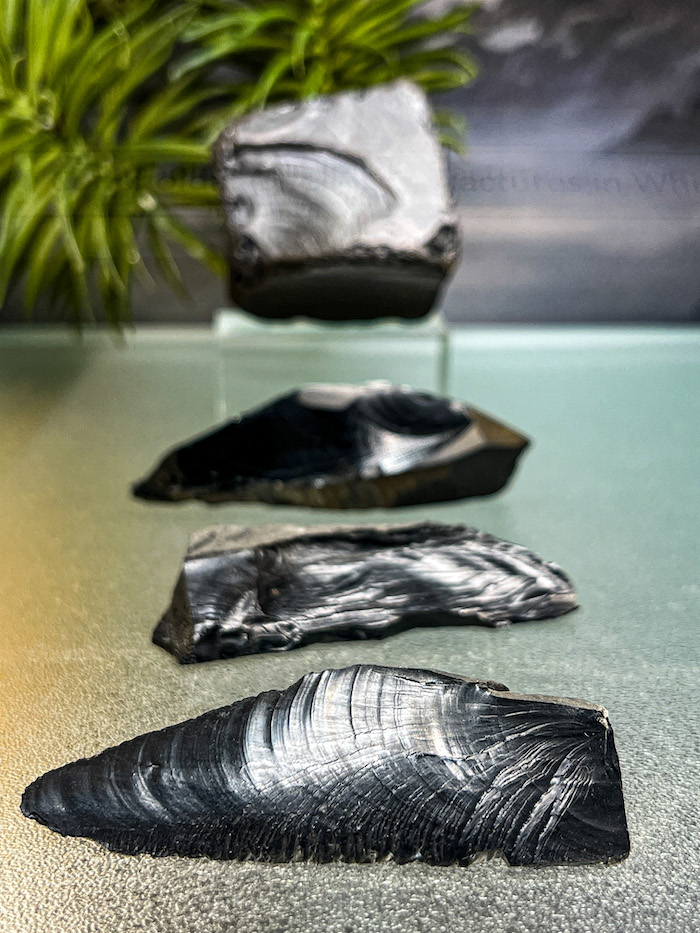
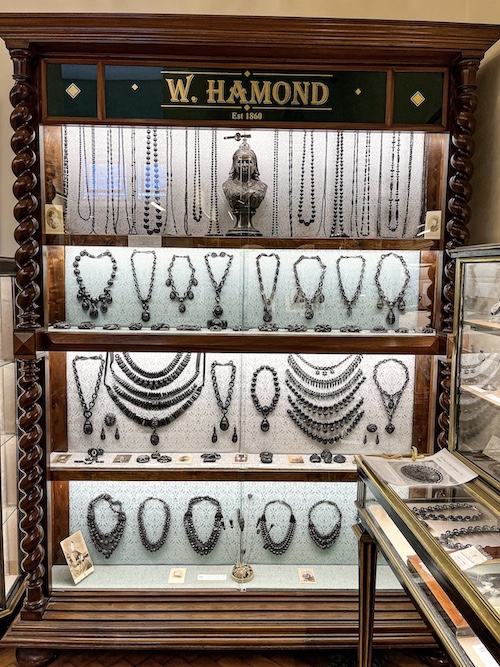
We visit the Jet Museum on Church Street. Whitby Jet is a semi-precious black gem…formed over millions of years from the fossilised remains of wood/trees. Queen Victoria made it popular when she wore it as part of her black mourning attire.

An hour’s drive the following day to the city of York. Surrounded by 4 metre high walls or ‘Bar Walls’ along which you can walk, York has been a city defended by walls since Roman times. Mickelgate Bar the most important of York’s gateways to the city; a gateway has stood here since the Romans… the earliest surviving piece of this gate dates to the 12th century. Roman stonework and even coffins were reused by Roman builders in its construction. Used over the years to greet royals and display the severed heads of traitors, there were people living in it as early as 1196…the last resident leaving in 1918.

Just off York marketplace lies The Shambles. Preserved heavy timbered medieval buildings lean in to each other over narrow streets filled with cafes and tourist shops. Crowded with visitors photographing crooked 14th century buildings.


The magnificent York Minster, over 1,000 years old. The Anglo-Catholic cathedral of York is one of the largest in Northern Europe. The title “minster” is attributed to churches established in the Anglo-Saxon period as missionary teaching churches. After several centuries of building it was completed in 1472.

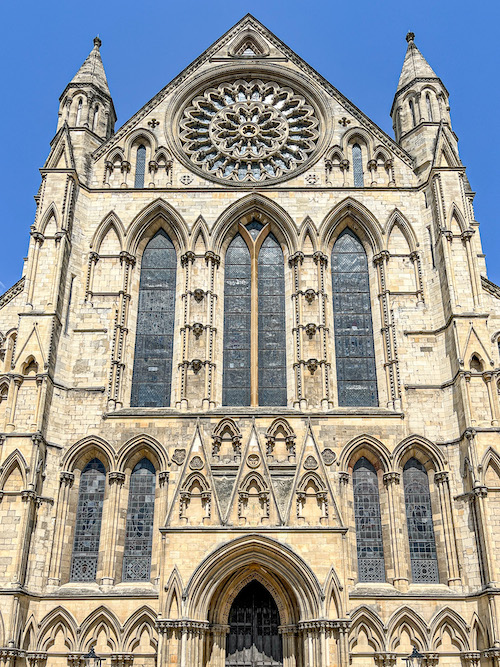
Buildings in and around York Minster Gardens.


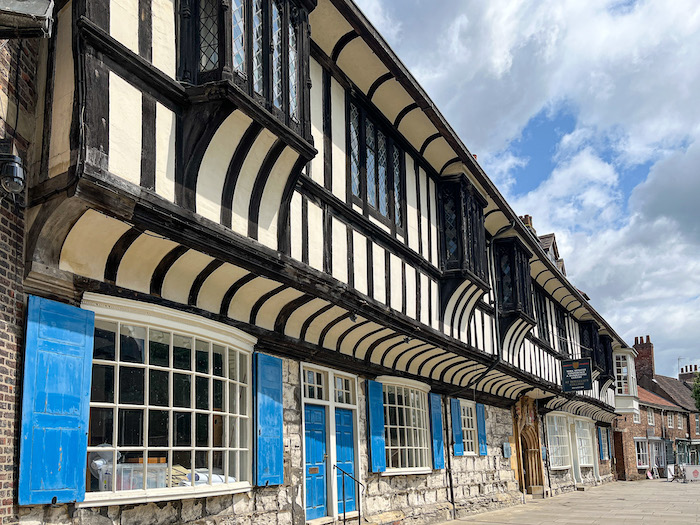
St Williams College, a Mediaeval building built 1461 restored in the 1900s. Originally a residence for priests serving chantry altars at York Minster. Sold after the reformation, it was owned by Sir Henry Jenkyns in 1642 and housed the printing presses of King Charles I during the Civil War. Ground floor bow windows were added in the 18th century when part of the building was used for retail. The timber framed jettied upper floor is believed not to have changed since original construction.
Wipmawopmagate…the shortest street in York. In 1505 it was known as ‘Whitnourwhatnourgate’ meaning “What a street!” I waited for a large school party to disperse; posing for photos, giggling at the name.

Wednesday morning we left Whitby to explore the Peak District, an area of England neither of us had visited. A-roads to the M1 winding back on to more A-roads turning at Penistone, driving past The Old Mustard…rolling pasture, yellow and russet moorland staggered by dry stone walls dotted with sheep. Following Mortimer Road passing Bolsterstone, Dungworth…by Windy Bank over Emlin Dike; old names in older places… looking down across Bradfield Dale on to the Dale Dike Reservoir. Driving by Foulstone cottage and The Strines Inn where 4 Peacocks rested heavily on a wire fence. Copper coloured hills of dry bracken, boulders and bridges.
Stopping at Ladybower Reservoir looking out at the enormous ‘plugholes’; shaft spillways which regulate water levels letting out water after heavy rainfall, carrying it through tunnels emptying into the River Derwent downstream. The released water is used to create hydroelectric energy.

Derwent Village lies below this huge body of water, non-existent by 1945 after controversially being flooded by Derwent Valley Water Board to create a reservoir to provide water for the expanding cities of the Midlands. The village was briefly visible to the public in the long hot summer of 2018 when the reservoir waters fell to reveal its ruins.

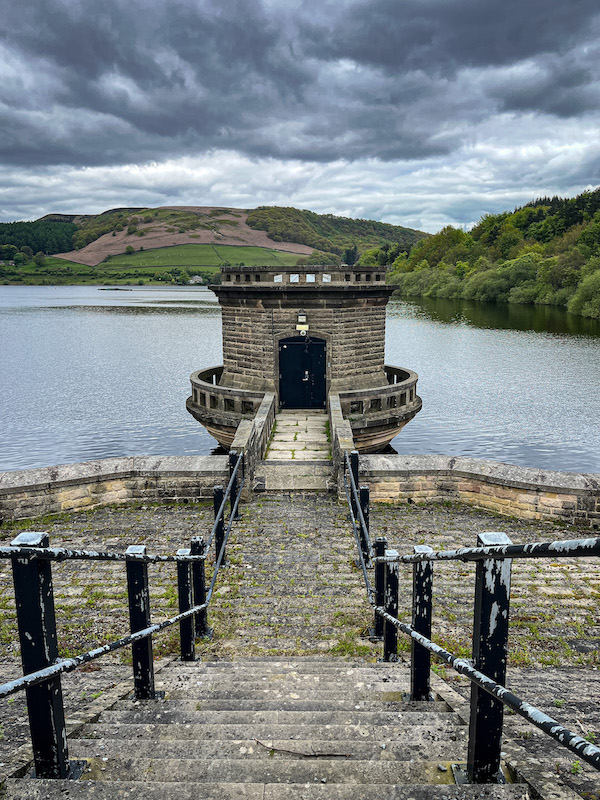
Following the road over a bridge to Derwent Reservoir. During WW2 the 617 Squadron practiced low-level flights needed for Operation Chastise; the ‘Dambusters’ raids, due to its similarity to the German dams.

On to Snake Road through Snake Woodland to Snake Pass. Shimmering in the distance Manchester suspended in a white haze. Through the town of Glossop more stone houses a dog parkour a field of creamy golden cows… out of the town up a steep hill a cyclist stopping to catch his breath in front of a road-sign ‘Think Bike’. Following Chapel Road passing the towering Chapel Milton viaducts and on to Winnats Pass; a winding road through a cleft of high limestone ridges…the name meaning ‘wind gates’ for the winds funneling the pass.

To the small town of Castleton. Lunch in a pub and an amble through this attractive village nestled in the heart of the Hope Valley.

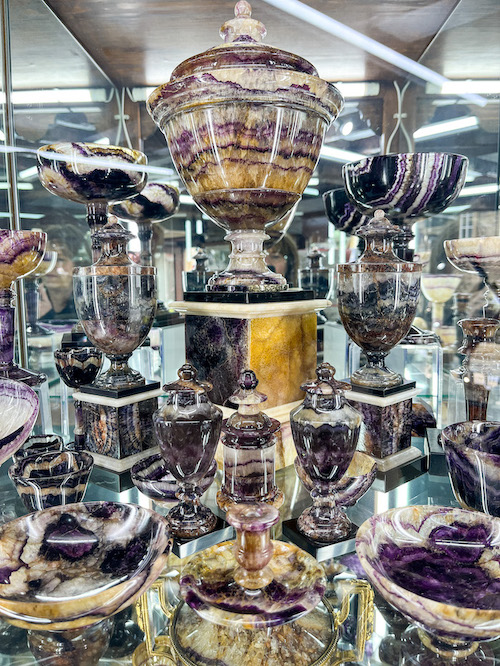
The shops specialise in the Blue John stone local to Castleton mined from Blue John Cavern and Treak Cliff Cavern. Also referred to as Derbyshire Spar, a semi-precious mineral…a rare form of fluorite banded with purple blue and shades of yellow. Almost every gift shop in Castleton sells it; jewellery, ornate bowls, urns, goblets, ashtrays. Backlit it’s beautiful.
We meet David at his shop ‘Carlton Emporium’. Fun and mad as a box of frogs. David: “I retired 42 years ago and I got bored so I bought this building. The local authority wouldn’t let me do what I wanted with it.” Me: “What?” David: “Open a home for wayward girls..from Manchester, Liverpool…anywhere as long as they were wayward!”
An American tourist stopped to ask directions; David: “You have to go down there and over the bridge and come back up here again.” Providing props for a photo… David: ”Don’t hold it like that, it’ll say tit.”

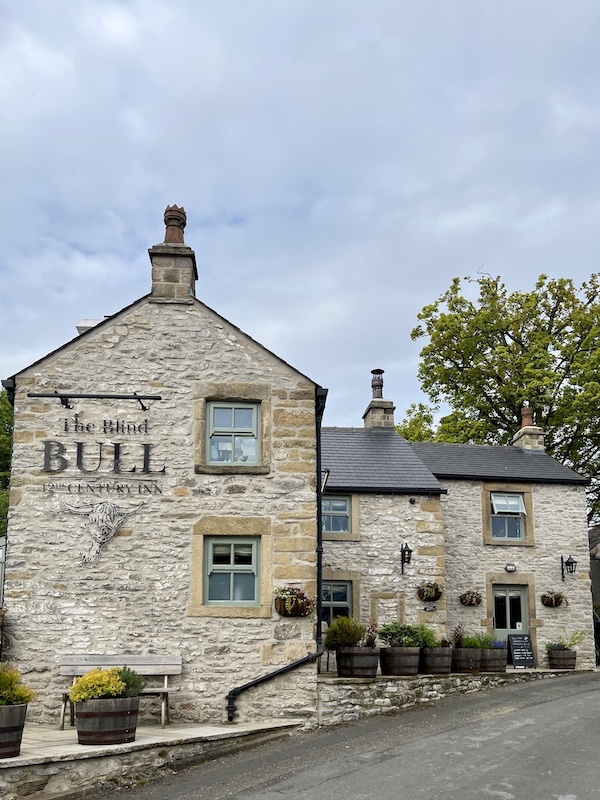
Driving to the Blind Bull in Little Hucklow near Buxton, hang gliders drift the thermals above Bradwell. Our room is fabulous. I luxuriate in the claw footed slipper bath…we sink on to the bed and eat local fudge. I binge ‘Happy Valley’ the English television series filmed in West Yorkshire in the Calder Valley starring the brilliant Sarah Lancashire. I’m gripped.

Next day to Chatsworth House, passing through Stoney Middleton where rocky cliffs loom above the village cottages and a curry house. By Calver village, farms and livestock sheds and miles and miles of stone walls, stone sheds, stone houses, stone sheep pens…through Baslow, by Over End crossing the River Derwent on Bakewell Road to Chatsworth House.
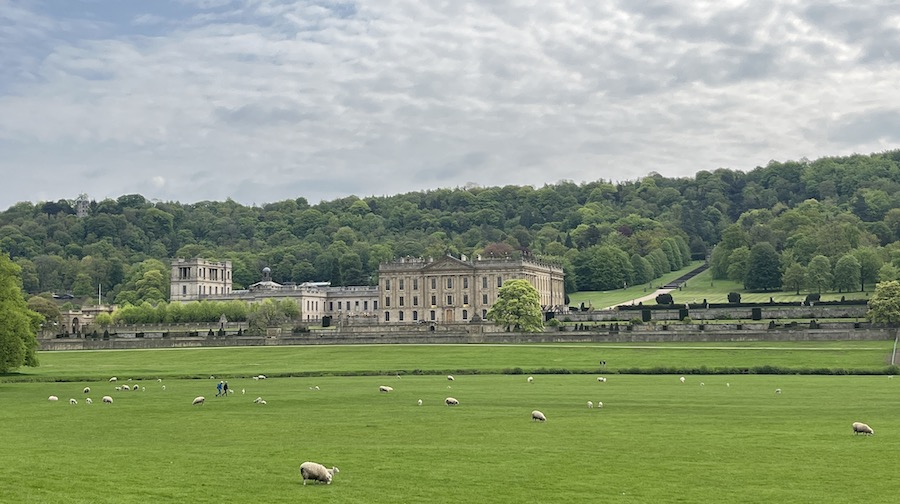
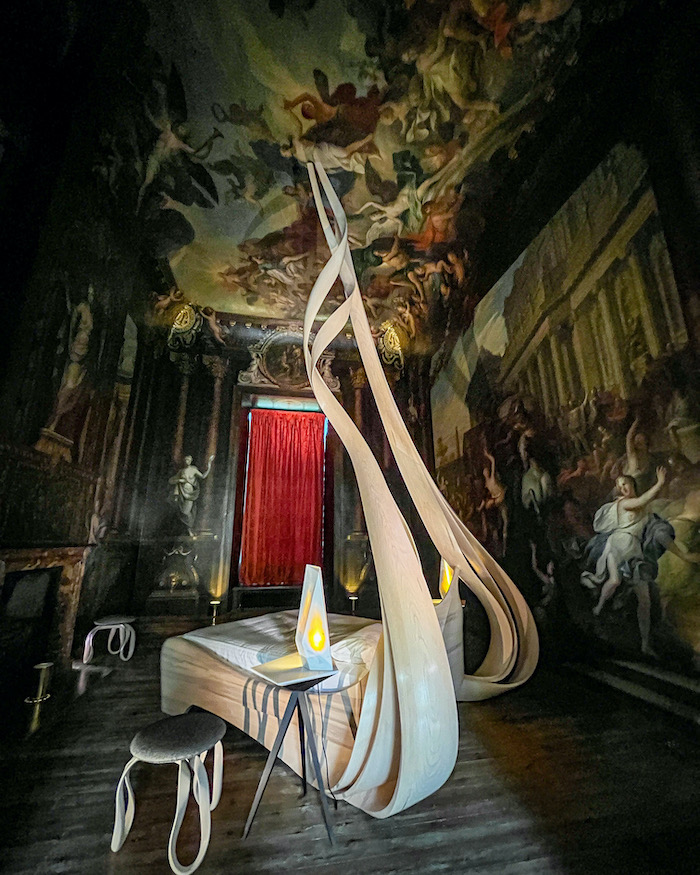
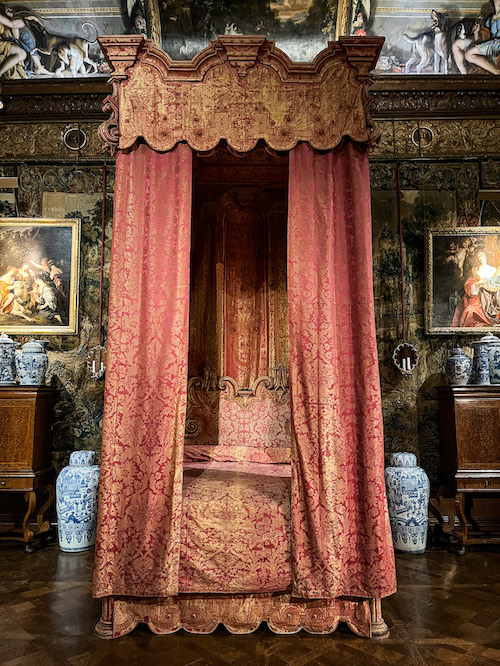
And it is gloriously opulent. Seat of the Duke of Devonshire currently the 12th Duke (the appropriately named Peregrine Cavendish) whose family live in private apartments in the house, Chatsworth contains works of art spanning 4,000 years and is run as a registered charity to help preserve it. It has belonged to the Cavendish family since 1549. The extravagant Painted Hall has magnificent murals painted by Louis Laguerre completed in 1694.


Modern designs displayed among original furnishings and paintings blend perfectly. ‘Enignum VIII Bed (in Bentwood) by the contemporary Irish furniture make and sculptor Joseph Walsh is extraordinary. On display at the time of writing in the painted Sabine room.
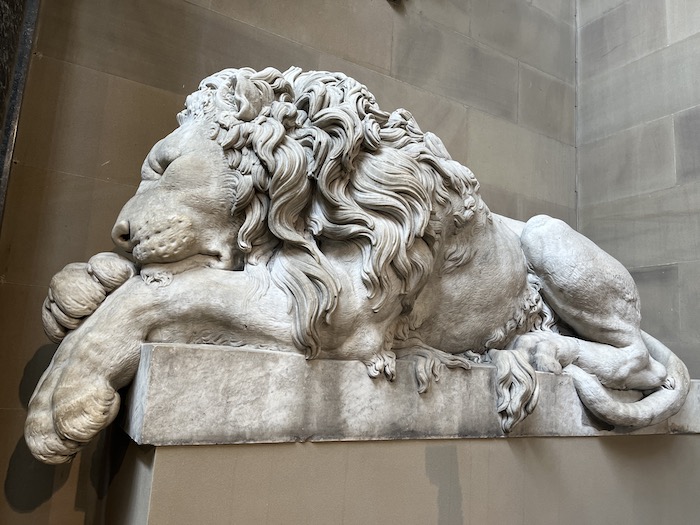
The marbles are stunning. The Chatsworth Lions (there are a pair but this one is my favourite) are copies of the originals by the sculptor Antonio Canova for the Rezzonico monument in Italy. The copies were commissioned by the 6th Duke of Devonshire in 1823 for Chatsworth House…so popular that miniatures are sold in pairs in the (extensive) gift shop.

The famous marble ‘The Veiled Vestal’ which some will recognise from the 2005 adaption of ‘Pride and Prejudice’ directed by Joseph Wright and filmed at Chatsworth House which stood in as the fictional home of Mr Darcy, his Pemeberley Estate visited by Elizabeth Bennett in the 1813 novel by Jane Austen.

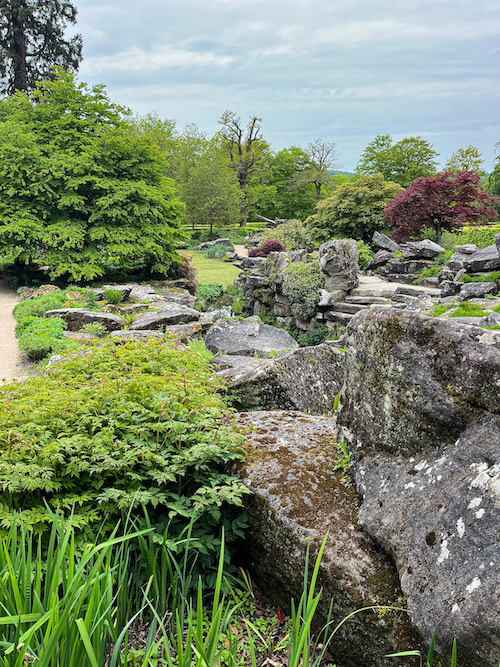
The gardens are beautiful, the rock garden extraordinary. Inspired by a visit to the Alps, the 6th Duke commissioned the building of the garden in 1842 with all of the rocks brought in from nearby Dobb Edge.

From Chatsworth to Bakewell to eat its namesake Bakewell tart with pretty much everyone else passing through town.

Driving through Ashford-in-the-Water through Eyham and back to Buxton for a wonderful dinner at The Blind Bull.
Early morning departure. Light rain and a brooding sky with blue breaking through. No other cars for several miles, views over bucolic English pasture. It’s beautiful. Local roads canopied by emerald trees… the sun glistening on rain creating thousands of temporary tiny diamonds glinting in the woods. Through the unusually named village of Foolow…3.15 hours on the satnav to London for one last day before flying home to our adopted country.
Stayed
Yorkshire Dales near Skipton: Throstle Nest Farm https://www.throstlenestfarmbandb.co.uk
North Yorkshire Whitby: Horngarth Luxury Lodgings https://www.horngarth.co.uk
Peak District Buxton: The Blind Bull https://www.theblindbull.co.uk
Ate – the places we really liked
Aysgarth Hamilton’s Tea Room (and guest rooms) http://yoredalehouse.com
Whitby Royal Fisheries Fish and Chips: https://www.royalfisherieswhitby.co.uk/us
Whitby: Bothams (still the best bakery) https://www.botham.co.uk
Whitby: Java Cafe https://www.facebook.com/people/JAVA-CAFE-WHITBY/100050056281187
York: Coffee Culture on Goodramgate https://www.coffee-culture.cafe
Peak District Buxton: The Blind Bull restaurant (excellent) https://www.theblindbull.co.uk
Saw
Yorkshire Dales Malham Cove: https://www.malhamdale.com/malhamcove
Yorkshire Dales Aysgarth Falls: https://www.yorkshiredales.org.uk/places/aysgarth_falls_national_park_centre
Yorkshire Dales Buttertubs Pass: https://www.yorkshiredales.org.uk/places/buttertubs_pass
North Yorkshire Rievaulx Abbey: https://www.english-heritage.org.uk/visit/places/rievaulx-abbey
East Yorkshire The Sledmere Cross: https://en.wikipedia.org/wiki/Eleanor_Cross,_Sledmere
North Yorkshire Wheeldale Roman Road: https://www.english-heritage.org.uk/visit/places/wheeldale-roman-road/history
North Yorkshire York Minster https://yorkminster.org
Peak District Ladybower Reservoir fascinating info here: https://www.bbc.com/travel/article/20190924-the-lost-villages-of-the-derwent-valley
Peak District Derwent Reservoir: https://en.wikipedia.org/wiki/Operation_Chastise
Peak District Chatsworth House: https://www.chatsworth.org
Peak District 360 view of The Painted Hall at Chatsworth House by Rod Edwards: https://rodedwards.com/interactive-files/Chatsworth_House/index.html
Other stuff
All Creatures Great and Small Television series: https://en.wikipedia.org/wiki/All_Creatures_Great_and_Small_(2020_TV_series)
James Herriot vet: https://en.wikipedia.org/wiki/James_Herriot
All Creatures Great and Small books: https://www.goodreads.com/series/76445-all-creatures-great-and-small
Whitby Jet: https://www.whitby-jet-jewellery.com/what-is-whitby-jet
Whitby town: https://en.wikipedia.org/wiki/Whitby
Joseph Walsh furniture maker: https://josephwalshstudio.com
Excellent info Chatsworth House on Wikipedia: https://en.wikipedia.org/wiki/Chatsworth_House
Happy Valley TV series: https://www.youtube.com/watch?v=TXdBMaocR_E
The Dambusters film: https://en.wikipedia.org/wiki/The_Dam_Busters_(film)
 The Travel Diarist