May 2025
Day 1 Tuesday 20 May – Madrid.
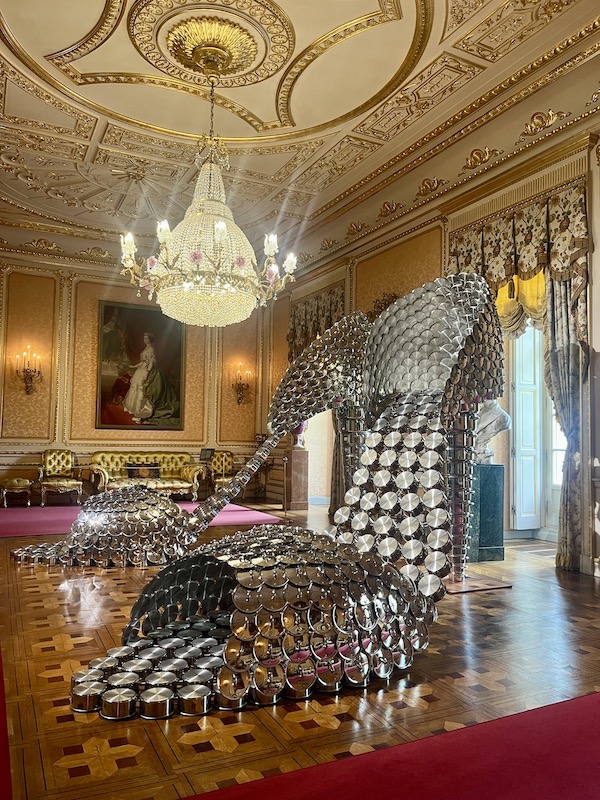
We’ve been to Spain a few times, to Barcelona, Grenada, Murcia, Cartagena…and Dave to Madrid for work, and it’s a place I’ve wanted to visit because this is the home of Picasso’s anti-war painting ‘Guernica’. From New York to London for 2 days to visit family then a 2 hour flight from Heathrow. Checking in to our centrally located hotel I see a leaflet for one of my favourite installation artists; Joana Vasconcelos is showing at the Palacio de Liria. I’ve only seen her art in photographs so this is a treat. Our first destination decided we stop en-route to eat tapas up some steps from the hotel in a shaded landscaped square. To Calle de la Princesa where Vasconcelos’s art complements the grandiose surroundings of the Palacio. The chapel filled with a huge fabric heart its ‘veins’ pulsing light to the song ‘Hallelujah’, her giant stilettos made from household cooking pans and lids…the suspended rotating black heart an intricate maze of disposable plastic cutlery. More installations reach out in to the grand spaces they occupy, suspended in stairways holding court in grand rooms…an elegant and thrilling juxtaposition.


The palace holds an impressive collection of European art; Titian, El Greco, Reynolds, Rubens…we puzzle over a Goya of a young woman with oddly shaped arms, her hands disproportionate to her body….it feels blasphemous to mock Goya. In the soothing green hues of the library books and parchments date back several centuries, a letter from Christopher Columbus lies displayed in a glass case. Outside the landscaped garden is scented with blooming jasmine and waxy mimosa. Incongruously a pig called Gordy wanders by, obeying its owner to sit on command…fed apples as reward. An area enclosed with low hedging contains a pet cemetery, rows of stone headstones dedicated to the resident 19th Duke of Alba’s family companions.


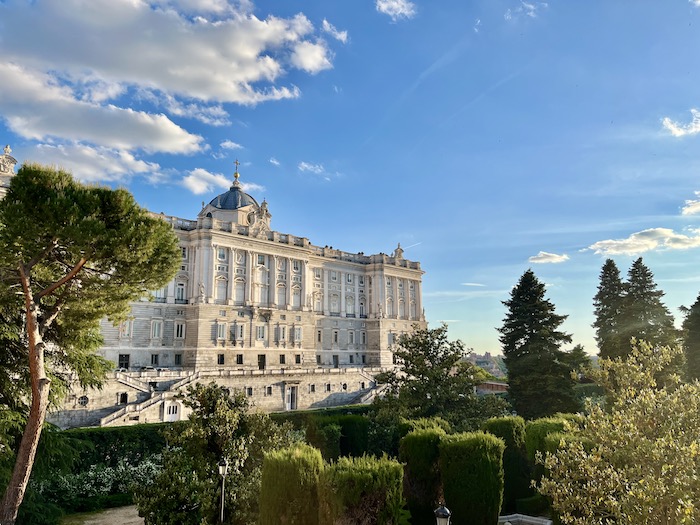
We walk back to the hotel passing glorious Spanish buildings, towering like iced confections. At the vast Royal Palace we stand with other tourists to photograph the baroque architecture. The building commenced in 1735 for King Philip V. At 135,000 square metres with 3,418 rooms it’s the largest palace in Europe, home to the Spanish royal family.

At 9pm it’s still light. We meet with Marcelino and Olga, colleagues of Dave’s from the Spanish offices, for dinner at Taberna del Capitan Alatriste a former 16th century palace with original brick and stone walls and intact centennial caves built with materials from an ancient Arab wall. Marcelino orders for us…plates of delicately small lamb chops, chorizo, croquettes, charred padron peppers. By 10pm we are eating dinner, traditionally the Spanish eat late in the evening…I find it difficult to wait this long but 2 hours later we enjoy a stroll around the old centre of Madrid. To Plaza Mayor, a large elegant rectangle of historic buildings and arcades and close by is the plaza of Puerta del Sol, ‘Kilometre Zero’…where Marcelino points out a stone slab which marks the geographical centre of Spain, explaining this is the starting point of the country’s six national roads the A-1 to A-6. At midnight there are plenty of fellow wanderers.

Day 2 Wednesday 21 May
The following day at Museo Nacional Centro de Arte Reina Sofia I finally get to see Picasso’s Guernica…and it’s as jawdropping as I expected. Painted in 1937 by Spanish artist Pablo Picasso as a commission for the Spanish Republican government to be displayed at the Spanish pavilion (it went on to tour), Picasso worked on the painting from his home in Paris. It became a response to the bombing of Guernica on 26 April 1937, (a town in Northern Spain). Measuring 3.49 metres by 7.76 metres it details the horrors of war; a screaming woman holding a dead child, a gored horse twisting in agony, a dismembered soldier, flames from burning buildings…Picasso’s trademark bull. It brought the attention of Spain’s civil war to the world. Understandably it attracts crowds of visitors but I find plenty of space to stand and admire it…returning again after walking some of the gallery’s other rooms. The place is vast.

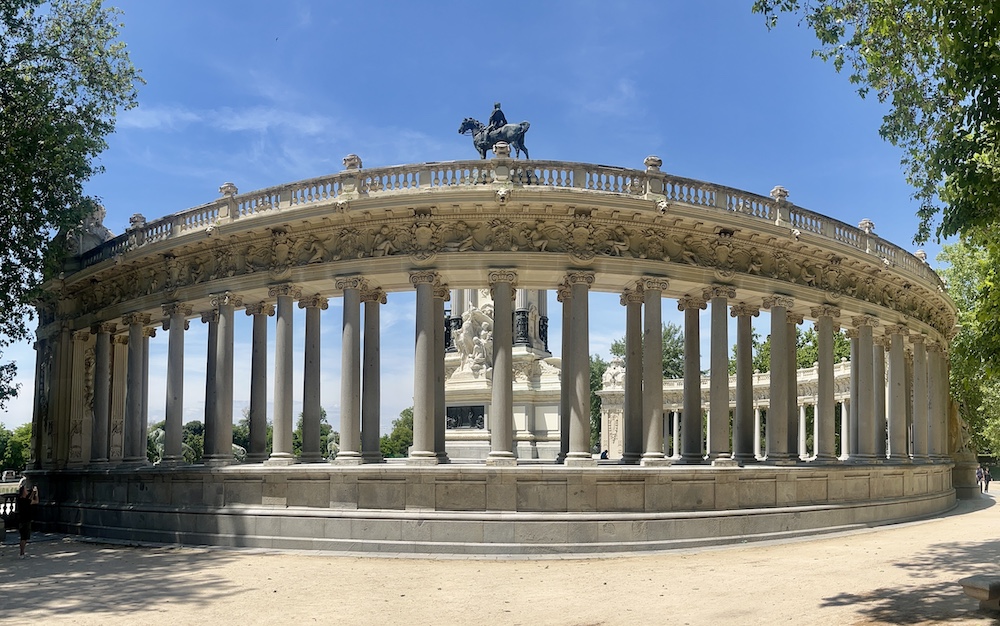
To El Retiro, the city centre park created in 1680 by Kings and Nobles extended by a Duke and now a UNESCO world heritage site. A lake for boating, large rose garden, a crystal palace, fountains and swans, a black swan gliding gracefully among them, basking turtles. A semicircular colonnade wrapping around the raised monument of King Alfonso XII on horseback. The Fountain of the Fallen Angel inspired by Milton’s ‘Paradise Lost’ is allegedly the only known monument to the devil…depicting Lucifer falling from heaven after being cast out.
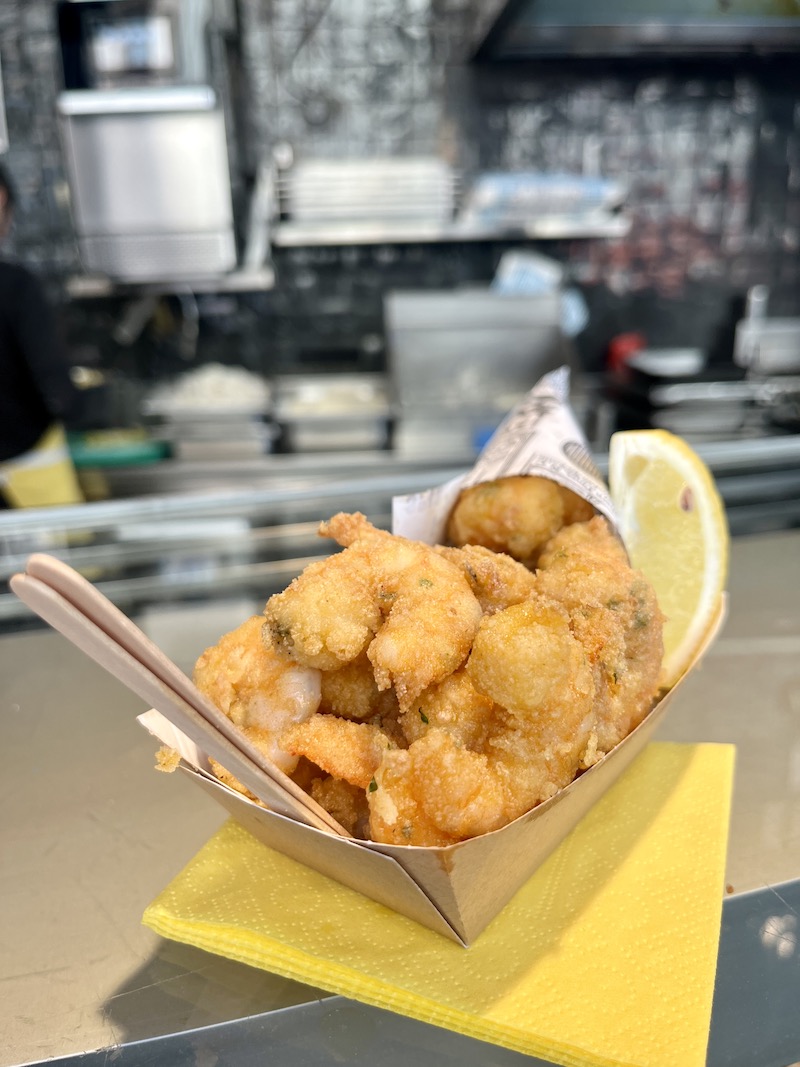
We walked to the Mercado de San Miguel where we wandered the indoor food stalls buying different tapas options; fried prawns with fresh lemon juice, chorizo baguette and a soft brie like cheese with raspberry jam…and sheep’s milk Manchego cheese with quince jelly. There are so many options here savoury and sweet and it’s a hugely popular place mainly with tourists.


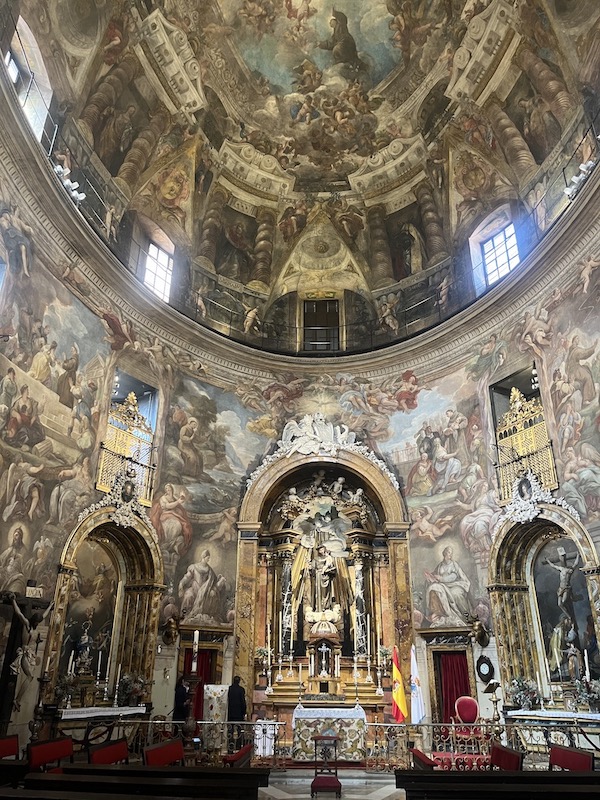
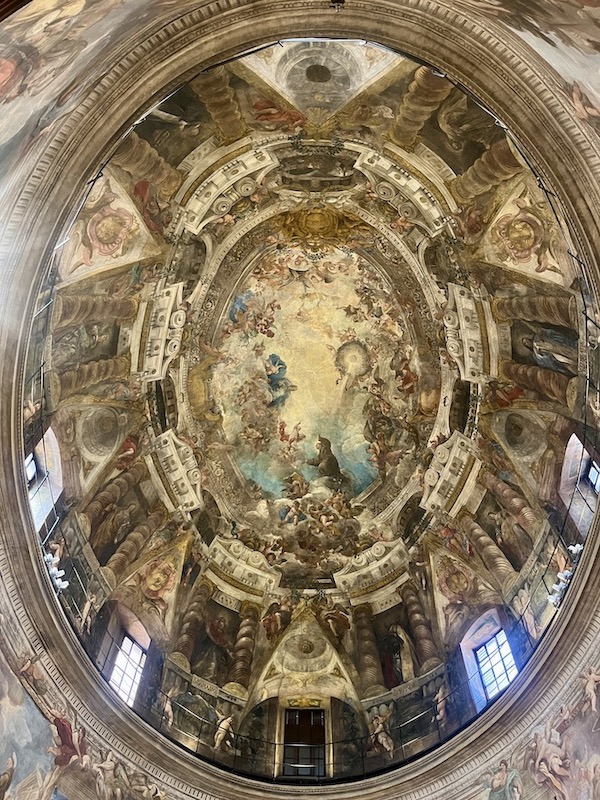
On asking Olga about her favourite places in her city she told us of Iglesia de San Antonio de los Alemanes (Church of Saint Anthony of the German) on the corner of Calle de la Puebla and Corredera Baja de San Pablo. Our final stop of the day, this 17th century baroque building dates to 1620, originally ordered by King Felipe III when Portugal was under Spanish rule for Portuguese migrants. When Portugal gained independence the name was changed and it was dedicated as a refuge to German immigrants. It is covered with frescoes…every space filled by a painting, apparently one includes the wife of painter Luca Giordano who alongside the painter Francisco Ricci created this incredible display. I have never seen a church so completely painted…the eyes rove overwhelmed by an excess of beauty which is softened by the diffused light entering the windows high in the dome.
Day 3 Thursday 22 May
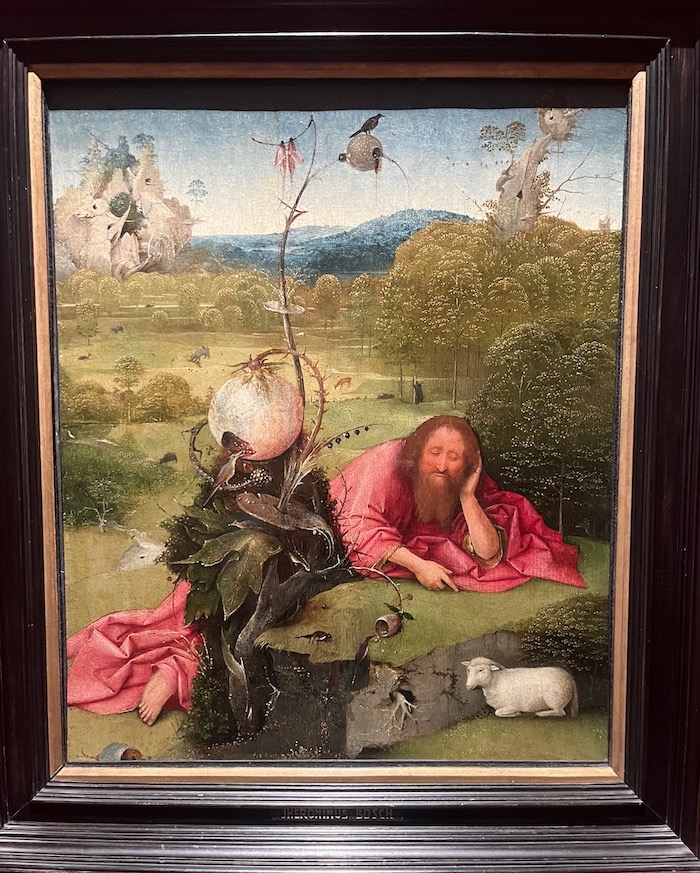
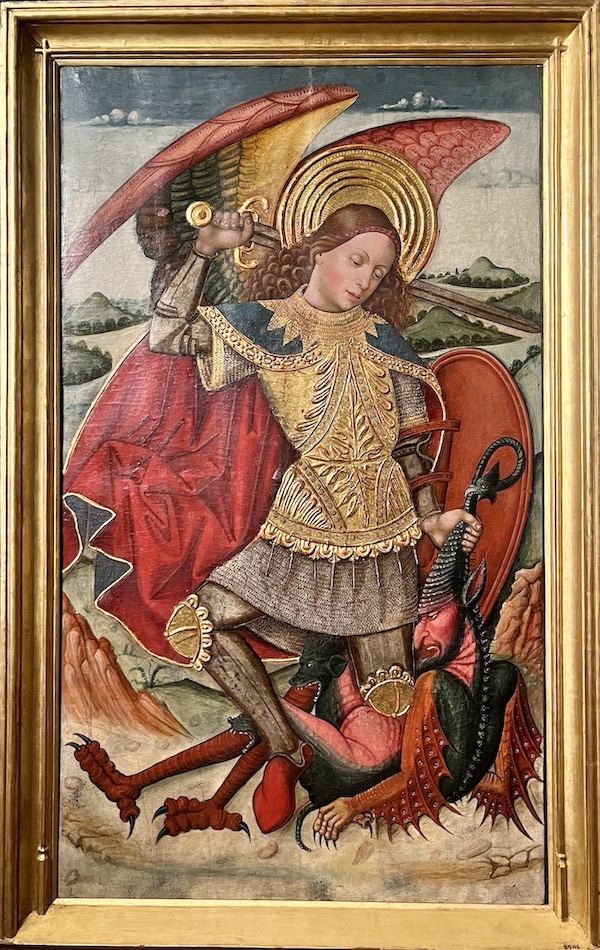
Started our day at the Museo Lazaro Galdiano to see oil paintings from the private collection of the former book publisher the museum is named after. Several floors of a gorgeous building filled with paintings, books, weapons. One painting by the Dutch Hieronymus Bosch, a surreal representation of a religious narrative typical of his style featuring a christ like figure, a lamb and exotic fruit. There are several paintings depicting George slaying the dragon, my favourite takes the form of a human looking devil.
On to walk around the neighbourhood of Barrio de las Lettras…originally home to the great 17th century writers like Lope de Vega. Smaller streets, tapas bars, religious shops selling statues and icons, some small boutiques. We eat in a simple tapas bar Casa Gonzalez, mashed black pudding and onions on toast…Iberian ham with tomatoes…sweet and fleshy like we never find in American supermarkets. Perched on high stools talking with two men on the next table from Northern Ireland, over for the Man U v Spurs game the previous day in Bilbao.

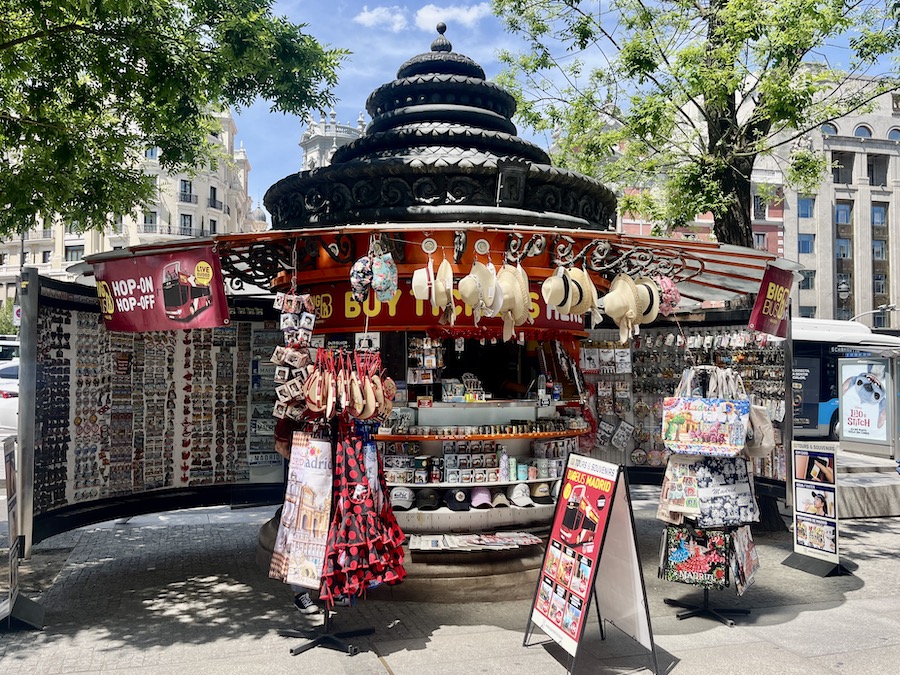
One of my favourite sights in the city are the ingenious kiosks selling snacks, tourist trinkets, sunhats, drinks…designed to open wide like embracing arms displayed with wares which close to lock around the contents securely at night. And the many attractive tapas bars with decoratively tiled facades.


A long walk back to the hotel stopping to see the Temple of Debod, an ancient Nubian temple from the 2nd century originally located south of Aswan in Egypt. The Egyptian government donated it to Spain in 1968 and it was shipped and rebuilt in the Parque de la Montaña. It’s a little underwhelming but surreal learning of its origin.

Day 4 Friday 23 May – Cordoba.
Train to Cordoba, greeted on board by 15 gladiators celebrating a stag weekend, one dressed as Obelix. Seats around us scattered with plastic gladiatorial helmets and swords. We walked 15 minutes from the station to leave our bags at the Libre apartments where self check in and lockers were available for arrivals earlier than the check in time.
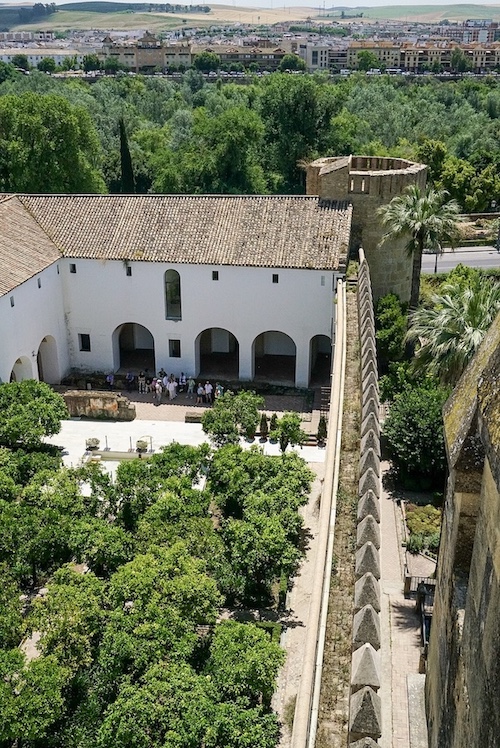
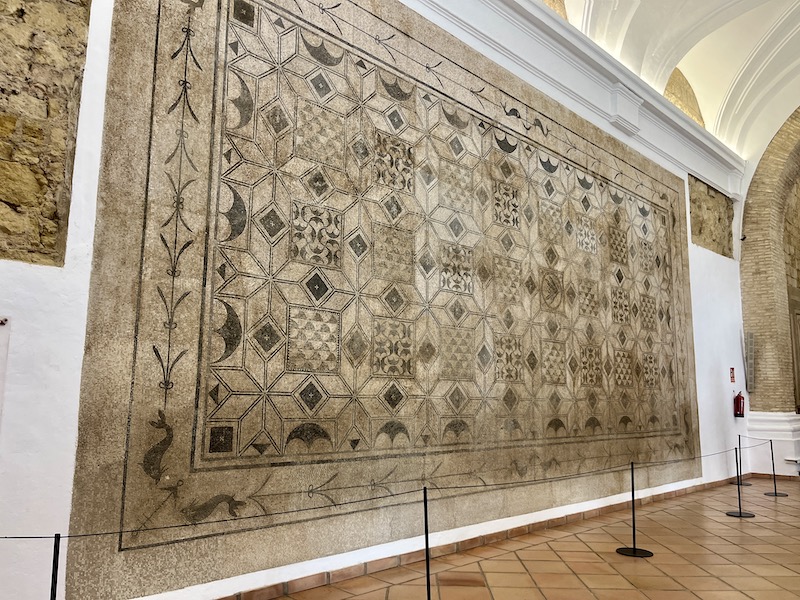
Out to explore, we wandered the narrow streets of Cordoba’s old town. First to the Alcázar de los Reyes Cristianos…castle of the Christian monarchs or Alcazar (Palace 1328). Occupied by the Visigoths in medieval times and by every conqueror after. Contains mosaics from the 2nd and 3rd centuries. We climbed to the top of the tower for views across palm trees later descending to the gardens with towering clumps of bears-britches filled with bees.

A tasteless touristy lunch of below average breaded ham with oxtail and fried calamari, the restaurant with outdoor tables simply too convenient for our 3pm tickets for the nearby Cordoba Mosque Cathedral. The meeting of two religious cultures on this architectural scale is incredible. The building originated as a mosque in 785 and was expanded up until the year 971…the original Islamic part of the building is my favourite, glorious vaulting arches of subdued candy stripes of red and cream dominate the central nave and prayer hall, its repetitive two tiered arches rolling overhead. The Mihrab (a niche symbolising the direction of prayer) is a chamber with such gorgeous mosaics and stone carving and a shell shaped cupola so stilling in its beauty that I am awed looking up in to it. It is breathtaking and I love it. It was my reason for including Cordoba in our trip and worth any detour you can take if visiting this country.

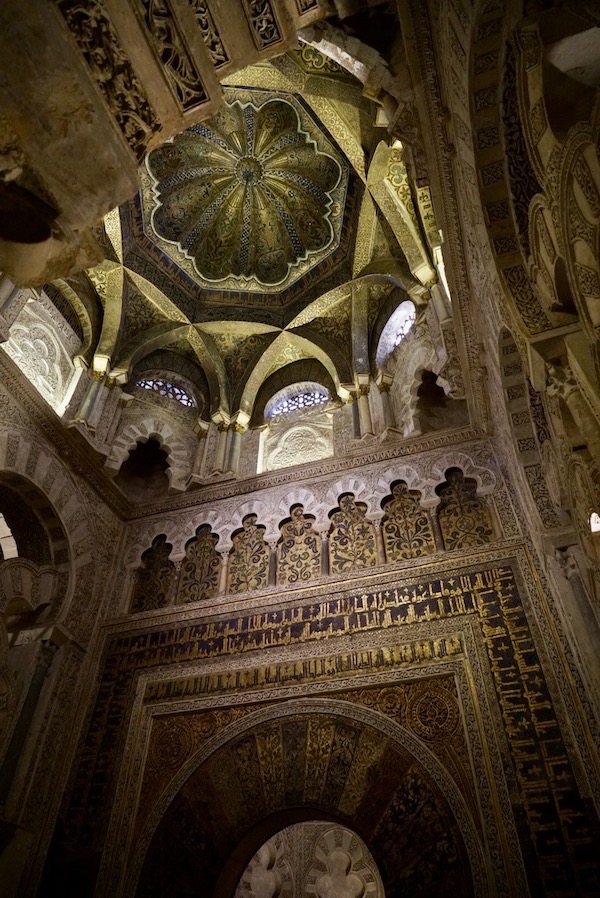
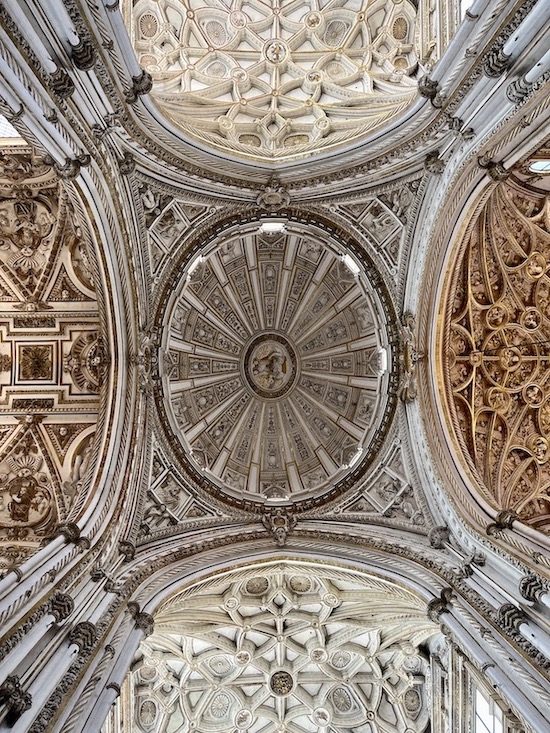
Converted to a cathedral in 1236 when Cordoba was captured by Christian forces of Castile during the Reconquista, the 16th century saw the introduction of the Renaissance nave and transept built in to the centre of the building. It’s an extraordinary clash of cultures after walking among the gentle cooling stone and muted colours, the tucked away chambers of the original mosque then thrown unexpectedly, abruptly in to the shock of towering domes, towering marble, towering carved wooden altars…everything towers and gold is everywhere. Of course it’s also stunning, but it’s so lavish, so over the top, it feels like an engorgement of beauty.

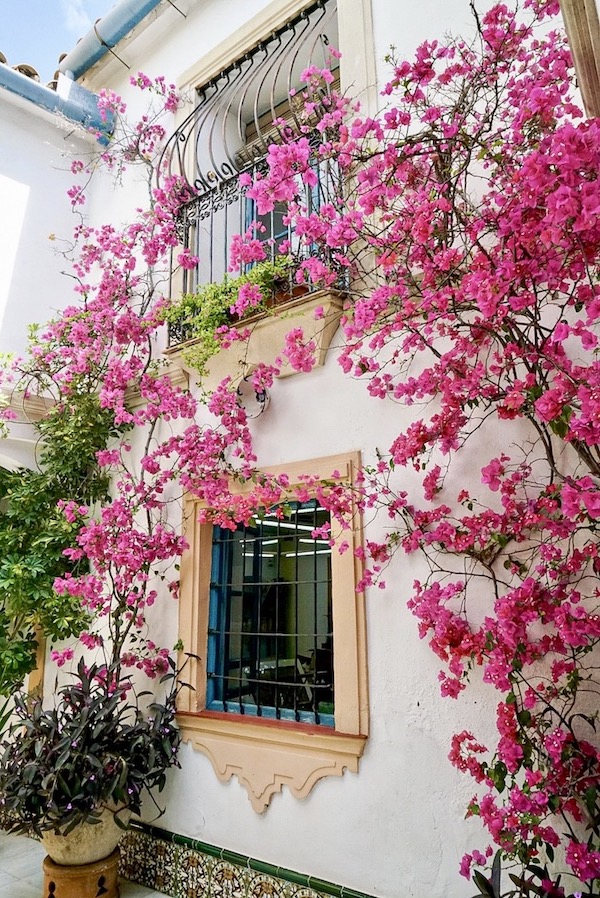
Outside it’s getting hotter…we take a slow wander of the Jewish quarter where simple white-washed houses with interior courtyards are filled with flowers. The shocking pink of papery Bougainvillea climbing the walls, potted plants tumbling flowers from iron balconies. Some buildings emulating the arches of the mosque.

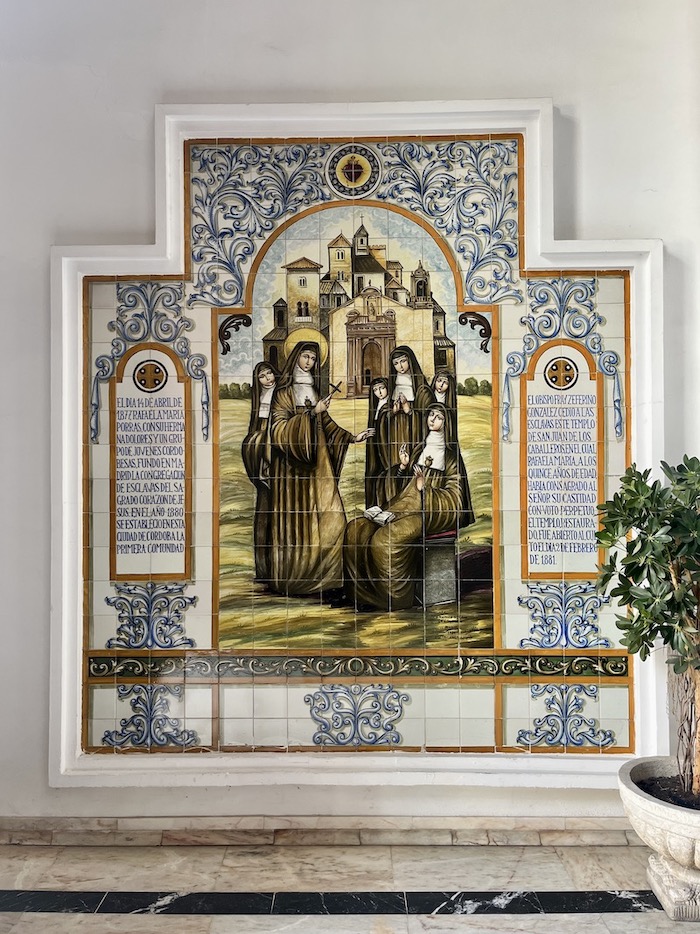
And in building doorways, courtyards and gardens we see painted ceramics depicting religious scenes and figures. We walk to the remains of the roman temple (81–96 CE), not discovered until 1950 during a building expansion and currently closed to the public awaiting restoration, its surviving columns viewed from the street.

Islamic architecture, individually hand placed pebbled cobbles covering steps and courtyards, Spanish colonial buildings. It’s hot and getting hotter…June, July, August would be too hot. Cordoba glows in the sun.


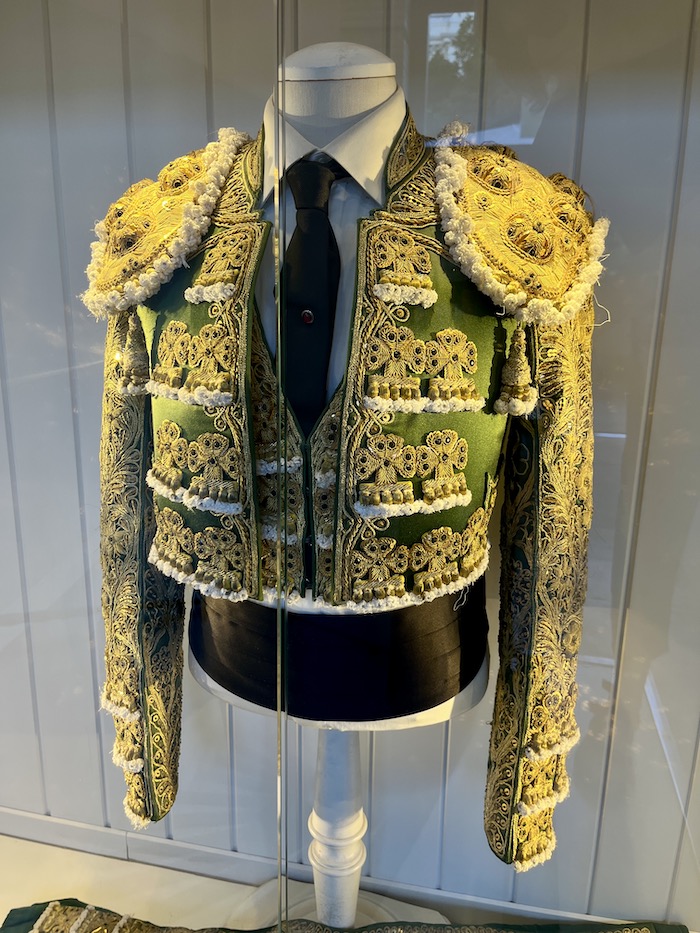
We enjoyed drinks in the square right below our hotel room window. Cocktails huge and potent at 8.50 euros each…they’d be $16-$18 back in New York. This is a very attractive city…lots of hen and stag nights in the evening which I didn’t expect but so far playful and not obnoxious. Sunny until 10pm…everyone is out on the streets dressed for dinner, having a drink, socialising. A bar has a Spanish bullfighter’s jacket behind glass…the fashioning of it I admire but what it represents I loathe and wish they would ban.

Day 5 Saturday 24 May
A leisurely morning and a later start before walking 10 minutes to the small flamenco museum ‘Centro de Flamenco Fosforito’. The low entrance fee of 2 euros reflected that many exhibits were broken or poorly displayed…but it gave us more insight in to the history of flamenco. There’s some wonderful photographs and the history of the museum’s pretty cobbled courtyard as a former corner Inn was interesting.
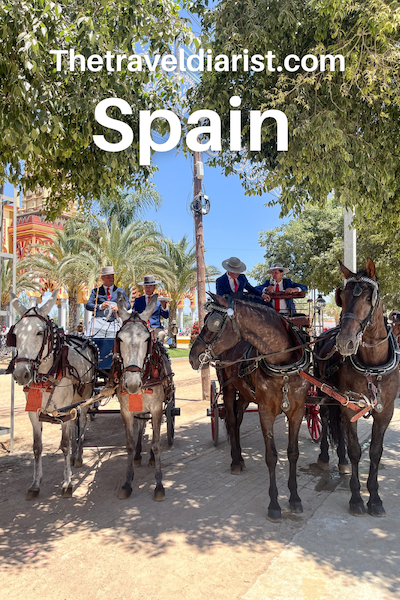
Feeling hungry we headed to the Riberia district on the banks of the Guadalquivir River, the second longest in Spain. Drinks and sandwiches at Signatorio sitting outside under parasols, puzzling why so many people were dressed in flamenco outfits many in horse drawn carriages heading across the river. One carriage of 5 women in jewelled colours, start a traditional clapping song. After talking with two English people at the next table, one who used to work in Cordoba, we learned about the Feria, held the last week of May to mark the feast of Our Lady of la Salud (Health). An annual fair right when we’re here, a fabulous surprise. So we walk across the bridge in the scorching sun through the striped arches modelled after the mosque and studded with lightbulbs in to the grounds of the fair of El Arenal.


Large tents filled with people dancing, temporary bars and food…many people dressed in the style known to be typical of the Spanish gypsy, going in to one tent after another, some less popular, others heaving with people. Singing, clapping, celebrating the history of flamenco, men and women dance, women dance with other women…the atmosphere is raucous and celebratory. Lines of horse drawn carriages with elaborately dressed men and women, some must be city dignitaries and wealthier citizens…their appearance and manner a little more refined and contained, all promenade the dusty wide avenues between the temporary streets of tents. A funfair for children is set up in a separate area, slides, racing games, shooting targets, the modern equivalent of coconut shys…parents lead their children stuffed in to bright costumes none of them complaining about the heat. The drinking, dancing and posing goes on all day and in to the night. We leave before nightfall, after a couple of hours we’ve enjoyed enough met some wonderful people even posed for photographs with a group of boisterous ladies.
Day 6 Sunday 25 May – Seville.
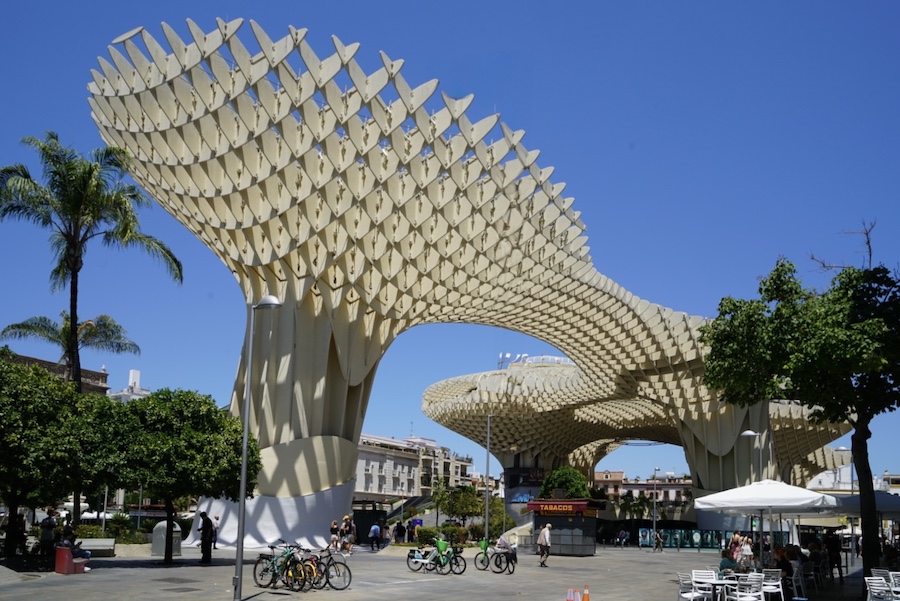
A short train journey an hour to Seville. We check in to our Airbnb above a tapas bar, it’s okay but very dark, designed no doubt for the scorching summers but hardly any light gets in and the inner courtyard private to our room, is enclosed trapping the air. The main living area is dominated by a huge black TV and console and 1980s glass topped tables…4 of them of varying size. We escape to explore, walking to the Setas ‘parasol’ contemporary walkway but found it ugly and disruptive to the space, I can’t imagine living overlooking it. We decided against paying to walk the top of it and instead go to the plaza of the huge cathedral and Alcazar…finding that they’re both sold out so we book tickets online for some late available time slots on Wednesday. It’s a new way of living, everything so hugely promoted in the digital age that if you don’t book in advance you don’t get entrance…which in turn results in a restrictive timetable. Travelling doesn’t feel as carefree. Horse and carriages carrying sunburned tourists clatter across the cobbles, the heat is rising, we’re both a bit irritable so we give up on sightseeing and decide to eat tapas in a shaded narrow street.


Day 7 Monday 26 May
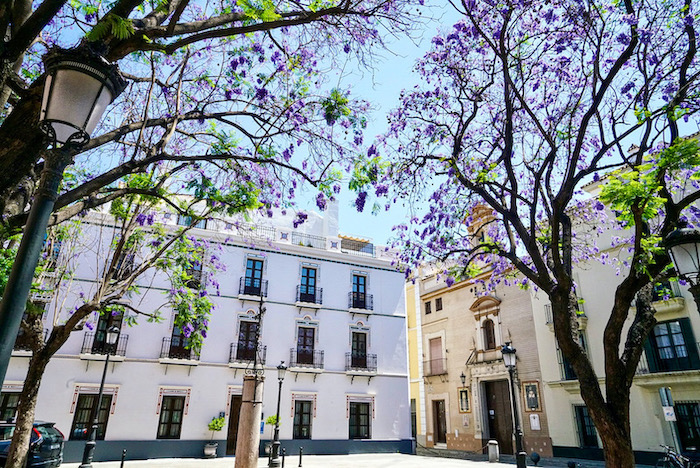
The following morning we’re woken early by construction workers in the apartment next door, our Airbnb demands video evidence of the sound. Luckily they acquiesce and refunded we find a beautiful hotel on a quiet cobbled square filled with heavily scented jacaranda trees in full bloom. Hotel Vincci Molviedro is perfect, the staff are welcoming and fun, our room and bathroom combined are larger than our Brooklyn apartment. Bliss.

We check in and head straight out to the Hospital de Venerables in the Barrio de Santa Cruz, a 17th century building formerly a residence for priests. A central courtyard is surrounded by small gallery rooms with a pretty barrel vaulted frescoed church in one corner. One of the galleries now houses the Velázquez Centre dedicated to the famous Spanish painter Diego Velázquez (1599-1660). The centre was created after a painting of the ‘Santa Rufina’ was attributed to Diego Velázquez and valued at 12.4 million euros….former hospital rooms renovated to exhibit it and others in the permanent collection. A fabulously informed member of staff called Clara walked us around the paintings educating us in the religious and mythological figures and symbolism; the Virgin’s pink clothing (usually blue) depicting strength, the heart, divine love, her ring and crown depicting her as ‘married’ (profound devotion) with God. I listen, interested…but I don’t understand all of it…religious interpretation often differing from country to country and my religious education is sparse at best. Upstairs another set of rooms/galleries are laid out mirroring those below but featuring contemporary art. My favourite part of the building is the ornately carved plaster-work on the ceiling above the staircase.


On to the small crowded tapas bar Bodega Santa Cruz Las Columnas which is so popular with both the Spanish and tourists it has 21 staff. People spill out on to the street. The atmosphere is fun and noisy. Only a shared table is available and recommended by our table partners we order the Gambas and boccorones (anchovies) which are delicious. Spanish couple Elvis and Isobel are on vacation from Northern Spain and we wind up spending a couple of hours using Google translate, not sharing a language, but still managing in this digital age to share travel adventures; Elvis had been to some incredible places including Iraq.

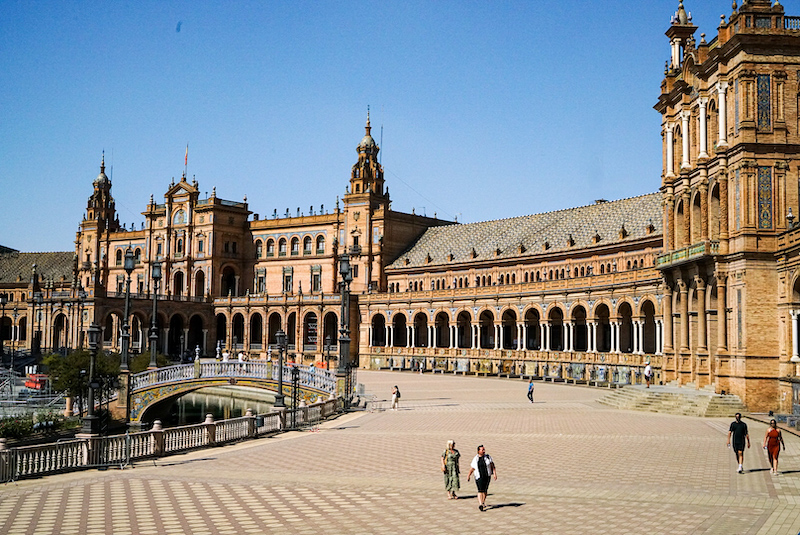
We eventually go our separate ways, we head to Plaza de Espana (completed 1928) where an event with a large stage and lots of technical equipment is in the process of set up. So hot…37c but cooler in the shade of the colonnades. Small tiled bridges serve a decorative function. Large groups of Asian tourists rest from the heat on the grand staircases, giggling and posing for photographs, they smile as we pass. A father with two young boys sell us 1 euro bottles of water…digging deep in to their cooler to give us ice cold bottles. A few minutes further we wander in to Parque Maria de Luisa…a beautiful spot with towering palms and water features, dusty winding paths and iron benches…but it’s so hot now we don’t last long.

Overheated and tired we walk 30 minutes back to the hotel where we eat early in the hotel restaurant. Drinking mojitos under the perfumed jacaranda trees in the square, dropping their lilac petals on the cobbles. Most of the customers are drinking only, preparing for a later dinner elsewhere. I eat perfect slices of duck cooked rare served with oven roasted tomatoes and asparagus. A neighbour’s elderly dog called Juancho wanders in to the square and skulks hopefully under the tables for scraps, I scratch his head and let him wander on.
Day 8 Tuesday 27 May
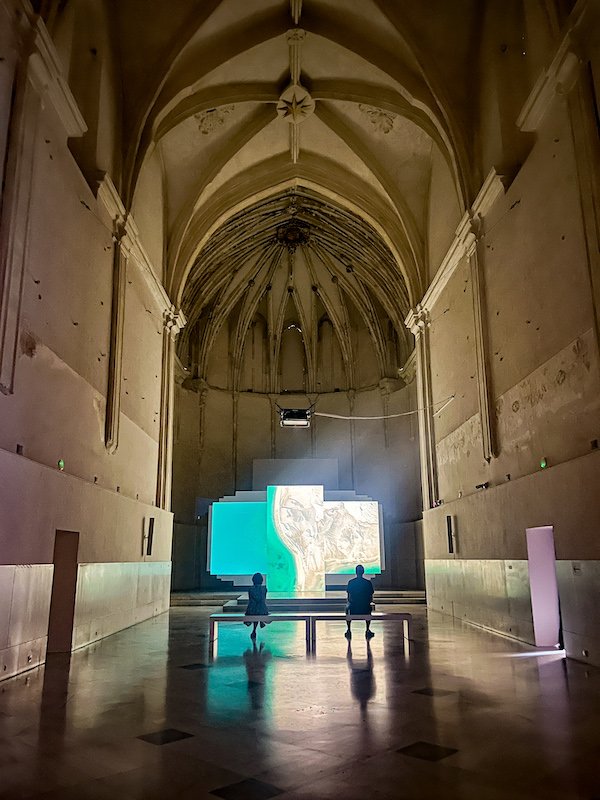
A long walk on another scorching day…over the Puente de Isabel II (Triana Bridge) the oldest iron bridge in Spain crossing the Guadalquivir River connecting Seville city centre to the neighbourhood of Triana. By the small mercado at the end of the bridge along a busy main road, past a huge column shaped office block (from every viewpoint an ugly blot on the landscape of this city) making our way to the Monastery of Santa Maria de las Cuevas, former monastery (once temporary home to the remains of Christopher Columbus) and a former successful ceramics factory of which several elegant brick chimneys remain. It now houses the Andalusian Contemporary Art Centre, a coffee shop/restaurant and university buildings. It’s a fabulous space for art but the only real interest to us is the film they’re playing in a beautifully vaulted space. Another room is wallpapered with Andy Warhol flowers which we’ve seen many times and other galleries hold disjointed displays of videos, random chairs…juxtapositions of things which make little sense (we visit galleries constantly, travelling and at home). There’s hardly anyone here…much more could be done with the space.

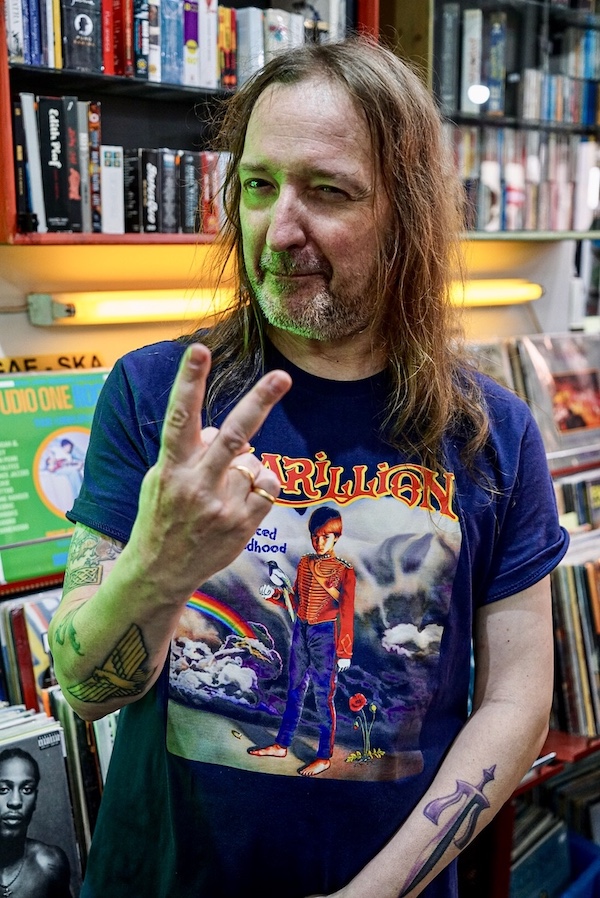
It’s reached 40 centigrade, we’re sweltering and call a cab to take us back to the bridge to walk around the neighbourhood Triana. Late lunch at a non touristed tapas restaurant called Bistec. More boquerones (anchoives marinated in vinegar), a tomato salad and patatas bravas. We check out the location of an airbnb which our friend Peter has booked for June…I warn him they’re going to fry. From there to wander Triana, more lived in scruffier, graffiti tags street art and bars announcing upcoming gigs. It feels like a livelier place but we’re here at the wrong time in the middle of the afternoon, most places are closed…but passing the Roman columns we meet Luis working in Record Sevilla, instantly friendly and a great laugh, he really knows his music.
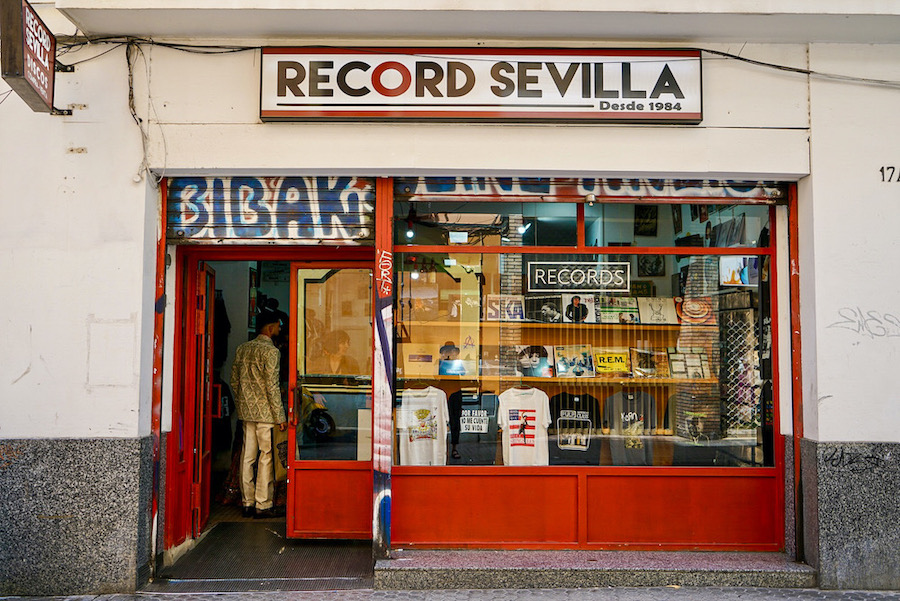
An attractive British Indian couple Nick and Ridhima pose for professional photographs, we assume they’re modelling but turns out they first met here 5 years ago and returned to get married in Seville. We tell them Dave and I first met in a London record shop and have been married 30 years. Dave buys a t-shirt of the shop’s logo. A short walk from Record Sevilla we drop in to Tattoo y Discos, a tattoo parlour also selling vinyl where we get talking with Angie and Pablo…big fans of Black Sabbath…I tell them my stories from working for a short period with Tony Iommi (one of the nicest and funniest men in Rock). Much of travelling is the people you meet, often recalling these encounters more fondly than landmarks.


Day 9 Wednesday 28 May
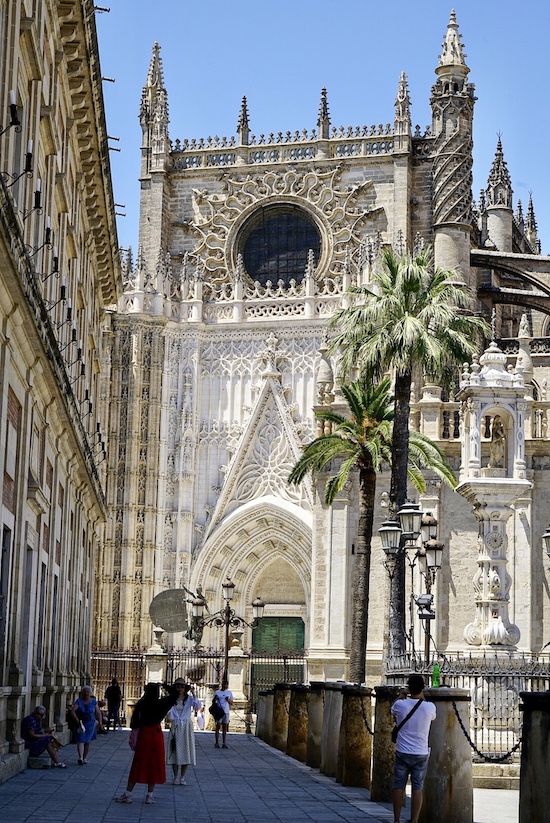
Spent the day visiting the big hitters, with our tickets reserved in advance online and a mercifully short wait in overhead sun to line up to enter. First to the Cathedral of Seville allegedly the second biggest in Europe and the third in the world…depending on what they’re using for measurement; biggest capacity, tallest etc, arguments over this stuff all the time. Anyway it’s bloody huge. Our tickets include climbing the tower; 37 flights…not steps but “gently sloping” brick ramps. They don’t feel gently sloped as we toil upwards with every other red faced sweating tourist, but the views over the city are worth it and there’s even a smidgeon of fresh air this high…a smidgeon. You can see the blot of the giant office block in Triana. I gleefully squash it between my thumb and forefinger.

Back in the main part of the cathedral we marvel at the skill level of the wood carvers, marble workers, artist painters. But the excess of wealth displayed…the money the church spent on all of this stuff, you can’t help thinking it could have served the poor far better than building these huge monuments to power. The Tomb of Christopher Columbus is here, carried aloft by 4 allegorical figures depicting the 4 kingdoms of Spain during his lifetime; Castille, Aragon, Navarre, and Leon. Designed by sculptor Arturo Melida it’s one of the most handsome tombs I’ve ever seen. He died in Valladolid in 1506 and his remains moved around a bit (from Valladolid Spain to Santo Domingo Dominican Republic, to Havana Cuba to the monastery in Seville) until they wound up here. On the pedestal it reads: “When the island of Cuba emancipated from Mother Spain, Seville obtained the deposit of Columbus’s remains, and its city council erected this pedestal.” But. Are they really his remains? Or those of his brother? In 1877 a box was discovered in Santo Domingo inscribed with: “The illustrious and excellent man, Don Colon, Admiral of the Ocean Sea.” The box is now in the massive Faro a Colon Lighthouse in Santo Domingo which we’ve also visited when in the Dominican Republic a few years ago, an absolutely huge Brutalist styled building just as jaw dropping as the cathedral. The remains have been DNA tested in Seville but depending on who is asked…there is still argument.


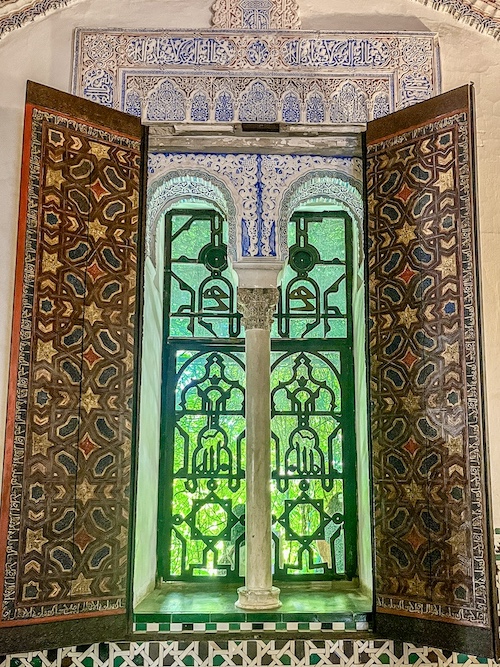
From the Cathedral to the Royal Alcazar Seville entering through the Gate of the Lion into the historic royal palace, one of the official residences of the Spanish royal family (they get all the best stuff). A 10th century former site of an Islamic era citadel developed through different dynasties to the 13th century, then progressively rebuilt with new palaces and gardens. Miles of tiles are gorgeous, the windows and wooden shutters are inviting portals. The Patio del Yeso (Courtyard of the Plaster) is one of the few remaining structures from the 12th century Almohad-era. The serene patio de las Doncellas laid with marble pavements in the 1580s. Ground level reception rooms line an oblong reflecting pool. Looking up into the dome ceiling of the Hall of Ambassadors is dizzying…it is all dreamlike….gorgeous. Sadly at 40 degrees, we pant around the gorgeous gardens but it’s just too hot and with no shade we’re quickly wilting. I could spend so much longer here but visiting two huge sites in one day and in this heat has worn us out.


Paella for two served in a large cast iron pan in a welcoming place with fun table neighbours from America, we trade experiences. The food is great, the iced drinks welcome. A slow wander through the streets, a final time walking under the sun-sails throwing welcome shade from that relentless glowing ball of heat. Back to the hotel for iced Mojitos in our favourite place. Great drinks great food and friendly service at less than half the price of New York…it’s going to be a rude awakening back in our adopted city.


Day 10 Thursday 29 May
Breakfast a few streets from the hotel, then packed up, checked out, said goodbye to the lovely hotel staff and the train back to Madrid. We arrive late afternoon too hot and lazy to wander more of the city, eat even more Iberico ham sandwiches at Madrid station, take a cab to our airport hotel to relax in the spartan room with snacks from the vending machine.
Day 11 Friday 30 May
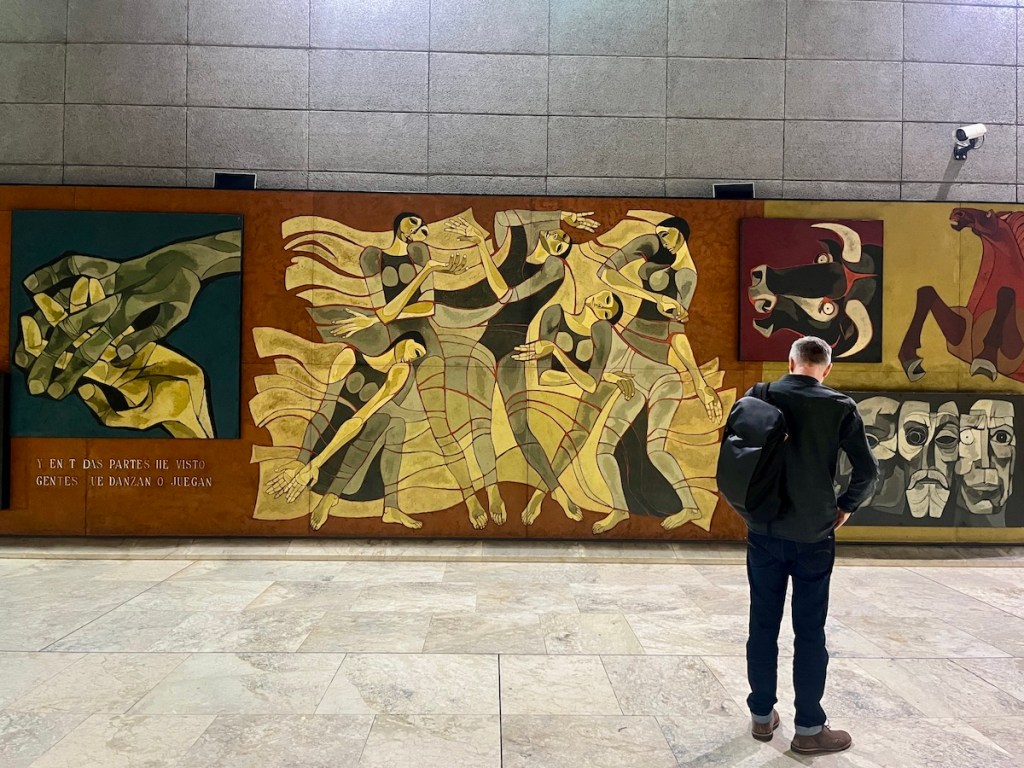
At the airport to fly back to New York, Madrid gives us one last hit of art with this great mural by Miguel Hernandez. We’ve had a fantastic trip, met interesting fun people, been bowled over by art architecture culture food. If planning this trip again we’d come at a cooler time of year…autumn or winter months. We’d stick to our tried and tested roadtrips, using a car; whilst travelling by train was great (less stress/shorter travel times) we were limited by train schedules and lost the freedom of exploring outside the cities. Having visited Spain several times and explored the famous cities I’d like to return to explore the north and drive through villages and small towns. Spain is always a fabulous time.
Stayed
Madrid: Hotel Jardines de Sabatini http://www.jardinesdesabatini.com
Cordoba: Libere Cordoba Tendillas https://www.staylibere.com/es/apartamentos/libere-cordoba-tendillas
Seville: Hotel Vincci Molviedro https://en.vinccihoteles.com/hotels/seville/vincci-molviedro
Ate
Madrid: Mercado de San Miguel, Pl. de San Miguel, s/n, Centro https://mercadodesanmiguel.es
Madrid: Taberna del Capitan Alatriste, C. de Grafal, 7, Centro https://www.tabernadelcapitanalatriste.com
Madrid: Cafe Central, Pl. del Ángel, 10, Centro, 28012 https://www.cafecentralmadrid.com
Madrid: Casa Gonzalez, C. del León, 12, Centro, 28014 https://www.casagonzalez.madrid
Cordoba: Singular, Rda. de Isasa, 4, local 3, Centro, 14003 https://cafe-restaurante-bar.es
Cordoba: Gran Bar, C. Jesús y María, 1, Centro, 14003 https://granbar.es/es
Seville: Breakfast at Brunchit, C. Santas Patronas, 1, 1, Local, Casco Antiguo brunchit.es
Seville: Gusto, C. Alemanes, 23, Casco Antiguo https://www.gustosevilla.com/?utm_source=google-my-business
Seville: Restaurante La Despensa, Pl. Molviedro, 4, Casco Antiguo https://restauranteladespensademolviedro.com
Seville: Bar Bistec, Pelay Correa, 34, 41010 smartmenu.agorapos.com
Seville: Bodega Santa Cruz Las Columnas, C. Rodrigo Caro, 1, Casco Antiguo, 41004 https://www.facebook.com/BodegaSantaCruzSevilla
Seville: De Nata Fábrica de Pastéis, C. Mateos Gago, 29, Casco Antiguo, 41004 https://denata.es
Saw
Madrid: Museo Nacional Centro de Arte Reina Sofia https://www.museoreinasofia.es (very popular because of Picasso’s Guernica painting, book timed tickets in advance)
Madrid: El Retiro Park Instagram parque_del_retiro
Madrid: Palacio de Liria https://www.palaciodeliria.com
Madrid: Church of Saint Anthony of the German (Iglesia de San Antonio de los Alemanes) https://es.wikipedia.org/wiki/Iglesia_de_San_Antonio_de_los_Alemanes
Madrid: Mercado de San Miguel https://mercadodesanmiguel.es
Madrid: Museo Lazaro Galdiano https://www.museolazarogaldiano.es
Madrid: Temple of Debod https://en.wikipedia.org/wiki/Temple_of_Debod
Madrid: Barrio de las Letras https://www.spain.info/en/discover-spain/madrid-barrio-letras
Cordoba: Fosforito Flamenco Centre https://centroflamencofosforito.cordoba.es
Cordoba: Mosque Cathedral https://mezquita-catedraldecordoba.es/en (very popular book timed tickets in advance)
Cordoba: Alcazar de los Reyes Cristianos https://alcazardecordoba.es
Seville: Cathedral of Seville https://www.catedraldesevilla.es (very popular book timed tickets in advance)
Seville: Royal Alcazar of Seville https://alcazarsevilla.org (very popular book timed tickets in advance)
Seville: Hospital de los Venerables https://sevillecityguide.com/hospital-de-los-venerables.html
Seville: Plaza de Espana https://en.wikipedia.org/wiki/Plaza_de_Espa%C3%B1a,_Seville
Seville: Parque Maria de Luisa https://en.wikipedia.org/wiki/Parque_de_Mar%C3%ADa_Luisa
Seville: Triana neighbourhood https://sevillecityguide.com/triana-seville.html
Seville: Monastery and Contemporary Art Gallery (a much less visited art musuem in an old Monastery over the river near Triana neighbourhood) https://en.wikipedia.org/wiki/Monastery_of_Santa_Maria_de_las_Cuevas
Shopped
Seville: Rue 8, Pl. de S. Francisco, Casco Antiguo, 41004 – for leather bags, clothing, jewelry.
Seville: Kareca, C. Sagasta, 4, Casco Antiguo, 41004 – for handmade bracelets, necklaces, belts.
Seville: Tattoo y Discos, C. Aposentadores, 5, Casco Antiguo, 41003 www.sublimatattoosydiscos.com Instagram: @sublimatattoosydiscos
Seville: Record Sevilla, C. Amor de Dios, 17, Casco Antiguo, 41002 (ask for Luis)
Instagram: @record_sevilla
 The Travel Diarist