March 2008

A 9 hour flight from Vancouver Canada on 29 March to Tokyo Japan where we arrived on the 30th March with a 10 hour time difference. Dave negotiated the Narita airport express train which took us another hour to reach central Tokyo. The subway felt so instantly familiar from years in London riding the tube that we hit the ground running with no issues with directions…something we’d been a little nervous about as we’d expected everything to be in Japanese. If you don’t understand Japanese it’s all helpfully colour-coded and there’s even timed carriages for women only. One subway train change and 4 stops later we arrived at our hotel in the Roppongi district.

First impressions of Tokyo? It’s fantastic…and a little bit nuts!!!!!! We’d bought coats back in LA which served us well in Seattle and Vancouver and were needed here in the cooler weather but even in pouring rain the first evening and following morning…we love it; it’s a full on dive in head first sensory overload. The streets talk to you; 20 foot high TV screens surround us, street signs in Japanese mean we can’t read any of it which is disorientating but fun, giant Manga cartoon characters are everywhere. Japanese people are friendly and kind. If you ever see a Japanese tourist at home, offer them help and treat them with respect, they are amazing people and go out of the way to help tourists even though most of them don’t speak English…they absolutely persevere to help you.
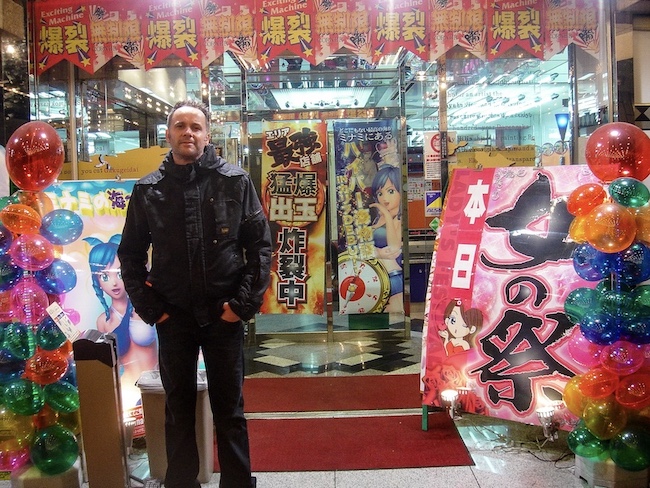
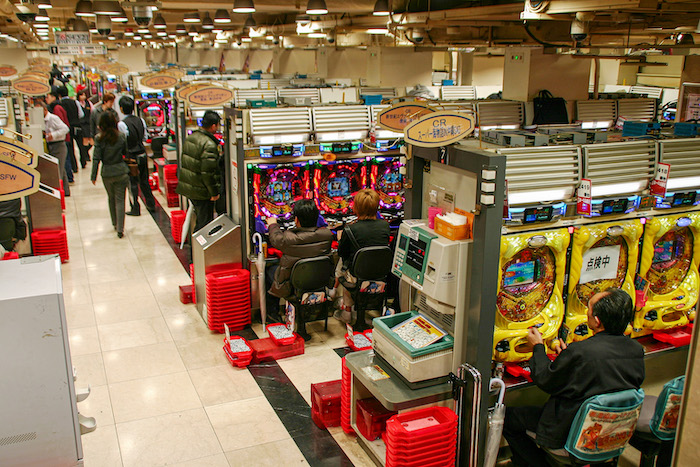


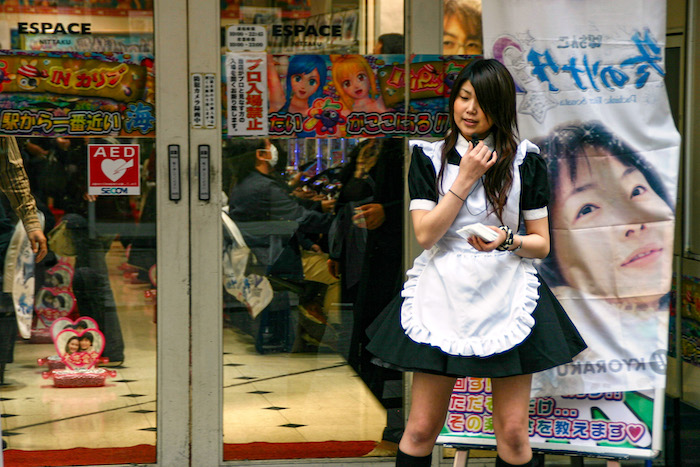
Pachinko is a craze in Tokyo and there are parlours scattered through the streets of Roppongi. Nothing prepares you for the deafening noise the glare of garish colour and the haze of cigarette smoke when you enter your first Pachinko parlour. Pachinko, パチンコ is a Japanese gaming device used for amusement and prizes. Pachinko machines were originally mechanical; modern pachinko machines are a cross between a pinball machine and a video slot machine. Players buy trays of metal balls like ballbearings at 4 yen per ball (250 balls for 1000 yen is the current rate) which are shot into the machine from a ball tray with the purpose of attempting to win more balls. The pachinko machine has a digital slot machine on a large screen in the center of its layout, and the objective is to get 3 numbers or symbols in a row for a jackpot.
Usually Dave and I have a rule; never buy food from restaurants which need to show you pictures of it. We’ve broken it here as we can’t understand the menus and have even moved to selecting from perfectly realistic plastic models known as ‘sampuru’. Originally made from wax but now from plastic, a mold is created which duplicates the rough surfaces of the food, filled with silicone and coloured resin, heated, the silicone then removed from the model…which is airbrushed and hand-painted by brush.

Back in our hotel room we watch Japanese TV; an eat as much as you can endurance test with people dressed to express themselves…it’s over the top utterly baffling and totally pointless, but fun. They don’t follow trends in Japan so much as start them.
It rained Monday morning but we headed to the Shinjuki district on the subway. Shinjuku station has 60…yes SIXTY!…exits, it’s bonkers. We walked miles just to get to the exit we wanted which was for the Tokyo Metropolitan government building (243 metres tall) with twin towers both offering observation decks. 45 floors up free to the public; a lift climbed in a breathtaking matter of seconds…my ears popped around floor 10. A staggering 13,000 people work in this one building. Rain streaking the windows didn’t dampen the views over skyscrapers.

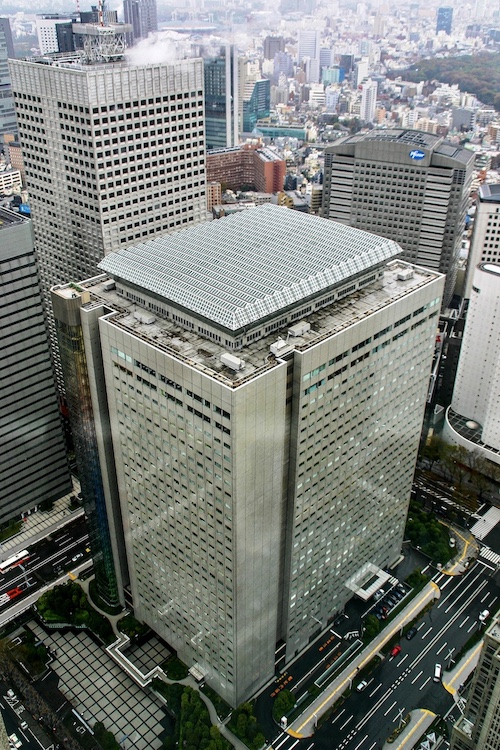
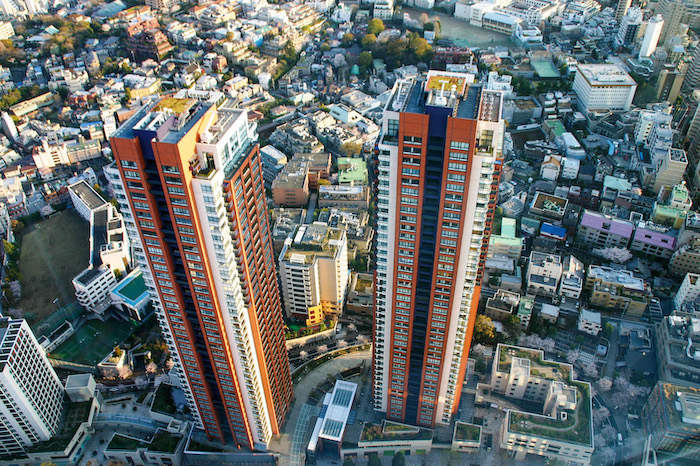
Early evening back in Roppongi and the sun came out. We went to the MORI tower observation deck 52 floors up and an even quicker ascent. A £7.50 ticket which included the MORI Art Museum…a great space showing contemporary art from some big names. We could stay as long as we wished; restaurants and cafes on the same floor.

On a lower outdoor level of the same complex stands a wonderful Louise Bourgeois bronze spider sculpture. Standing at around 30 feet tall imposing in daylight…an encounter later that night was enough to turn one arachnophobic.

Japan is a country of extremes. In Tokyo ancient wooden temples and shrines stand metres from skyscrapers and high fashion shopping plazas. The Hanazono–jinja shrine is a 5 minute walk from the Tokyo Metro Shinjuku-sanchome station. Known as a protector of the Shinjuku district since it was established during the Edo Period and primarily dedicated to the Yamato–takeruno–miko who is an imperial prince in Japan’s mythology, Shinjuku was developed as one of the places located on the route of Koshu–kaido over 300 years ago.
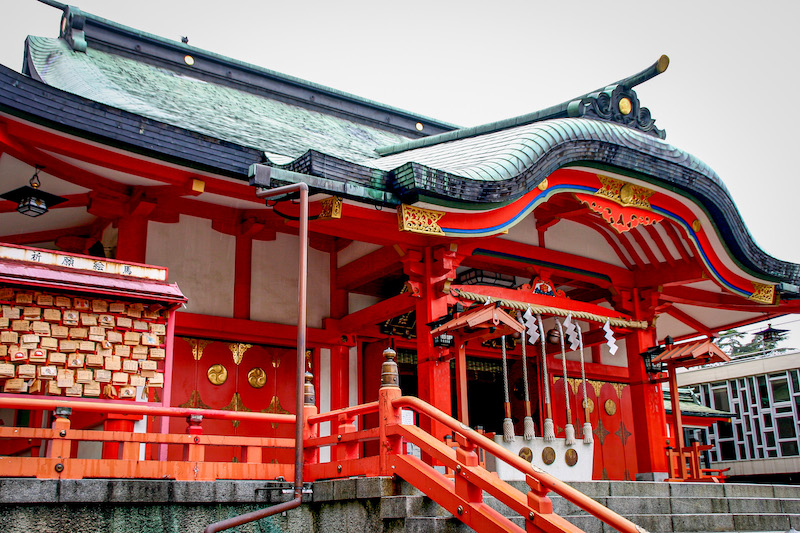
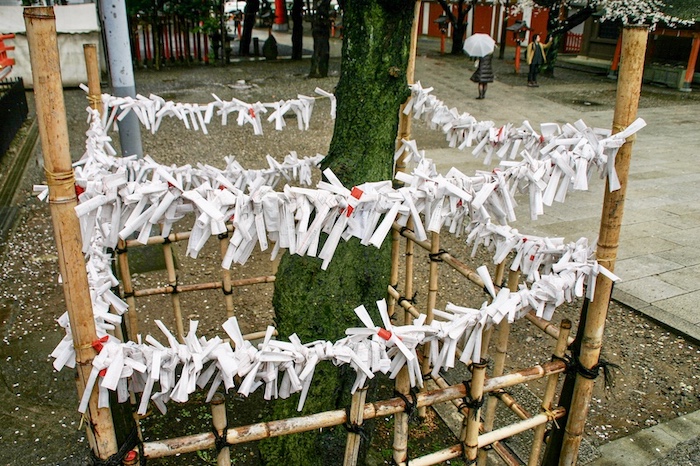
A Japanese gentleman demonstrated how we could show our respect and have our wishes granted by the shrine. Standing in front of long ropes we pull one to make it ring against the bell and then clap our hands 3 times, making a wish or for some a prayer. Japanese people also bow several times. Fortune papers known as Omikuji are tied by people and temple votive tablets or ‘ema‘ are another way to leave wishes. Leaving the temple we headed to eat locally….at a place with a camel centrepoint to the space, a baffling juxtaposition but excellent food.


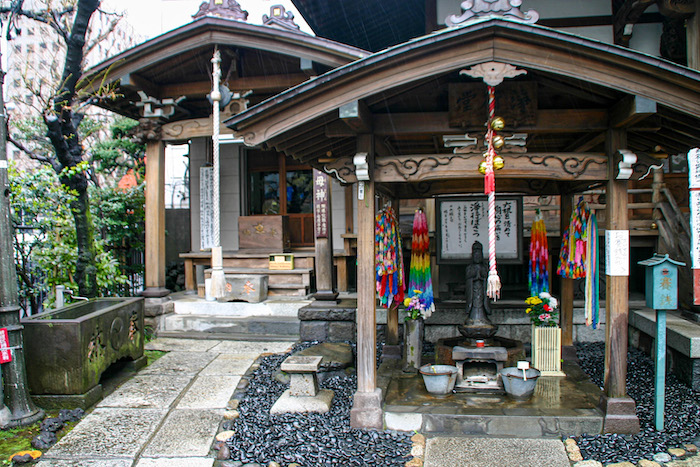
Shin Jeon–Ji shrine one among hundreds scattered throughout the city, is one of the larger shrines and has a graveyard adjoining it. Cremation is mandatory in most parts of Japan, 24 hours need to pass before cremation and the family has a plot where the ashes are placed in an urn and interned. A marker is engraved with the name and other details then placed with other markers of the family. There seems to be little space in Tokyo (streets of houses in the city back on to each other and there is little evidence of private gardens); so funeral plots like these aren’t cheap.


A small street in Kabukicho, a district known for adult entertainment filled with bars each one the size of a broom cupboard…closed when we were there during the day but they don’t openly invite tourists in. The streets cover a small area of about 4 alleys backing on to contemporary modern buildings and the area is under threat of development.
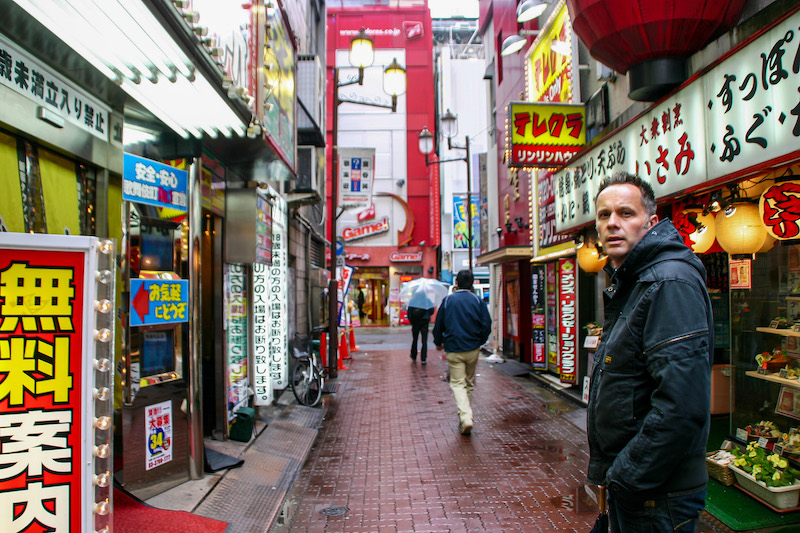
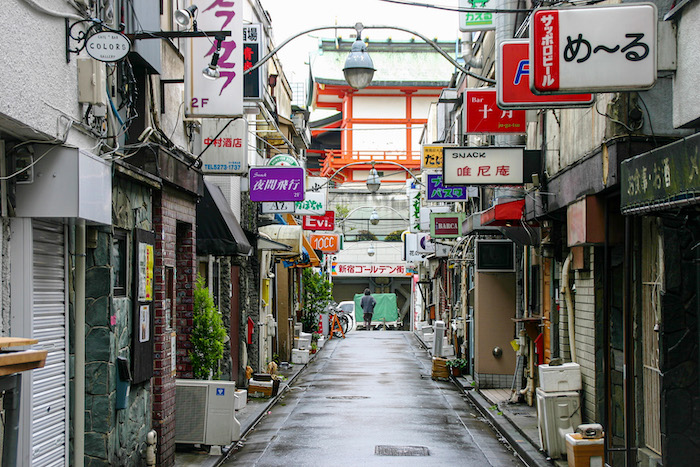
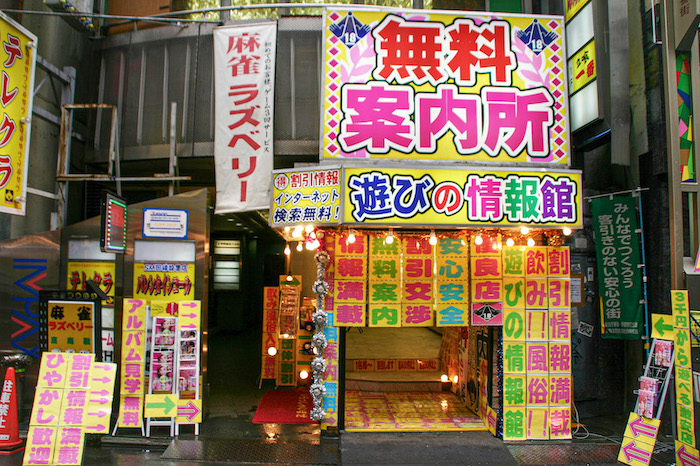
Centre Gai in Shibuya. When the lights change a flood of people swarm across the main intersection which is dominated by huge TV screens and loudspeakers; from music to advertising for Pachinko gaming parlours to random birdsong and cuckoo sounds fluting out from hidden speakers. It’s bonkers.


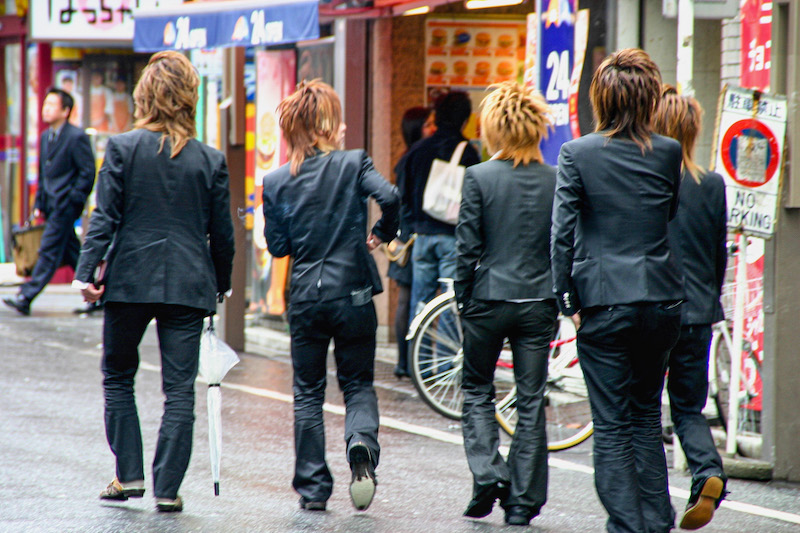
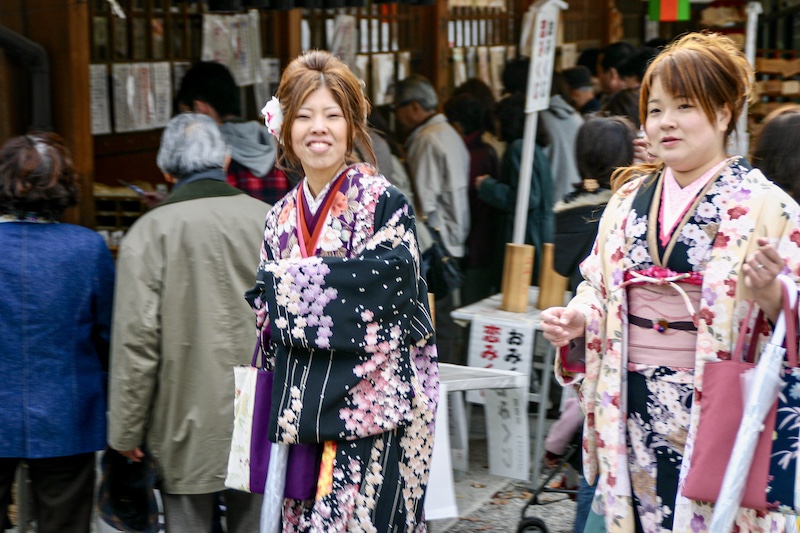
Looks like a hairdressers convention, but these 5 young men in the Shibuya area were out posing. Hair seems to be a national pastime with young Japanese men; it’s fascinating. Posing is a big deal around Tokyo; young people trying to out-pose and out-dress each other. From one youth fashion extreme to another, a girl with her parents being fitted for a kimono; she was happy to pose for a photo.

Bullet train to Kyoto and traditional Japanese weddings.
We are having an incredible time in Japan but we fly tomorrow to Hong Kong, wish we had more time to explore this fascinating country…we need to return. A couple of days ago we took the bullet train from Tokyo to Kyoto; 2hrs 40 minutes to go 476 kilometres. The speed and efficiency is stunning and they look fabulous. They slide in to the platforms like shimmering white ghosts. The destination boards show information in Japanese and English. The boards below show the return leg from Kyoto back to Tokyo. Fast comfortable immaculate and always on time…what more can you ask of your public transport.
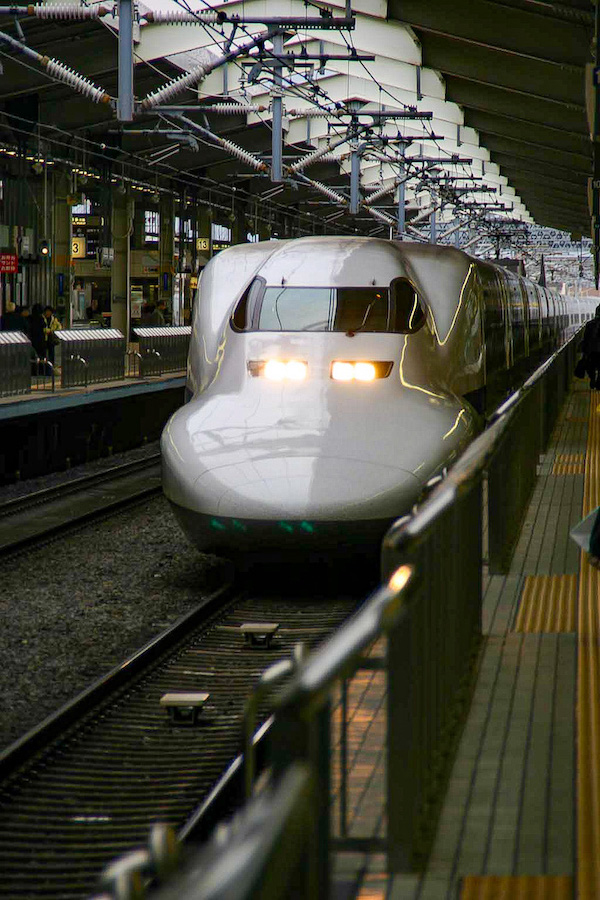
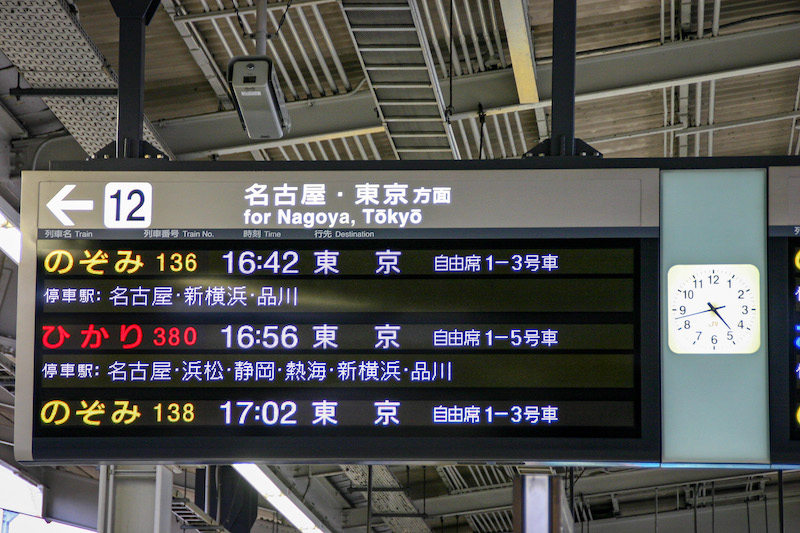
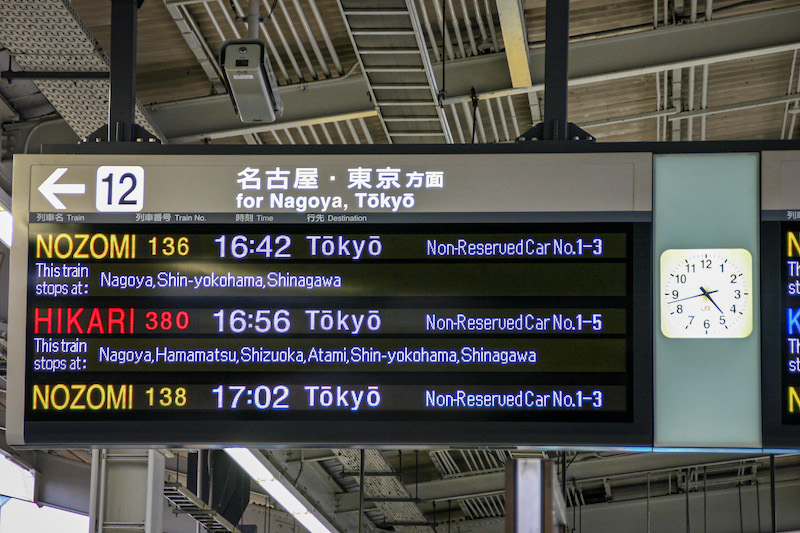
Plus views from the train of Mount Fuji! Amazed I got a shot of it considering the speed we were travelling at.

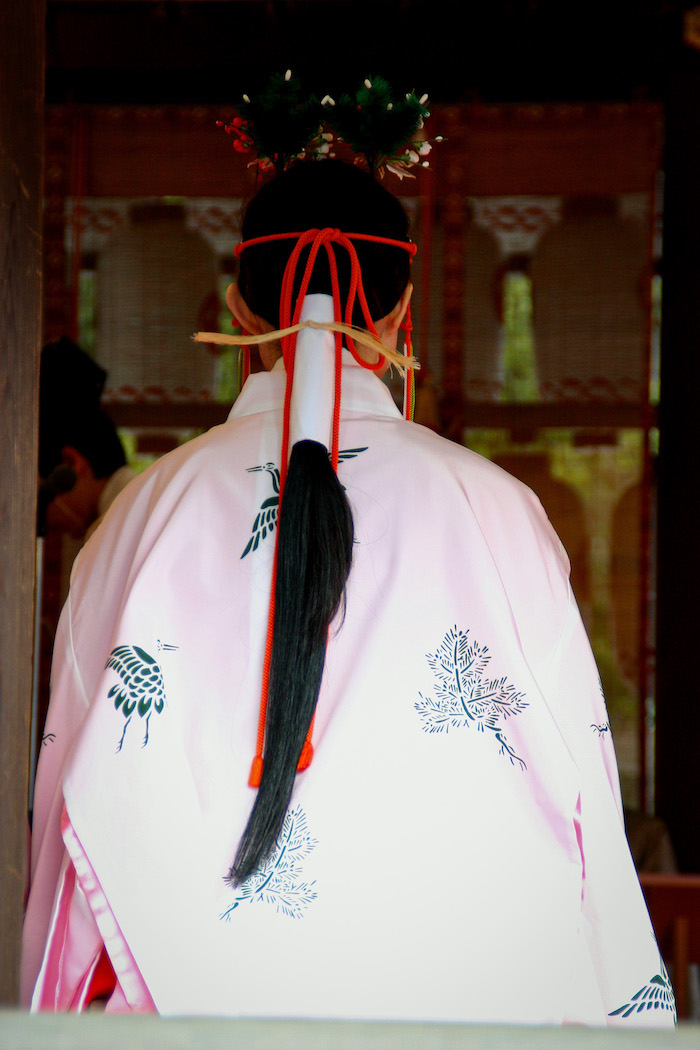
In Kyoto we were fortunate to see some traditional wedding ceremonies; at Heian Jingū Shrine brides layered in gorgeous richly coloured fabrics wearing elaborate wigs; in one a Western groom wearing traditional Japanese wedding clothes and a tall curved elaborate black headpiece.
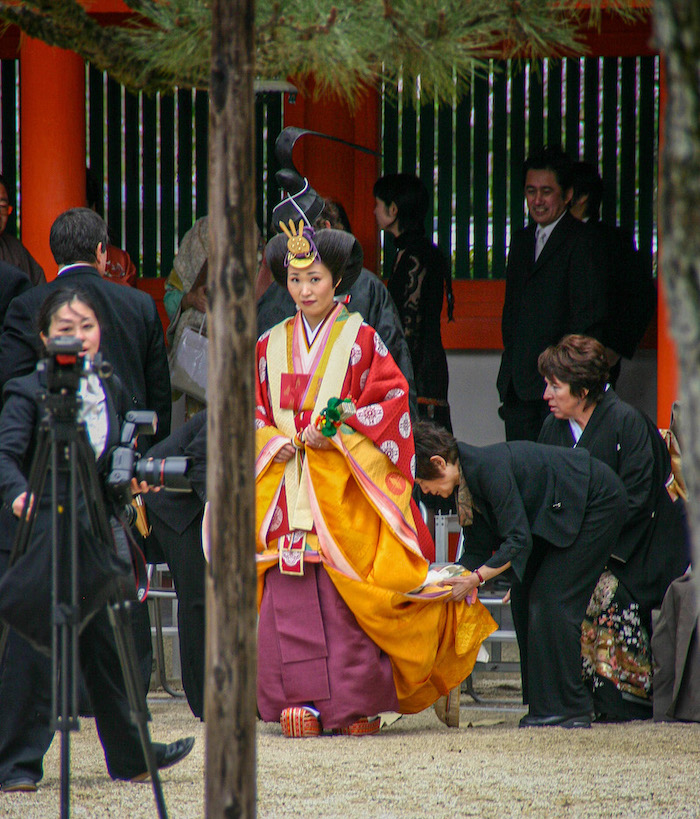

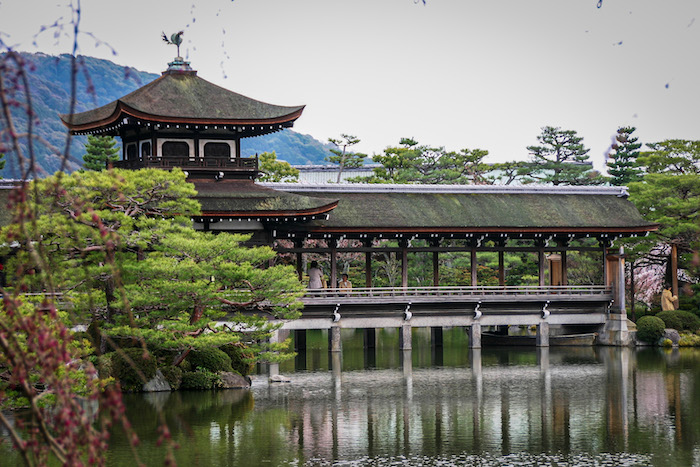
Heian Jingū Shrine is located in the Okazaki area of Kyoto. A reproduction built in 1895 for an exhibition celebrating the 1,100th anniversary of the establishment of Heian-kyo (Kyoto as it’s now known) the shrine is apparently built at 5/8 scale of the original in length due to failure to secure enough land where the Heian Palace used to stand. At the end of the exhibition the building was kept as a shrine in memory of the 50th Emperor. Reconstruction had to be carried out after a fire in 1976 destroyed several buildings. I love the roofs of these buildings, the complex tiling, often green, with decorative metal capping details. A Japanese couple took our photograph at the main gate entrance. Taihei-kaku wooden bridge crosses the pond of the shrine’s gardens.


A Shinto wedding at the Yasaka-jinja shrine. During a Shinto wedding ceremony vows and rings are exchanged and cups of sacred sake are shared between the bride, groom and their families…a ritual known as ‘San San Kudo’. People gathered to photograph the bride as she exited the temple. She looked breathtaking in her traditional Shinto shiromuku wedding kimono, bright red lipstick and wataboshi head cover; the equivalent of a veil under which I learned she would wear a wig. The groom elegant in his pleated striped hakama (trousers), kimono style coat, and obi (a wide sash or belt of stiffened material).


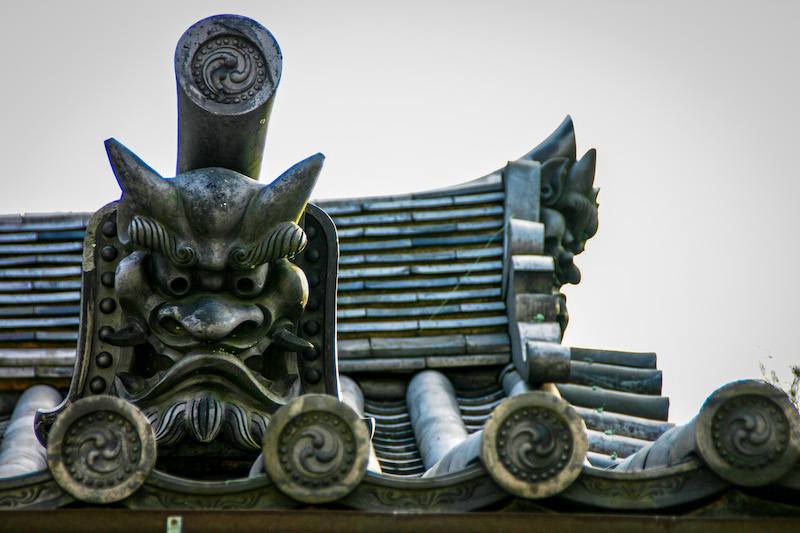
Yasaka Shrine…the ornamental roof titles and symbolism is exquisitely structured.


In the Gion district not far from Yasaka Shrine around Shijo Avenue we walked in the Geisha district or ‘Geiko’ in Kyoto dialect. Maiko are Geisha apprentices though I’m not sure if the young women in my photos are apprenticing or simply dressed in traditional clothing. The combinations of fabric, pattern and colour is wonderful to see…the black fabrics with blossom prints particularly bold.



We ate at a tiny place which if we hadn’t see other customers enter we wouldn’t have realised was actually a place to eat…sliding doors covered the entrance. Dave is struggling a bit with the food as he’s not a fan of noodles or sushi, he enjoys raw fish but doesn’t like cold rice, but he always manages to find something like simple skewered yakitori chicken rich in smoky sauce and sesame seeds. After lunch we walked the streets looking at wooden houses then on to Chion-in Temple, the head temple of the Jodo sect of Japanese Buddhism.


An imposing wooden building, Chion-in Temple has a huge Sanmon entrance gate dating to the early 1600s, it’s the largest wooden temple gate in Japan. Monks in brown robes were performing a Buddhist ceremony when we arrived.

A short subway ride just for the hell of figuring it out, to Nijo Castle another historic monument of Japan…one of the seventeen in Kyoto designated by UNESCO as world heritage sites.


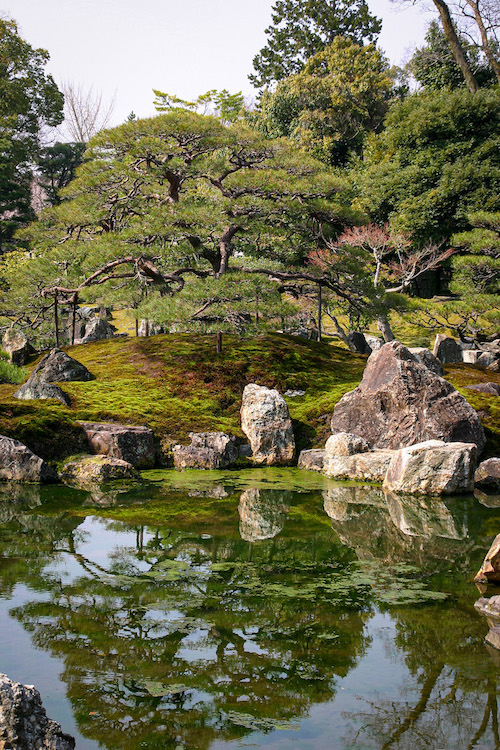
Built in 1679 Nijo Castle is gorgeous with captivating gardens, sweeping roof tiles, latticed wood, gold details, intricate carving. The ornate main gate leads to a 68 acre site including the Ninomaru Palace and the ruins of the Honmaru Palace. A gardener is clipping pruning and shaping a tree. The artfully designed landscaping is extraordinary, the most beautiful we’ve seen.


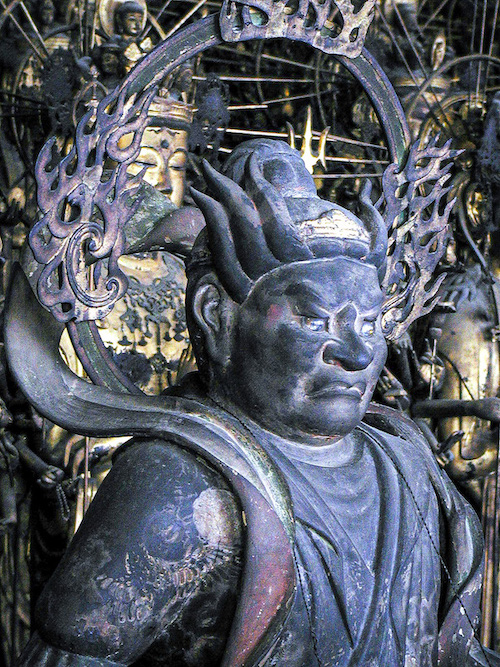
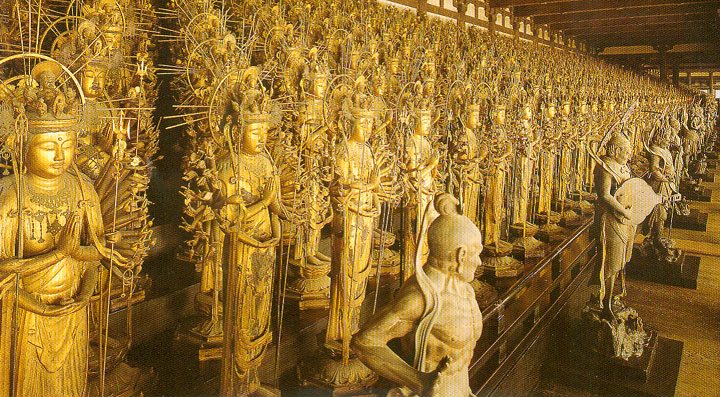
Sanjusangendo was the most mind-blowing temple we visited in Kyoto. Photography not permitted so I can’t take credit for the images below as I found them online as stock photos. I wanted to share them as this place was incredible. Sanjusangendo Temple was established in the twelfth century and houses 1,001 carved wooden statutes of Kannon, the Buddhist Goddess of Mercy, laid out in ranks in the main hall flanking a huge Buddha. On 15 January each year a competition of Japanese archery, ‘kyudo’ is held outside the hall. The temple’s name translates as “hall with thirty-three spaces between the columns.” Fierce warriors with painted eyes glare at us, hundreds of golden statues with intricate delicate headdresses line the steps.

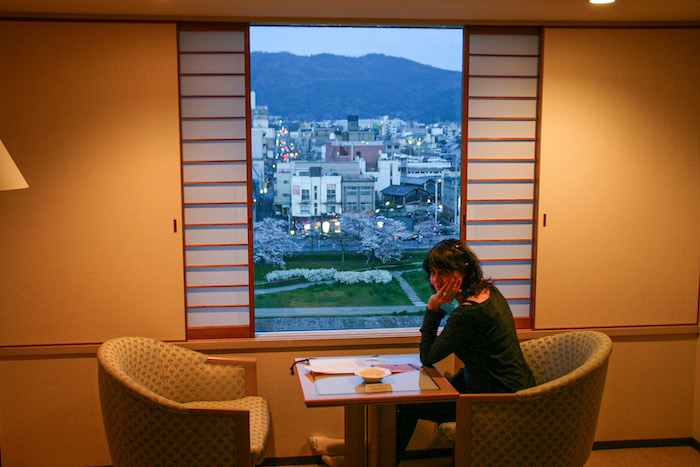
Relaxing back at the Fujia hotel feeling a little ‘templed out’ but with a fabulous view from our room across the Kamo River.

Leaving romantic Kyoto…back on the Bullet train to the bustling streets of Tokyo. Checking back in to the same hotel in Roppongi for our last two nights the receptionist greeted us with an American one cent coin taped to a piece of paper, bowing and handing it to me…I was baffled. It transpired that I’d discarded the coin in the room and in a hugely respectful culture, the staff did not want to be seen as stealing it; so they kept it to give back to me on our return. We were nonplussed by the gesture.
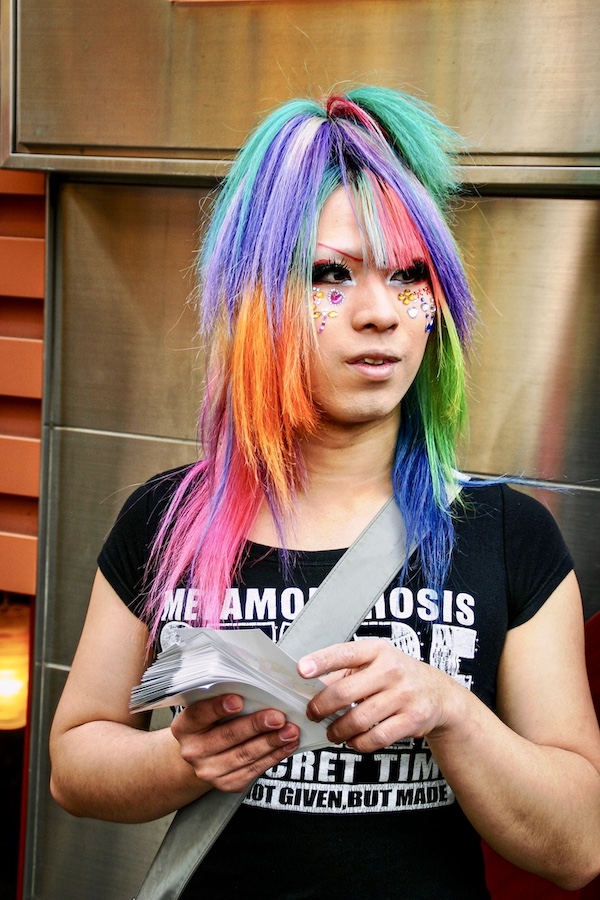
The fashions on the street especially in Yoyogi Park and Harajuka are wild but meticulously curated, people are happy to pose for photos when asked.


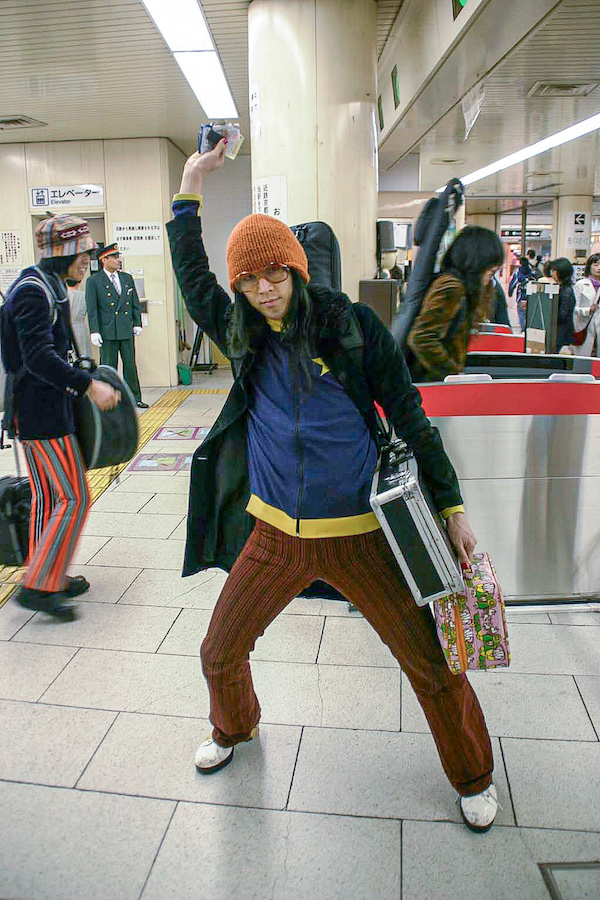
We met a band at the subway station, this guy must have been the singer…I pointed my camera at him and he pulled a suitable rock n’ roll pose. The oddest thing we saw at the subway station in Tokyo was early on Saturday morning where a man lay spreadeagled across the floor, arms splayed wide his business suit jacket open revealing his wallet, his briefcase nearby. It was explained that he will have been drinking late on Friday night when many Japanese businessmen hit the bars to smoke profusely and indulge in alcohol to which they don’t have a great tolerance…letting off steam at the end of the week. Incredible that he’d fallen asleep on his way home and his possessions remained untouched…people simply stepped around or over him leaving him to sleep it off. ‘Kokuminsei’ meaning Japanese nationality, values social harmony respects an observance of hierarchy and the avoidance of conflict. The entire time we were in the country we never saw any arguments in the street, no-one raised their voice…we didn’t see chewing gum marking the pavements. The flipside to this is an extremely conformed society wherein the rights of individuals are second to the harmonious functioning of the whole. It sounds wonderful but to us as visitors it feels impenetrable and lacking at times of individual expression outside of a larger group.
We stumbled across a professional photo shoot of a couple in traditional dress…her kimono decorated with cranes; a bird symbolic of peace luck and longevity in Japan.

To another temple. At the main entrance to Senso-ji it was packed with people, the atmosphere buoyant, stalls selling crafts tourist tat and food. The oldest temple in Tokyo founded in 645 AD as a Buddhist temple it is located in the Asakusa district. Incense was wafted by hand over the head for luck or cleansing… I wasn’t sure, huge lanterns statues pagodas…another sensory overload but with a festive jubilant feeling, welcoming…people smiling and laughing.


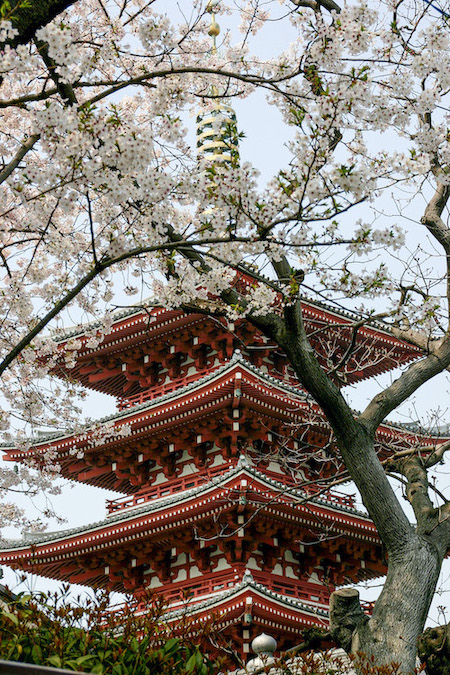
We spent our last couple of days hanging out with Andrew, an old friend of our mate Tim’s back in London. Andrew relocated from the UK and now works and lives here with his partner Michelle. We walked with him to Yoyogi Park to see the towering Cyprus Gate and a wall of sake barrels wrapped in painted straw. Cherry blossom picnic parties were spread under the trees in swathes of blue tarpaulin. We are lucky to be here during cherry tree season…the busiest season of the year as thousands of Japanese travel around the country to famous cherry blossom sites.


Andrew took us to see Tokyo at night; the maid parlours, seedy bars…we were kicked out of one within minutes of entering. Andrew ignored the ‘Japanese only’ sign and pushed us in to see this other side of the culture; mirror top tables across which young women would strut in childlike uniforms, the mirrored tables reflecting a view up their skirts…gross but tamer than your average strip club back in the UK. The manager hustled us out in less than a minute. We went to the Park Hyatt Tokyo hotel, used for the location of Sofia Coppola’s film ‘Lost in Translation’. The top floor bar, 52 floors up gave incredible views but Andrew, suffering from vertigo, clung to the edges of tables refusing to come near…generous of him to bring us here, we had no idea. He took us for dinner at Gonpachi; the restaurant which inspired Tarantino for the ‘Kill Bill’ fight scene in a tiered wooden building where Uma Thurman, standing in the centre, fights off hundreds of Japanese swordsmen. The same evening we sat with Andrew in a 9th floor bar reached by a crusty old lift in what looked like a flimsy office block when we experienced our first ever earthquake tremor. Surreal.
We bloody love Japan. Sad to leave. Tokyo is a Bladerunner landscape….a visual and audio feast. The people are excellent, services are excellent, trains are immaculate, the bullet trains are mind blowing…they make British Rail look prehistoric. Everyone is friendly and I feel totally conversant in the traditional head-nod bow. It’s so polite it’s a breath of fresh air.
But on to our next stop…Hong Kong.

Saw
Tokyo Pachinko game: https://en.wikipedia.org/wiki/Pachinko
Tokyo Sampuru Japanese art of realistic fake food explained: https://www.today.com/food/trends/sampuru-japanese-art-fake-food-rcna26990
Tokyo Metropolitan Government Building: https://www.japan-guide.com/e/e3011_tocho.html
Tokyo Roppongi Hills Mori Tower Observation: https://artview.roppongihills.com/en/index.html
Tokyo Spider artist Louise Bourgeois: https://www.tate.org.uk/art/artists/louise-bourgeois-2351/art-louise-bourgeois
Tokyo Hanazono-jinja Shrine: https://en.wikipedia.org/wiki/Hanazono_Shrine
Tokyo Senso-Ji Temple: https://www.senso-ji.jp/english/
Tokyo Yoyogi Park: https://www.japan-guide.com/e/e3034_002.html
Tokyo Park Hyatt Hotel from Lost in Translation movie: https://www.hyatt.com/en-US/hotel/japan/park-hyatt-tokyo/tyoph
Tokyo Gonpachi Restaurant: https://gonpachi.jp/nishi-azabu/
Kyoto Heian Shrine: https://www.heianjingu.or.jp/
Kyoto Heian Shrine: https://en.wikipedia.org/wiki/Heian_Shrine
Kyoto Shinto weddings: https://en.wikipedia.org/wiki/Shinto_wedding
Kyoto Yasaka Shrine: https://www.yasaka-jinja.or.jp/en/
Kyoto Geisha culture: https://www.vogue.com/article/geisha-culture-kyoto-japan-how-to-see-geiko-maiko
Kyoto Geisha Culture: https://www.britannica.com/topic/holiday
Kyoto Chion-in Temple: https://www.chion-in.or.jp/
Kyoto Nijo Castle: https://nijo-jocastle.city.kyoto.lg.jp/?lang=en
Kyoto Sanjusangendo Temple: https://www.sanjusangendo.jp/
Bullet Train Japan Rail Pass: https://www.jrailpass.com/shinkansen-bullet-trains
 The Travel Diarist